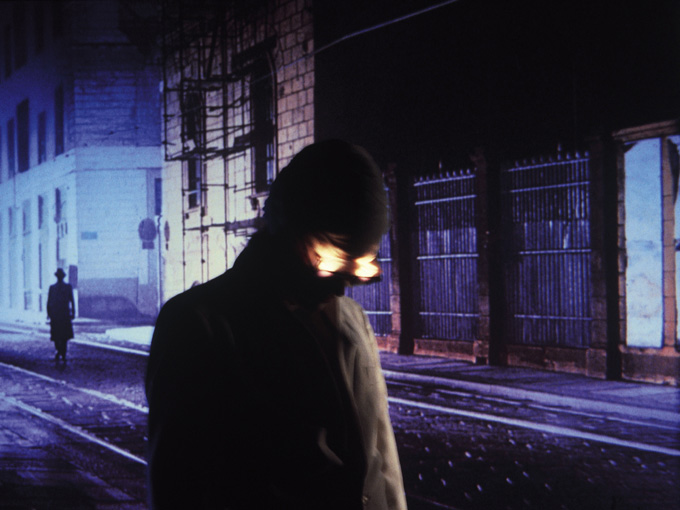
"Night in Shangri-La I"
GOTTFRIED HELNWEIN - ESSAYS
A selection of texts and essays about Gottfried
Helnwein; in chronological order.
Eine Auswahl von Texten und Essays über Gottfried Helnwein in chronologischer
Reihenfolge.
"Night in Shangri-La I"
FACING INNOCENCE: THE ART
OF GOTTFRIED
HELNWEIN
Mark Van Proyen
Catalogue
Crocker Art Museum, 2011
GOTTFRIED HELNWEIN, MEMORIALISING
THE HOLOCAUST
Dissertation
by Katy O'Donoghue, May 2008
ANGELS SLEEPING
Catalogue
Rudolfinum Gallery, Prague
Petr Nedoma, 2008
HELNWEIN - NINTH NOVEMBER NIGHT
The Documentary
Catalogue
Museum of Tolerance, Simon Wiesenthal Center, Los Angeles
Johnathon Keats, The Art of Humanity
http://kristallnacht.helnwein.com
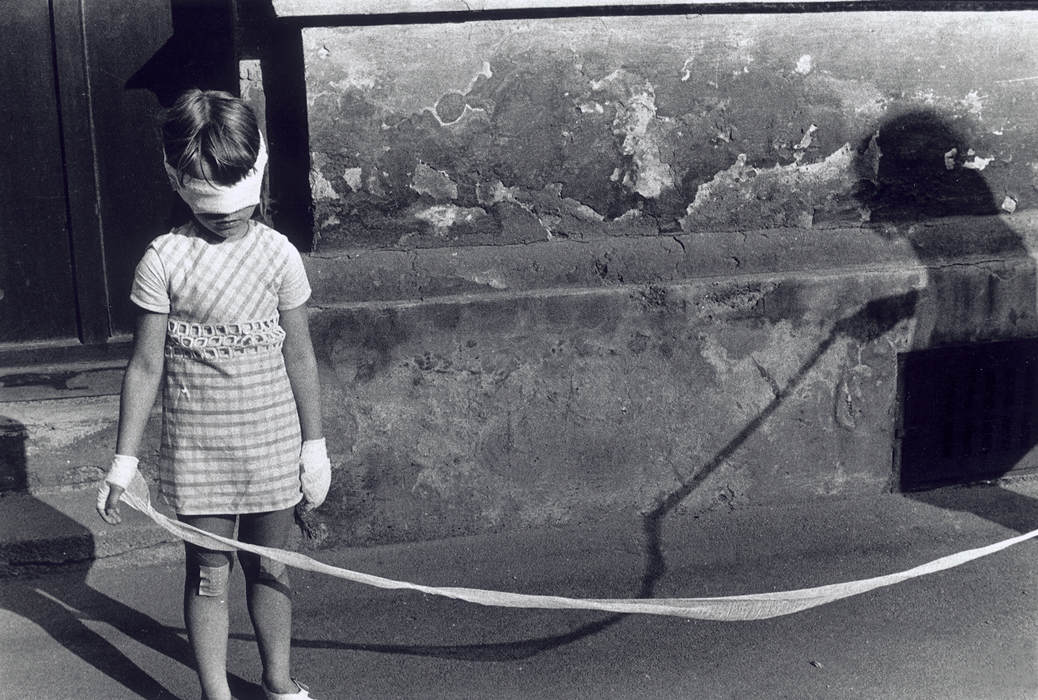
"Aktion Sorgenkind"
"GOTTFRIED HELNWEIN AT MODERNISM"
By Jonathon Keats
Artweek, Volume 33, Issue 10
December, 2002
"HELNWEIN"
By Mic Moroney
Lead White Gallery, Dublin
September 2002
"THE SUBVERSIVE POWER OF ART: GOTTFRIED HELNWEIN - A CONCEPT
ARTIST BEFORE THE TURN OF THE MILLENNIUM"
By Klaus Honnef
Curator for Photography and New Media at Rheinisches Landesmuseum, Bonn
Ruprecht-Karls-Universität Heidelberg, Institut: Kunstgeschichte
10. September 2002
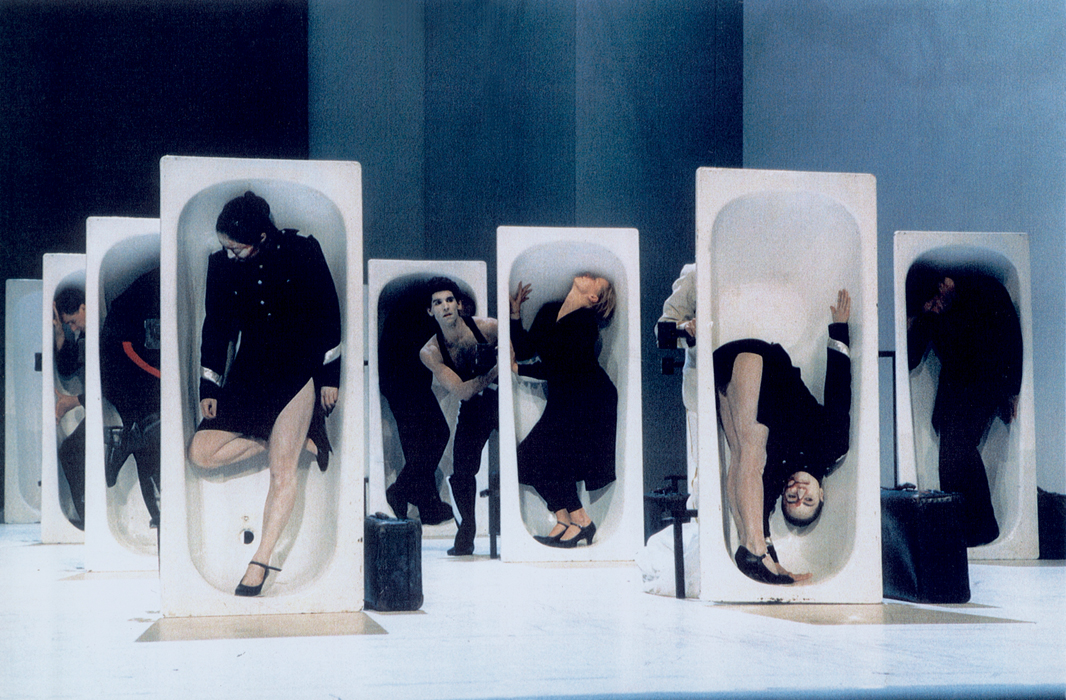
"Scene from Macbeth"
"HELNWEIN"
By Robert Flynn Johnson
Curator in Charge, Achenbach Foundation for Graphic Arts, Fine Arts Museums
of San Francisco
Robert Sandelson Gallery, London
Gottfried Helnwein, one-man show, catalogue
May 2001
"MAGIC VISION"
Gottfried Helnwein
Arkansas Arts Center
By Townsend Wolfe
Donald W.Reynolds Center for Drawing Research and Education
16. November 2001
"THE MURMUR OF THE INNOCENTS"
By Mic Moroney
Helnwein catalogue for the Kilkenny Arts Festival 2001
August 2001
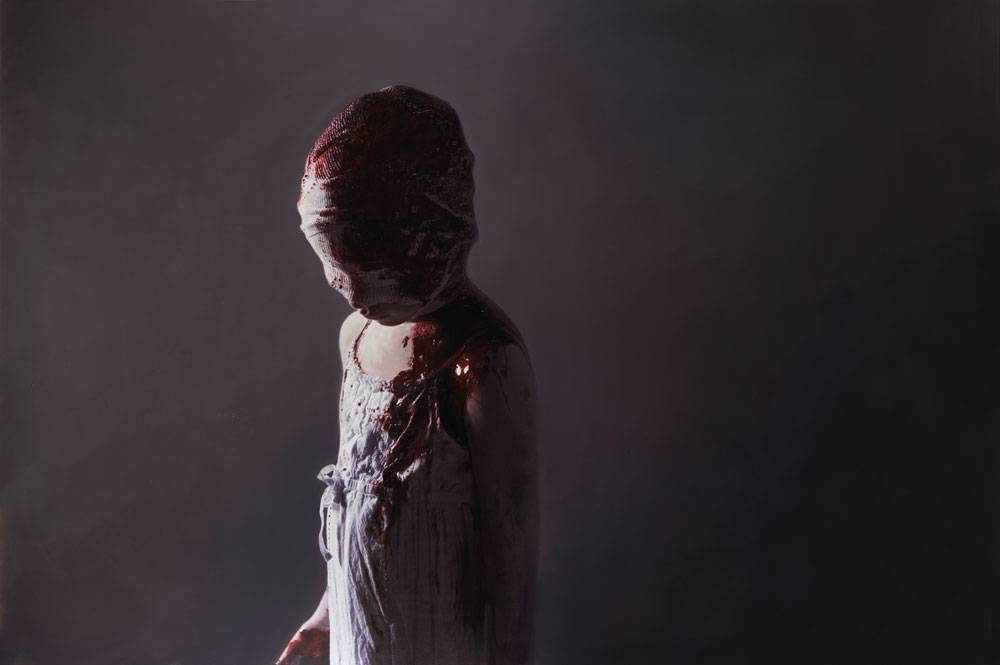
"The Murmur of Innocents 14"
"LE «CORPS-HUMAIN» DANS L’ART PICTURAL
CONTEMPORAIN"
Gottfried Helnwein
By Stéphane VELUT
Centre d'Etudes Supérieures de la Renaissance
Deuxième Table Ronde sur la Médecine, 6 avril 2001
06. April 2001
"ÖSTERREICHISCHE KÜNSTLER - JETZT"
Gottfried Helnwein
By Angela Stief
Albertina, Wien
Katalog zur Ausstellung
2001
"THE SHOCK OF
THE REAL"
Gottfried Helnwein
By John Hendry
REUTERS City , International / Art
20. May 2000
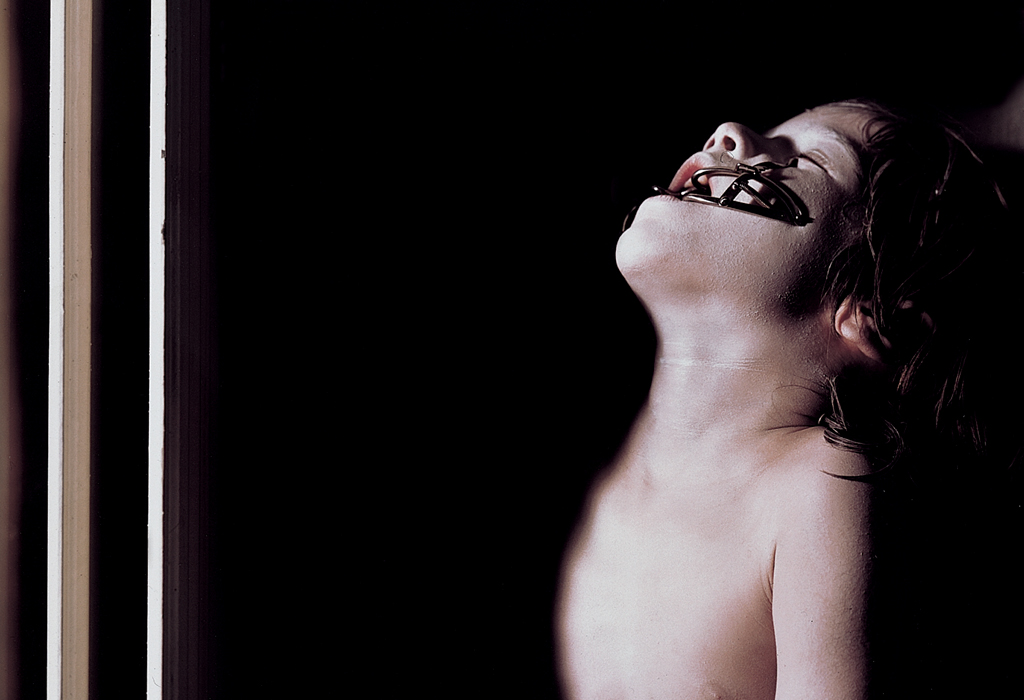
"Untitled 1"
"FERVENT MACHINES"
Gottfried Helnwein
by Robert Lort
- Incorporeal Part II -
Azimute (http://home.pacific.net.au/~robertl/azimute.html)
2000
"HELNWEIN"
By Joanna Hayman-Bolt
ART newsroom.com, London
06. December 2000
"THE AMERICAN PAINTINGS"
By Gottfried Helnwein
TANK Magazine, Volume 2, Issue 2, London
February 2000
Helnwein.jpg)
"Untitled (The Disasters of War 24)"
"THE DARKER SIDE OF PLAYLAND: CHILDHOOD IMAGERY FROM THE
LOGAN COLLECTION' AT SFMOMA"
San Fracisco Museum of Modern Art
Gottfried Helnwein
By Alicia Miller
Artweek (Celebrating 30 years)
2000
"GHOST IN THE SHELL - Photography and the Human Soul,
1850-2000"
Los Angeles County Museum of Art
Gottfried Helnwein
by Robert A. Sobieszek, Curator of Photography, Los Angeles County Musrum of
Art
2000
"GEGEN DIE HARMLOSIGKEIT IN DER KUNST"
Gottfried Helnwein
By Peter Zawrel
Director of the Museum of Lower Austria
Museum of Lower Austria
Catalogue, Gottfried Helnwein, one-man show and installation in the Dominican
Church, Krems, 13.6. - 31.8. 1999
01. June 1999
Helnwein.jpg)
"Night V (Phoney Death)"
"EIN KÜNSTLER VON WELTFORMAT - Die Hymne des Freundes"
Manfred Deix about Gottfried Helnwein
News Magazin,Wien
1999
"INSPIRED BY HELNWEIN"
By Wolfgang Bauer, Poet
Museum of Lower Austria
Gottfried Helnwein, "Apokalypse", installation, one-man show
1999
"THE LUDWIG MUSEUM IN THE RUSSIAN MUSEUM"
Gottfried Helnwein
By Evgenija Petrova
Chief curator, State Russian Museum St Petersburg
The State Russian Museum St. Petersburg
Palace Edition
1998
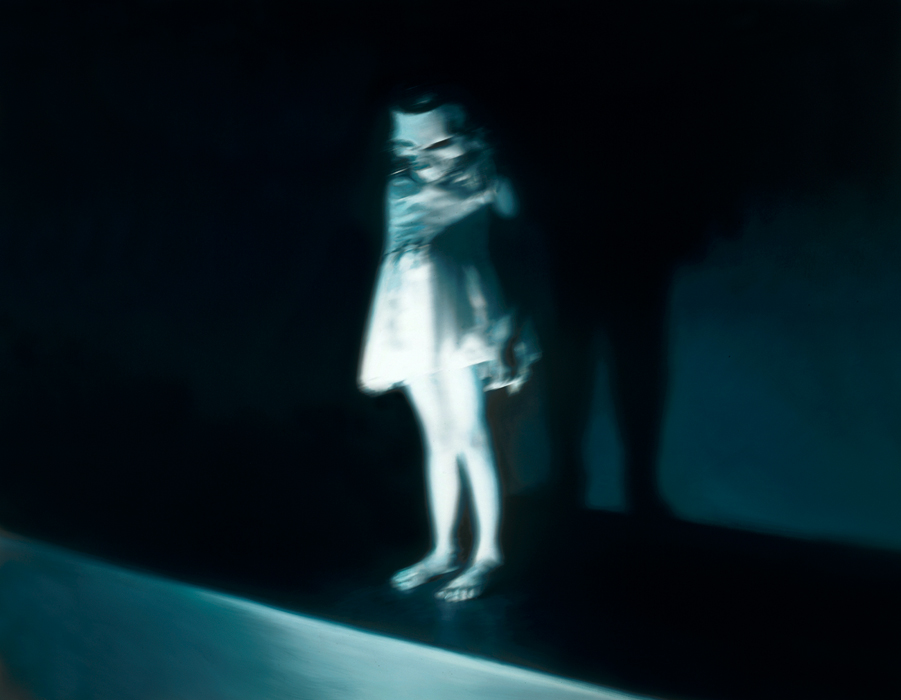
"Stage Fright"
"DAS VERSPRECHEN DER PHOTOGRAPHIE - Gottfried Helnwein"
By Klaus Honnef
Kurator für Fotografie, Rheinisches Landesmuseum, Bonn
Prestel, München, New York
1998
"HELNWEIN HAASTAA VUOROPUHELUUN"
By Virpi Wuori
Unikankare kuvataide
Finland
02. October 1998
"47. BERLINER FESTWOCHEN, HAMLETMASCHINE VON HEINER MÜLLER
IN DER BERLINER ARENA"
Gottfried Helnwein
By Heinz Benfitzsch
Deutschlandradio (Kulturzeit - 9.05 Uhr)
30.Sep.1997
"ICH BIN NICHT HAMLET"
Gottfried Helnwein
By Axel Sanjosé
Applaus, Kultur-Magazin
"Hamletmaschine" in der Muffathalle. Bühnenbild: Helnwein
01. September 1997
"THE HELNWEIN PASSION"
By Alexander Borovsky
Curator for Contemporary Art at the State Russian Museum, St. Petersburg
Helnwein Monograph, the State Russian Museum, St. Petersburg
1997
"HELNWEIN: THE ARTIST AS PROVOCATEUR"
By Peter Selz
Professor Emeritus, Department of Art History, University of California, Berkeley.
Former Curator at the Museum of Modern Art in New York and founding director
of the Berkeley Art Museum.
Helnwein Monograph, the State Russian Museum, St. Petersburg
1997
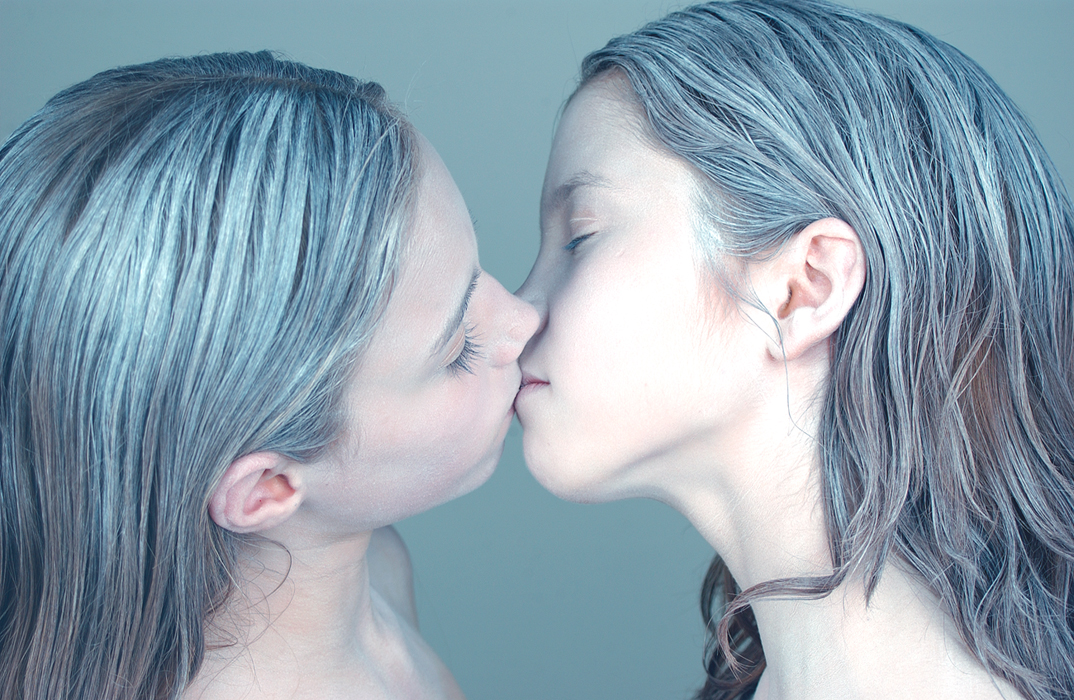
"Paradise and the Peri"
"THE SUBVERSIVE POWER OF ART"
Gottfried Helnwein
By Klaus Honnef
Curator for Contemporary Art at Rheinisches Landesmuseum, Bonn
Helnwein Monograph, The State Russian Museum, St. Petersburg
1997
"MADONNA"
Gottfried Helnwein
By Günter Zehnder
Rheinisches Landesmuseum Bonn
1996
"PETER UND IRENE LUDWIG SCHENKEN CHINA KUNSTWERKE"
Gottfried Helnwein
By Astrid Legge, Astrid Maria, Petra s.Versteegh, Pia vom Dorp
Ludwig Museum für Internationale Kunst, Chinesisches Kunstmuseum, Peking
1996
"THE METAPHORICAL PRINCIPLE OF GOTTFRIED HELNWEIN"
By Evgenija Nicolaevna Petrova
Chief Curator of the State Russian Museum, St. Petersburg
Museum of Modern Art, Otaru, Japan, catalogue
1996
"IT’S ONLY ROCK AND ROLL"
Gottfried Helnwein
By David s. Ruben
Curator of 20th Century Art, Phoenix Art Museum
Rock and Roll Currents in Contemporary Art
Prestel, Munich - New York
1995
"ENDZEITSTIMMUNG - DÜSTERE BILDER IN GOLDENER ZEIT"
Gottfried Helnwein
By Gregory Fuller
DuMont, Buchverlag, Köln
1993
 Helnwein.jpg)
"Untitled (Red Gun II)"
"VORWORT BY ROY DISNEY"
"Wer ist Carl Barks?"
Helnwein, NEFF Verlag
1993
"GOTTFRIED HELNWEIN"
By Gisela Fiedler-Bender
Pfalzgalerie Kaiserslautern; Kunstmuseum Thun
May 1992
"DAS KIND IM FOCUS"
About Gottfried Helnwein, Teil I -
By Johannes Rother
Mittelrheinmuseum, Koblenz (Zur Ausstellung im Mittelrheinmuseum, Teil I)
04.Jan.1992
"HELNWEIN - FACES"
By Reinhold Mißelbeck
Curator for photography and new media, Museum Ludwig, Cologne
Helnwein - Faces, Edition Stemmle
1992
"HELNWEIN TALKS WITH CARL BARKS"
Helnwein visits Carl Barks in Grants Pass, Oregon
11. July 1992
"GOTTFRIED HELNWEIN - L’HORRIBLE ET LE SUBLIME"
By Andreas Mäckler
Benedikt Taschen Verlag
1992
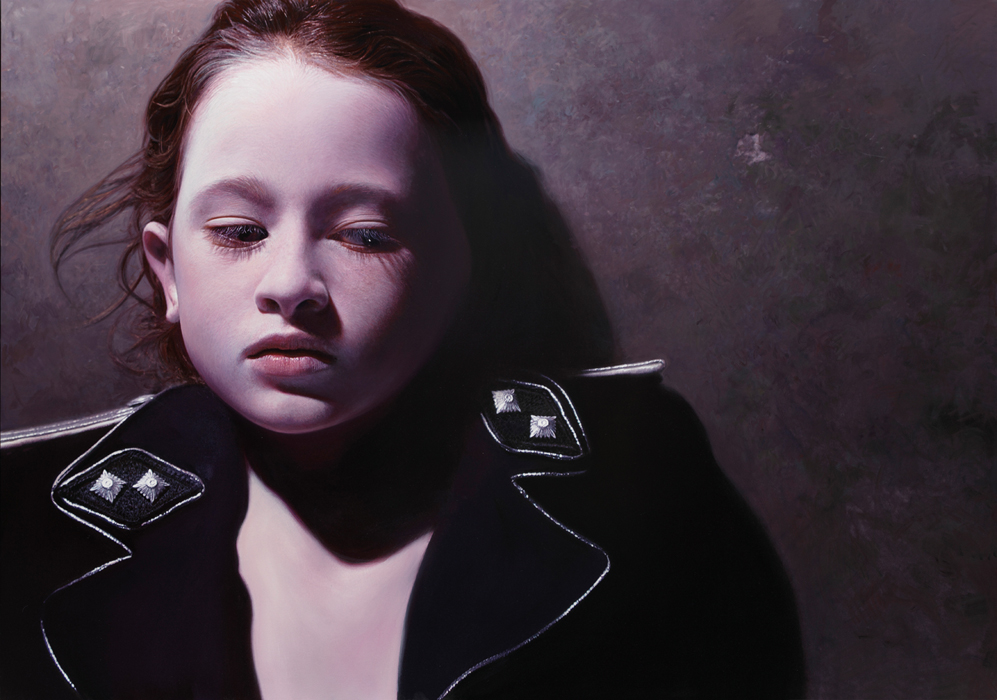
"The Murmur of the Innocents"
"HELNWEIN’S WORK"
By William S. Burroughs
Helnwein, "Faces", catalogue
Edition Stemmle
1992
"‘KINDSKOPF’, HELNWEIN’S PLEA FOR A
DIFFERENT CHILDHOOD"
By Peter Zawrel
Chief curator, Museum of lower Austria
Exhibition catalogue
Museum of lower Austria
1991
"ERSTICKTER SCHREI"
Gottfried Helnwein
By Susanne Vill
polyaisthesis
1990
"ZEICHENOPFER"
Gottfried Helnwein
By Roland Gross
Frankfurter Allgemeine
16.Nov.1989
"MEMORIES OF DUCKBURG"
English translation of "Erinnerungen an Entenhausen" ("Micky
Maus unter dem Roten Stern")
By Gottfried Helnwein
ZeitMagazin, Hamburg
12.May.1989
 Helnwein.jpg)
"The Golden Age 2 (Marilyn Manson)"
"GOTTFRIED HELNWEIN ODER DIE WELT HINTER DEN DINGEN, EINE
BETRACHTUNG"
By Hubertus Froning
Curator for Drawings and Graphic Arts, Folkwang Museum Essen
Exhibition catalogue
Folkwang Museum Essen
02. January 1989
Qui n`a pas de folie n `est pas aussi sage qu`il
croit.
Wer nicht ein bisschen verrückt ist, ist nicht ganz so weise, wie er glaubt.
La Rochefoucauld
Kurt Eitelbach
Chief Curator
Mittelrhein-Museum, Koblenz
1988
"NINTH NOVEMBER NIGHT"
By Reinhold Mißelbeck
Curator for Photography and new media, Museum Ludwig, Cologne
Gottfried Helnwein, Installation "Ninth November Night", catalogue
09. November 1988
"LES AUTOPORTRAITS DE GOTTFRIED HELNWEIN"
By Roland Recht
Conservateur en Chef des Musées de Strasbourg
1988
"DIE VERWANDLUNGSKUNST DES DOPPELGÄNGERS"
Gottfried Helnwein
By Peter Gorsen
Ordinariat für Kunstgeschichte an der Universität für angewandte
Kunst, Wien
"Helnwein - der Untermensch" (Self-Portraits 1970-1987)
One-man show at the Museum of Modern Art, Strasbourg
Edition Braus, Heidelberg
1988
"REICHSKRISTALLNACHT - NIGHT AND FOG"
By Charles-Henri Favrod
Director Musée de l'Elysée Lausanne
Gottfried Helnwein, installation "Ninth November Night", catalogue
1988
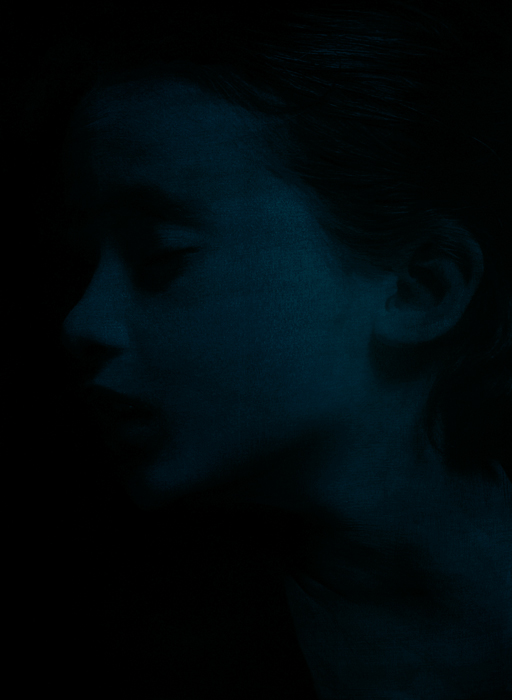
"Sleep 5"
"DIE KIELER AFFÄRE - IN MÖRDERISCHEN TÄNZEN"
Gottfried Helnwein
By Rolf Michaelis
Die Zeit
19. February 1988
"THE DIVIDED SELF, GOTTFRIED HELNWEIN IN HIS SELF-PORTRAITS"
By Peter Gorsen
"Der Untermensch", Edition Braus, Heidelberg
1988
"THE SELF PORTRAITS OF GOTTFRIED HELNWEIN - A WORLD OF
HORROR IN PICTURES"
By Roland Recht
Chief Curator of Museums, Strasbourg
Edition Braus Heidelberg
1988
"THOUGHTS"
By Simon Wiesenthal
Gottfried Helnwein, installation "Ninth November Night", catalogue
Museum Ludwig Cologne
1988
"DER KÜNSTLER ALS MÄRTYRER"
Gottfried Helnwein, Selbstbildnisse
By Peter Gorsen
Frankfurter Allgemeine Zeitung
18. April 1987
"DIE LÄDIERTE WELT"
Realismus und Realismen in Österreich
Gottfried Helnwein
By Klaus Albrecht Schröder
Kunstforum, Wien
14. May 1987 - 26. June 1987
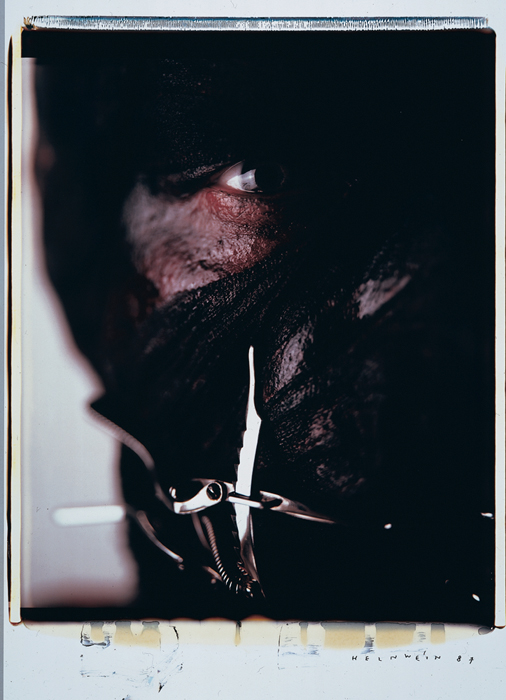
"Black Mirror, Self-Portrait"
"BLACK MIRROR"
Gottfried Helnwein
By Heiner Müller, poet
1986
"MALEN HEISST SICH WEHREN. IMMER EINE ANTWORT AUF
ETWAS." HELNWEIN"
By Hans Dichand - Kurt Eitelbach
Katalog, Mittelrhein-Museum, Koblenz
1986
"RETROSPECTIVE IN THE ALBERTINA, VIENNA"
Gottfried Helnwein
By Walter Koschatzky
Director of the Albertina Museum, Vienna
01. April 1985
"GOTTFRIED HELNWEIN, DER KÜNSTLER ALS AGRESSOR UND
VERMALEDEITER MORALIST"
by Peter Gorsen
Gottfried Helnwein, One-man show, Albertina Museum, Vienna
1985
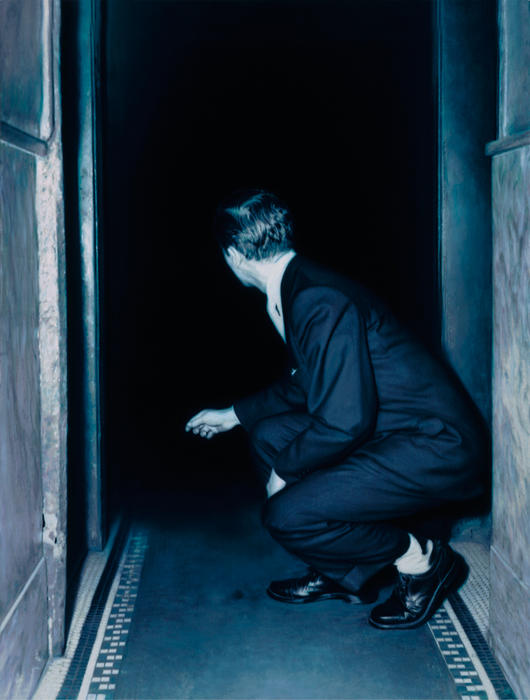
"Untitled"
"BOULEVARD OF BROKEN DREAMS"
Song for Helnwein
By Wolfgang Bauer, Poet
1984
"EIN AUFSCHREI GEGEN DIE SCHMERZEN DER WELT"
- Die Kunst von Gottfried Helnwein - Erfolg und Kritik -
By Erika Brenken
Deutsches Allgemeines Sonntagsblatt
13.Feb.1983
"WUNDERKINDER?"
1.Wiener Kindergalerie
Gottfried Helnwein, Ausstellung 17. Oktober bis 21. November 1982
01. October 1982
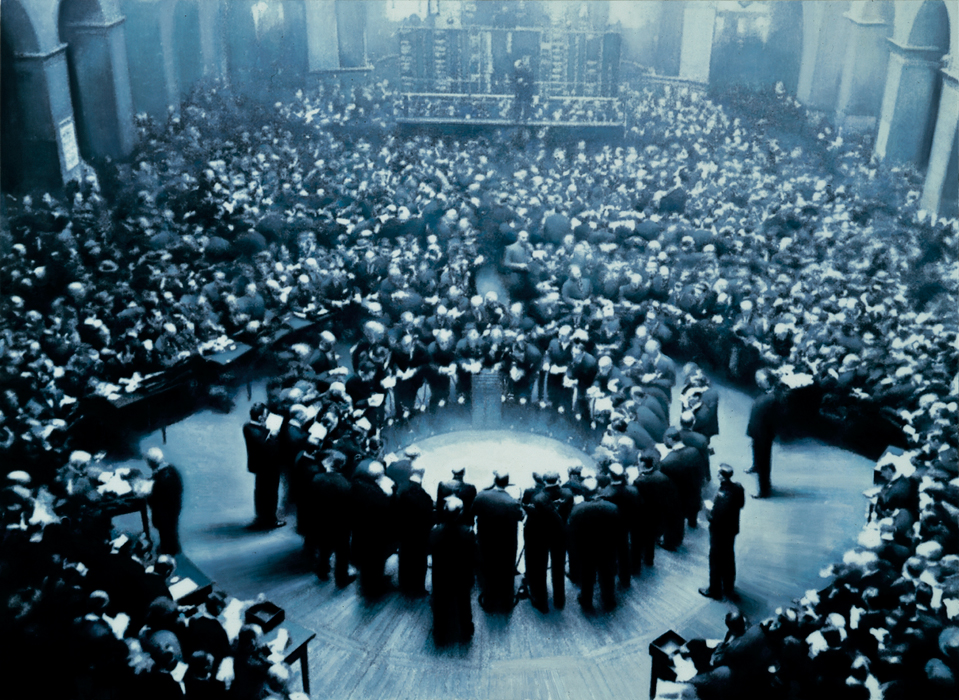
"In the Heat of the Night"
"ALS FREMDER UNTER FREMDEN LEBEN"
Gottfried Helnwein
By G. Brugner-Rosenbaum
Süd-Ost Tagespost
21. January 1982
"CRYING FOR THE MOON"
Gottfried Helnwein
By Barbara Frischmuth, Poet
Helnwein, Monographie
Orac Pietsch Verlag, Wien
1981
"H.C. ARTMANN"
- über gottfried Helnwein -
"Helnwein", Monographie, Orac Pietsch Verlag, Wien
1981
"VON DEN ALLTÄGLICHEN LEBENSKATASTROPHEN
UNSERER ZEIT" -Gottfried Helnwein
By v.h.
Tiroler Tageszeitung
Gottfried Helnwein, one- man show, Galerie Bloch, Innsbruck
17. June 1980
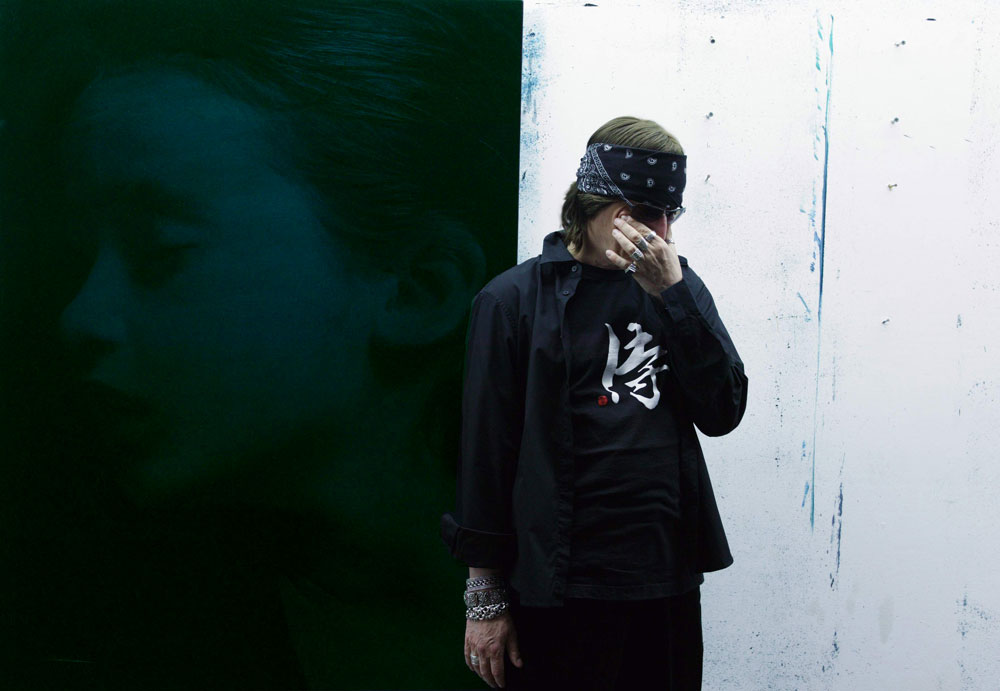
Helnwein in the studio
ESSAYS:
HELNWEIN - NINTH NOVEMBER NIGHT
Museum of Tolerance
Los Angeles
Johnathon Keats
The Art of Humanity
catalogue
09. November 2003
On Sunday, November 9, at 7:00 p.m. the Museum of Tolerance commemorates the 65th anniversary of the infamous 1938 Nazi “Night of Broken Glass” (Kristallnacht) pogrom which targeted 1,000 synagogues in Germany and Austria and marked the beginning of the end of European Jewry.
The commemoration is highlighted by the screening of a documentary by renowned Austrian artist, Gottfried Helnwein, 9th November Night, who has committed himself and his art to reminding the world of the Holocaust. The documentary is based upon his 1988 exhibit of seventeen children’s portraits that were displayed in commemoration of Kristallnacht in Cologne, Germany. Just days into the exhibit, these portraits were vandalized.. “The fury with which the neo-nazis reacted to these portraits is understandable inasmuch as it is the very same fury with which they have for years been fighting against The Diary of Anne Frank,” said famed Nazi hunter Simon Wiesenthal. “The murder of children rouses abhorrence and conflict in every human, whether they are motivated by ideology or insanity. The urge to destroy has survived; the portraits bear witness to its rage.”
For full text go to: http://www.helnwein.com/kuenstler/bibliografie/artikel_1451.html
"GOTTFRIED HELNWEIN AT MODERNISM"
By Jonathon Keats
Artweek, Volume 33, Issue 10
01. December, 2002
The first and last enduring lesson Gottfried Helnwein learned in art school
came about the day he refused to sketch yet another classic nude, and instead
took a razor to his fingers and drew a portrait of Adolph Hitler in his own
blood. The year was 1965, the city Vienna, and all Austria seemed tacitly to
have agreed that responsibility for Nazi atrocities would be forgiven if only
the whole horrid era were forgotten. So, rather than praising Helnwein's exceptional
draftsmanship, using so painfully original a technique, his instructor gathered
the entire faculty and accused him, in front of the student body, of attempting
to ruin the school's reputation.
"This was the moment when I sensed for the first time," Helnwein has
since written, "[that] you can change something with aesthetics, you can
get things moving in a very subtle way, you can get even the powerful and strong
to slide and totter, anything actually if you know the weak points and tap at
them ever so gently by aesthetic means." For the following three-and-a-half
decades he has relentlessly pursued that goal, masterfully incorporating everything
from painting to performance to photography, regularly causing art world outcry
and public fury. Yet as his knockout exhibition at Modernism last October made
clear, his art is successful less for its evident tendency to provoke than for
its extraordinary ability to perplex. . .
Ambiguity, of course, has always been the essence of art, setting it apart from
mere commentary. Many, from Robert Arneson to Barbara Kruger, have ultimately
failed for putting their work in the service of polemic. Had Helnwein taken
too fervently to the lesson he learned in art school - had he simply chosen
to be an effective agitator - he assuredly would have suffered the same fate.
In truth, that initial portrait of Hitler, while gutsy, isn't especially deep.
It served as a point of departure, but once he was on his way, the Austrian
painter, now working in Los Angeles, let his distance from it grow greater by
the hour.
In Downtown (17), we see a woman lying in a tub, apparently dead, while another
kneels beside her as if in prayer. Both are unclothed, yet their mutual nudity
exposes nothing about either. On the contrary, the cause of that unsettling
situation, and its effect, are cropped out, eliminated with all spatial context,
every last clue. The image has the look of a noir film still, without fitting
into a larger story. An act of violence has been committed, one to which we
are privy, yet we don't know how or why it happened. Worse, it's unclear whether
we're witness to criminal activity or just watching a scene from a movie.
For full text go to:
http://www.helnwein.com/texte/selected_authors/artikel_890.html
"HELNWEIN"
By Mic Moroney
Lead White Gallery, Dublin
September 2002
GROUP SHOW
Gottfried Helnwein is an international artist in his early 50s, whose work is
now housed in such prestigious collections as the Smithsonian Institut in Washington,
the Ludwig Museum in Cologne, the Fine Arts Museum of San Francisco, the State
Russian Museum in St. Petersburg and the Chinese Museum of Art in Beijing. Personal
clients include the major American collector Kent Logan and the actor Arnold
Schwarzenegger.
Originally from Austria but now resident in County Tipperary, Helnwein grew
up into a claustrophobic, bourgeouis, post-war Viennese society which, unlike
much of Germany, had not been truly deNazified. This unease with, and yet celebration
of German-language cutlure continues to inform Helnwein's work, not least in
this large piece, "The Silent Glow of the Avant Garde"
Helnwein's painting -- both cheekily and totally in homage -- appropriates the
great paintings, "The Polar Sea" (1824) by the leading German Romantic
landscape artist Casper David Friedrich. Helnwein here re-renders the painting
in a gloomy, cinematic blue-black duochrome, and hugely magnifies it from its
original scale (about 1 metre by 1 metre 30), although the foundered ship still
seems dwarfed and pulverised by the splintering ice sheets. It remains a fine
example of that particularly Germanic celebration of heroic humanity dashing
itself against the majestic cruelty of nature.
Helnwein, in his wry title and borrowing of the image, is suggesting an uncomfortable
paradigm behind Friedrich's painting -- a perpetual sense of momentous revolution
within nature, raw humanity and indeed artistic culture. These ideas pervaded
Friedrich's work, as well as that of composer Richard Wagner and philosopher
Friedrich Nietzsche -- all of whose works were later so mistakenly absorbed
into the "superhuman" aesthetic of Nazi ideaology and doctrine.
Gottfried's work has evolved from his early realist, often grotesque drawings
and bandaged "Aktionen" (performances) on the streets of Vienna to
a moody, very contemporary photorealism. He is happy to work through different
media, and has collaborated with a number of theatre and opera directors on
large-scale set-designs in Germany, as well as rock artists in Germany and the
US, where he is currently working with Marilyn Manson. But Helnwein's work is
not without its humour -- as when he appropriates the image of Mickey Mouse
and invests him with growling menace, or celebrates his lasting appreciation
of the saintly everyman persona of Donald Duck.
For full article go to:
http://www.gottfriedhelnwein.ie/special_ireland/ireland/article_696
"THE SUBVERSIVE POWER OF ART: GOTTFRIED HELNWEIN -
A CONCEPT ARTIST BEFORE THE TURN OF THE MILLENIUM"
By Klaus Honnef
Curator for Photography and New Media at Rheinisches Landesmuseum, Bonn
Ruprecht-Karls-Universität Heidelberg, Institut: Kunstgeschichte
10. September 2002
Es gibt gewichtige Gründe, um Helnwein als den legitimen Erben Beuys und
Warhols zu bezeichnen. Einerseits folgt er in seinen Werken rituellen Mustern,
andererseits spielt er mit einer Reihe von künstlerischen Variationen.
Er untergräbt die Magie der Bilderwelt, indem er einen Störfaktor
einbaut, durch den ein Schock im Verhältnis zwischen dem Kunstwerk und
dem Betrachter entsteht. Helnwein vermischt Altes mit Neuem, und sein Stil spiegelt
den Beginn der Moderne, aber auch die Welt des Cyberspace wieder. Einen großen
Einfluss hat das Wien der sechziger Jahre auf ihn. Auch wird er von der Welt
des Comics inspiriert. Helnwein besuchte die 'Höhere Graphische Bundeslehr-
und Versuchsanstalt'. Um gegen die tägliche Routine des Klassenzimmers
zu protestieren, schnitt er sich mit einer Rasierklinge die Hände auf.
Durch diesem Vorfall wurde ihm bewußt, wie hilflos die Gesellschaft auf
körperliche Ungerechtigkeit und auf Verletzungen reagiert. Nach dem Abschluss
an der 'Graphischen' besuchte er die Wiener Akademie der Künste. Zu dieser
Zeit tauchte auch zum ersten mal eines seiner Leitmotive auf: Kinder. Durch
das Malen von verletzten Kindern verursachte Helnwein eine Art Schock, und brachte
somit den 'Horror' zurück in die Kunst. Damit zeigte er offen den Zynismus
einer Gesellschaft, die nicht mehr die Dinge so sieht, wie sie sind, dessen
Sichtweise aber durch 'Bilder über Dinge' geprägt ist. Im Jahre 1973
illustrierte Helnwein einen Artikel in der österreichischen Zeitschrift
'Profil'. Die Resonanz übertraf alle Erwartungen. Durch seine Methode des
kalkulierten Umsturzes, hat Helnwein den Kunstmarkt gründlich irritiert
und dadurch einen Effekt als Künstler erzielt, der mit keinem anderen seiner
Zeitgenossen vergleichbar ist. Schließlich konnte auch die internationale
Kunstszene nicht länger den erfolgreichen Außenseiter aus Österreich
ignorieren. Wichtige Ausstellungen in renommierten Museen und Galerien auf der
ganzen Welt zeigen die Wertschätzung seiner Kunst. . .
For full text go to:
http://www.helnwein.de/texte/local_texts/artikel_1184.html
"HELNWEIN"
By Robert Flynn Johnson
Curator in Charge, Achenbach Foundation for Graphic Arts, Fine Arts Museums
of San Francisco
Robert Sandelson Gallery, London
Gottfried Helnwein. one-man show, catalogue
May 2001
The art of Gottfried Helnwein cannot be properly considered without surveying
the terrain of modern and contemporary art from which it developed. To understand
Helnwein is not just to see what movements and artists he embraced and was influenced
by, but also what he rejected. For Helnwein, creativity is not a vocation but
a mission. His art is the visual equivalent of a contact sport. It not only
has put Helnwein at odds with much of the history of post-war art, but also
has positioned him in the forefront of the highly regarded confrontationalist
movements of contemporary art so active in America and Europe today.
After World War Two, the tear glands of the world dried up from over-use. It
is this world for which Warhol is spokesman. Lucy R. Lippard, 1966
It is startling and disturbing to reflect that if one walks through the galleries
of major museums exhibiting art of the fifties, sixties, seventies, and even
into the eighties, there is a virtual dearth of art whose subject matter involves
an emotional response to the human condition or which comments on the major
social issues of the day. For those major painters and sculptors it is as if
the Holocaust, the Vietnam War, the civil rights, women's rights, and gay rights
movement did not exist. It is not that one would expect many to choose such
subjects but that virtually none did is noteworthy.
Of course, there were a number of artists who continued the crusade (which reached
its peak in the 1930s) to use art as a weapon of social activism. Artists like
Stanley Spencer, Ben Shahn, and Leon Golub created provocative work but they
were seen as peripheral to the avant-garde by critics, collectors, and museums
alike.
Europe, the scene of so much destruction and displacement during the century,
had a greater number of artists attuned to human values in their art than America.
In France, Picasso continued to utilise his canvas to mirror his psyche and
libido to the world. However, as passionate as he was, Picasso rarely allowed
his art to go beyond his own life as he did in the earlier monumental paintings
Guernica (1937) and The Charnel House (1945). The Swiss-born Alberto Giacommetti
created stark and unnerving images of man in his sculptures and paintings. Jean
Dubuffet drew as much inspiration from the art of the insane as real life in
his contorted comic personages. Germany and Austria in this period, however,
were marked by suppression, not expression in their art. Mannerists such as
Paul Wunderlich and Ernst Fuchs were in vogue but only the seemingly random
photorealism of Gerhard Richter and Franz Gertsch and the tormented expressionism
of Anselm Kiefer and Horst Janssen struck a truthful note.
For full article go to:
http://www.gottfried-helnwein-child.com/articles/RFjohnson.html
"MAGIC VISION"
Gottfried Helnwein
Arkansas Arts Center
By Townsend Wolfe
Donald W.Reynolds Center for Drawing Research and Education
16. November 2001
Artists in their pusuit to understand themselves and the world around them have
been forced to face the pain of suffering.
Helnwein, in his important "American Madonna" (Epiphany IV) painting,
depicts with provocation the conflict between men of power and the weak.
In this present day setting, the police are confronting a divine being. . .
http://www.helnwein.com/news/news_update/article_257-Magic-Vision
.jpg)
"American Madonna (Epiphany IV),
2000, mixed media (oil and acrylic on canvas), 177 x 213 cm / 69 x 83''
"THE MURMUR OF THE INNOCENTS"
By Mic Moroney
Helnwein catalogue for the Kilkenny Arts Festival 2001
01. August 2001
As I write, the Austrian artist, Gottfried Helnwein is wrestling excitedly with
his first exhibition in the country which he recently made his home. The work
spills out of Butler House, and up onto the festival streets of Kilkenny. These
images are huge - in one case as big as six by nine metres, hoisted onto the
facade of Kilkenny Castle.
Most of the city pictures emerge from a deceptively simple strand of Gottfried's
work, the frank photography of children's faces. He photographed over ninety
children in Kilkenny. Now these kids are immortalised, larger than life in their
extreme youth, and dotted around the gable-ends and walls of their native town;
there eyes closed in beautiful, breathless meditation. Mounted in a manner which
is normally the preserve of billboard advertising, these are quietly awesome
images of the city's youngest inhabitants.
Gottfried was so impressed with the photographs he took, that he intends to
eventually produce a book of 1,000 faces of Irish children. He wants to codify,
in their features and freckles, some oblique reflection of Irish history and
society and experience.
It's a Christo-like strategy. Next year, Gottfried also plans to show huge 10
metre high pictures of shut-eyed children in the Chinese National Museum in
Beijing's Forbidden City - where he will be the first Western artist ever to
exhibit there. Everything will have to be negotiated past the Party censors,
but who, one wonders, could have a problem with pictures of children; their
slumbering faces murmuring telepathically from somewhere far beyond us - even
on such a monumental scale? What could be simpler or more inoffensive then a
child's face?
However, such images evidently irritated somebody in Köln in 1988, when
Gottfried himself funded a public art installation - after he failed to raise
sponsorship - to commemorate the 50th anniversary of Kristallnacht, November
9th 1938. That was the night that Nazis ran riot across Germany, looting and
burning Jewish homes and businesses, and setting alight the touchpaper of the
Holocaust.
In the context of the muted, conceptualist Holocaust art-memorials in Germany
and Austrian, the City of Köln refused Gottfried permission to exhibit
on its property. But Gottfried got his hands on a little strip of land which
belonged to the railways, suitably enough.
Facing onto a pedestrian walk-way along a railway bridge, he mounted a long
line of four-metre high children's faces, powdered white, many with their eyes
closed, after the huge word "SELEKTION" - as though these kids were
to be weeded out for concentration camps. Despite CCTV video cameras, somebody
- probably a neo-Nazi - came along one night, and painstakingly sliced the throats
of every single child-portrait.
For full article go to:
http://www.helnwein.com/texts/english_texts/article_84
"LE « CORPS-HUMAIN » DANS L’ART PICTURAL
CONTEMPORAIN"
Gottfried Helnwein
By Stéphane VELUT
Centre d'Etudes Supérieures de la Renaissance
Deuxième Table Ronde sur la Médecine, 6 avril 2001
06. April 2001
La deuxième Table Ronde sur la médecine a réuni des historiens
de la médecine et de l’art, des médecins, des philologues,
des étudiants du CESR et de la Faculté de Médecine autour
de la notion du symptôme.
Dès l’antiquité, le médecin est amené à
observer les signes du corps (tà sêmeia) et à interpréter
ceux qui ont une valeur significative pour faire un pronostic correct de l’évolution
de l’état des malades (Hippocrate, Pronostic 25). La sémiologie
méthodiste garde l’idée que seul un concours de signes est
signifiant, mais transfère les signes du malade à la maladie.
L’interprétation (significatio) de l’ensemble des signes
devient utile au diagnostic (Caelius Aurelianus, Maladies aiguës I, 1).
Le terme grec sumptôma dans un contexte médical apparaît
chez Galien (De la meilleure des sectes, 21), indiquant « ce qui accompagne
la maladie », désignant des différences de grandeur ou de
caractère...
-
A l’opposé -il n’est pas possible d’affirmer que c’est
en réaction-, plusieurs artistes contemporains nous rappellent, par leurs
œuvres, ce qui nous fait et qui, montré frontalement, est beaucoup
moins édulcoré que le simple produit de paires de chromosomes
arrangées dans un ordre impeccable. Qui nous montrent en somme qu’il
n’y a, chez l’homme, jamais rien d’impeccable. Il s’agit
notamment de Francis BACON, Lucian FREUD, Gottfried HELNWEIN, Joël-Peter
WITKIN et du « cas » David NEBREDA. Pour autant que leur intention
ne soit pas forcément la subversion, ils ont au moins en commun de nous
jeter au regard ce que cache la peau, ce qu’est la chose qui nous fait
sous sa surface visible, cette autre chose que le pur produit d’une matrice.
. .
L’évolution du concept scientifique du corps, dont la médecine
a fait un «produit», s’oppose à l’évolution
de la représentation du corps dans l’art contemporain. Il suffit
de se souvenir que le mot de « diabète insipide » était
utilisé par les médecins du début du siècle pour
souligner que, chez les malades en souffrant, les urines n’avait aucun
goût, à l’inverse de celles des patients souffrant d’un
« diabète sucré ». Il suffit de se souvenir de cela,
ou des phtisiologues qui goûtaient les crachats, pour prendre conscience
à quel point l’homme qui analyse de nos jours le symptôme
a, grâce aux techniques, mis une distance considérable entre le
corps de l’autre et lui-même. On ne voit plus, on ne touche plus,
on ne sent plus, on ne goûte plus, on n’entend plus le corps de
l’autre. On le fait toucher par un faisceau ultra-sonique, on le fait
regarder par une machine à résonance magnétique, on le
fait goûter par des réactifs chimiques, on le fait sentir par les
cultures microbiennes. Le fait est là: le corps est devenu un produit
qui se fabrique (fécondation in vitro), se répare, se modèle
et éventuellement, usé, se jette après en avoir prélevé
les pièces encore saines. Comme tout produit, on ne s’étonne
pas que ceux qui en possède un réclament une notice d’utilisation,
un manuel d’entretien, un service après-vente, et même, en
option, des prestations supplémentaires. Ce « corps-produit »
a relégué le « symptôme » au rang de «
défaillance technique ». On en oublie la plainte que le symptôme
engendre. La défaillance est un problème à résoudre.
Résolu, la plainte disparaîtra. Que la défaillance ne puisse
être corrigée, reste la plainte qui, pour celui qui soigne, devient
une entité impalpable, sur laquelle il a peu de prise, car « trop
humaine ». Alors il doit inventer un concept qui ferait de la plainte
une défaillance technique. Il doit « techniciser » ce sur
quoi il n’a pas prise, il se rassure ainsi. Il invente le soins palliatif,
il rend rationnel ce qui est philosophique. Il rend technique ce qui est humain,
il établit des conduites Presque codifiées face à la «
fin de vie », il fait de l’humain une science, il parle de «
sciences humaines ».
For full article go to:
http://www.gottfried-helnwein.ch/texts/french_texts/article_1028
"ÖSTERREICHISCHE KÜNSTLER - JETZT"
Gottfried Helnwein
By Angela Stief
Albertina, Wien
Katalog zur Ausstellung
2001
GOTTFRIED HELNWEIN
Das mediale Spektrum, das Gottfried Helnwein in seinen Arbeiten umreißt,
könnte nicht vielfältiger sein. Egal ob Malerei, Graphik, Theater,
Werbung, Film, Fotografie, Skulptur oder Performance, nichts scheint ihm fremd.
Souverän benutzt er die Medien und ihre formalen und technischen Möglichkeiten.
Zudem beschränkt er sich zwar auf thematische Schwerpunkte, denen es aber
nie an Referenzpunkten zu Welt fehlt: Politik, Walt Disney oder Religion, alles
wird aktualisiert und kommentiert.
Die mixed media - Serie "Fire", der ein fotografischer Naturalismus
zugrunde liegt, ist in den Jahren 1994 bis 1996 entstanden und setzt das Interesse
von Gottfried Helnwein an Portraits, egal ob religiöse Idole, Rockstars,
Verbrecher, bildende Künstler, Politiker oder Schauspieler uneingeschränkt
fort. In dieser Serie scheint das Portrait realistisch und nüchtern, kaum
mehr als eine objektive Abbildung von Menschen, die es scheinbar wert sind,
abgebildet zu werden. Dahingegen antworten die "48 Portraits" von
1991, die ausschließlich Gesichtsaufnahmen weiblicher Persönlichkeiten
includieren, auf ein Werk eines anderen Künstlers, nämlich Gerhard
Richter. Scheint bei "Fire" der künstlerische Kommentar noch
sehr zurückgenommen, so spurt man in den "48 Portraits" bereits
gesellschaftliche Kritik. Kritik übt Helnwein auch an einer gesellschaftlich
etablierten Darstellungsweise, nämlich den Hochglanzbildern der "Hochglanzpersönlichkeiten".
Selbst wenn sich der Künstler zum Beispiel mit Andy Warhol, Charles Bukowski
oder William S. Burroughs bereits Berühmtheiten auswählt, die sowohl
für ihre Genialität, als auch für die dunkle Seite ihrer Persönlichkeit
bekannt sind, scheint die Art der Darstellung doch nicht nur psychologisierend
zu sein, da besonderes Augenmerk auf das Abgründige und Kaputte im Menschen
gelegt worden ist.
Nicht nur um die Spannbreite des künstlerischen Darstellungsmodus, der
sowohl reduktiv wie expressive ist, zu demonstrieren, sondern auch, um die Gattung
der Portraits zu ergänzen, sei kurz auf die "Selbstportraits"
verwiesen. Die Akribie der Fotografien und "silver" prints, die Präzision
der Zeichnungen und die Radikalität der Farbmalerei, die die eigene Gestalt
zum Schimmer ihrer Selbst werden läßt, indem Form und Kontur fast
bis zur Gänze aufgelößt ist, verdeutlichen Schmerz, Angst, Leid
und Ohnmacht. Auch das so oft anzutreffende Portrait von Gottfried Helnwein,
welches ihn durch das an sein Gesicht angepaßte, ärztliche Instrumentarium,
zur Grauen erregenden Maske mutieren läßt, ist Schrecken der eigenen
Erscheinung. Erblindung, Schrei und Fessel stoßen ab, indem die tiefsten
psychischen Abgründe anschaulich inszeniert und allegorisiert werden.
Ein krasser Kontrast fällt beim Vergleich von "Kindskopf", der
Installation in der Minoritenkirche in Krems/Stein von 1990/91, und "Apokalypse",
der Installation in der Dominikanerkirche in Krems von 1999, auf. In beiden
Installationen wird die ausschlaggebende Spannung durch das Spiel von Bild und
Kontext gebildet. Das eine Mal treffen wir auf bildliche Affirmation des religiösen
Orts, indem sich der meditative und introvertierte räumliche Charakter
im Portrait widerspiegelt. Das andere Mal erlebt der Betrachter den Schock der
Differenz: nicht mehr deformierte Kinder, sondern kindliche Deformationen wirken
monströs und blasphemisch in der räumlichen Heiligkeit.
Angela Steif
Ausstellungskatalog
25. January 2001 - 07. March 2001
Albertina, Wien
Ingried Brugger, Angela Stief
PAINTING - AUSTRIAN ARTISTS NOW
Albertina, Wien - 10. 10. 2000 - 18. 10. 2000
Galerie Suppan, Wien - 23.10. - 25.11. 2000
Museum of Fine Art, Budapest - 25.1. bis 7.3.2001
Kuratoren:
Ingried Brugger, Gabriela Fritz
Organisation und Koordination:
Gabriela Fritz und Martin Suppan
"THE SHOCK OF THE REAL"
Gottfried Helnwein
By John Hendry
REUTERS City , International / Art
20. May 2000
A year or so back, an exhibition called Sensations caused a few upsets, first
in London and then in New York. Central to the reaction was a large-scale portrait
of a child-killer assembled from, if I remember correctly, the palm prints of
children. So far, so bland. The shock element in art has been much talked about
in the last five years but art that actually shocks has been thin on the ground
during the same period.
Step forward then, Gottfried Helnwein.
By and large, if art is going to shock, it better have something shocking to
say,and it's clear that Helnwein has found that.
The images on display at the Robert Sandelson Gallery (5a Cork Street, London
W1) are eye-poppingly horrific. Several of Helnwein's big canvases depict officers
in Nazi uniforms. On one scene, confident, well-groomed men gaze serenely and
approvingly at what appears to be a naked infant Hitler, balanced on his mother's
knee. In another, facially scarred war veterans are grouped round the limp figure
of a child lying on a table with her legs dangling down lifelessly from the
knees.
There's more. Of the remaining images, the majority depicts the remains of pickled
foetuses from the eighteenth and nineteenth centuries, stored in Viennese museums.
At about ten times life size (or, more accurately, death size) and rendered
in a greenly yellow glow, these looks disturbingly alien. Their unstressed poses
and closed eyelids suggest sleep rather than death.
Helnwein's precise photo-realism presents all these images with a bland unemotional
detachment, and the evidence is much more compelling as a result. Skin, lips,
eyes and hair are painted with dispassionate care in acrylic over digital prints
of the original photographs. The wrinkled skin of a dead foetus seems somehow
no less healthy than the smooth complexion of a contemporary young woman in
a large portrait nearby. On the surface, all these images seem to be quite sanitary,
yet their subject matter says otherwise.
For full text go to:
http://www.helnwein.com/press/internet/article_79-THE-SHOCK-OF-THE-REAL
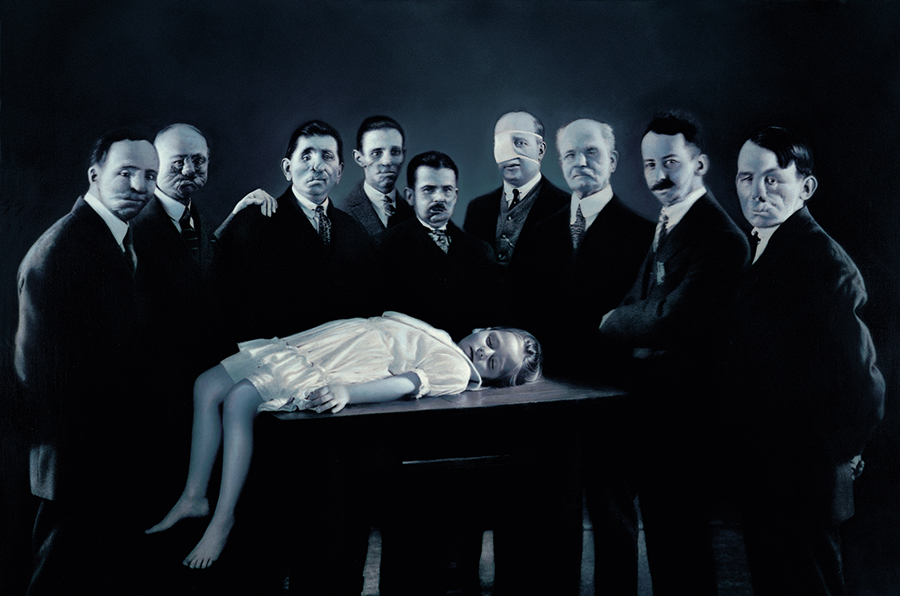
"Epiphany III (Presentation at the Temple)", 1998
210 cm x 310 cm
mixed media (oil and acrylic on canvas)
"FERVENT MACHINES"
Gottfried Helnwein
by Robert Lort
- Incorporeal Part II -
Azimute (http://home.pacific.net.au/~robertl/azimute.html)
2000
"There can be no art without pain, there can be no pain without art".
-- Alexandro Jodorowsky
Austrian born artist Gottfried Helnwein's work is also of exemplary value, beginning
with bandage action events (documented by the artist appearing in cafe's and
lying in the street with his "wounded" head and face bandaged).
His work depicts physical injuries which are metaphors for far deeper existential,
psychological and human tragedies. Medical injuries, facial deformities and
abused children proliferate throughout his work evoking primary internal anxieties.
The inhumane acts of violence (child abuse, war atrocities, state oppression)
and frightening images of familial estrangement that are presented in his work,
constitute events which are preferred forgotten, like the nazi era, or preferred
left unspoken such as familial traumas like child abuse.
Helnwein also conducts a probing analysis of the individual and the self through
an abundance of self portraits, each obscured by hideous facial bandages, his
facial muscles, lips and eyes are stretched apart, torturingly, by varied medical
instruments, now made famous by the Rammstein covers.
All his images in some way evoke associations with mutilation, anguish or internal
alienation.
The works (frequently paintings appearing remarkably like photographs), boldly
put forward social unacceptabilities never before portrayed so lucidly and so
confrontingly.
The many intensities produced in the work are profoundly disturbing, the impressions
- uncomfortably eerie, electrocuting the eyes with a rush of haunting spatiality.
. .
For full article go to:
http://www.gottfried-helnwein.ch/press/internet/article_1540
"HELNWEIN"
By Joanna Hayman-Bolt
ART newsroom.com, London
06. December 2000
It's rare to see such explicit confrontation with major social issues. References
in art to such horrors as the two world wars and the Holocaust are usually made
indirectly through symbolism or abstraction. Despite attention given to the
users of shock tactics, the majority of contemporary artists shy away from figurative
images which directly illustrate horrific social realities, preferring instead
to use personal concerns or the heavy use of irony. This is where Helnwein differs.
His photo realist paintings are strongly illustrative of the results (rather
than the acts) of Nazi oppression in the Second World War.
Where do Donald Duck and Mickey Mouse come into all this? Helnwein uses the
strategy, known to many film makers, of juxtaposition; take a serious "adult"
phenomenon such as death or sex and place it together with a picture of childlike
innocence and the mental disturbance to the viewer is increased ten fold. The
use of children and cartoon characters have several functions. They are not
just a filmic special effect, although the paintings are particularly uncomfortable
to look at for this reason; they have particular relevance to the artist both
in terms of his own experiences and his concerns with some of the muffled truths
of the Second World War.
Helnwein was born in Austria; a country that had willingly embraced Nazi Germany.
For decades after it's defeat the Austrian population had great difficulty in
coming to terms with the evil association. Helnwein felt that for this reason
he had been brought up in a dysfunctional society.
The artist wrote of this time: "My childhood was a horror. Born right after
the war, I lived in a world of deep depression and unlimited boredom . . . I
never saw anyone laughing and I never heard anybody sing. I always felt I have
(sic.) landed in limbo. A two-dimensional world without colours. My real life
began when I got my first Mickey Mouse comic book from the Americans - when
I opened a world full of three dimensions and wonders . . ."
The Mickey Mouse that stars in Cork street ("Mickey Mouse", 1995)
is far from colourful. Painted in tones of black and white, although his radar
ears and doorknob nose is as sweetly comical as ever, his smile is menacingly
sinister. The sheer size of the famous mouse becomes threatening and we begin
to see the character through the eyes of a terrified child in war time cinema.
Helnwein explained that he began to paint as a way of diffusing his frustration
with not having his questions about the war answered. An early picture of his
was a portrait of Adolph Hitler painted with his own blood from self-inflicted
razor cuts to the palms of his hands. Having painted Hitler portraits throughout
the 1970's he began to attract attentions. Ironically some of it came from Neo-Nazis
knocking on his door to see the freshly painted portraits of the "Fuhrer".
Another irony is the fact that Helnwein studied at the Academy of Fine Arts
in Vienna - as indeed did Hitler.
For full article go to:
http://www.helnwein-archive.com/5/one-man_show_at_robert_sandelson_gallery_london_2000.html
"THE AMERICAN PAINTINGS"
By Gottfried Helnwein
TANK Magazine , Volume 2, Issue 2, London
01. February 2000
These paintings are about America, I guess from a very European point of view.
They're based on photographs, mainly newspaper photographs, of the Fifties and
Sixties from archives in New York and L.A. Most people in these pictures are
real people, caught in some long forgotten, petty events.
I rearranged the scenes, introduced new characters, and created new relationships
and contexts. And then I painted them in black and blue.
That's how I remember America back then in the early Fifties in Vienna, where
I was born. The big war had ended a few years ago, but the city still seemed
undecided as to whether this was the end of the world or if life should go on.
It was a strange, sad and surreal world. The streets were empty, the houses
dark - many of them in ruins from the bombings.
The few people I saw seemed ugly, clumsy, and depressed.
I never saw anybody laughing and I never heard anybody sing. It was a world
without sound and colour. Everything moved in slow motion, like slime. We had
no phones, no television, no cars, no music, no pictures, except the paintings
of tortured people in the Roman Catholic church which made a deep impression
on me, haunting me in the sleepless nights of my childhood limbo.
And then, without any warning, suddenly there was America.
When I saw the first picture of Elvis I was in a state of shock, because I couldn't
believe that a human being could be so beautiful.
That was the beginning of the never-ending flood of American images that suddenly
came over us and started to penetrate and transform everything.
The world that we inherited from our parents was a depleted, exhausted, and
empty place. Most of the artists, writers, and intellectuals had left the country
or were dead. The museums had been looted by the Nazis and everything that they
called "degenerate art" was gone. All the books had been burned. And
now all the images, pictures and designs of the Third Reich that had suffused
everything for so many years had also been trashed overnight. It was a pretty
empty place now...
For full article go to:
http://www.helnwein.org/article/29
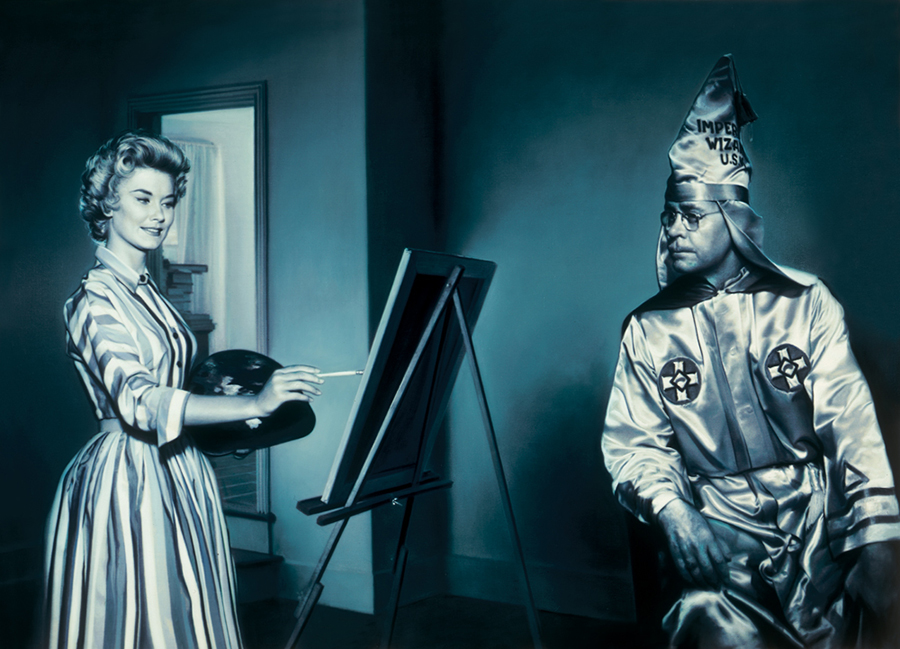
"Art in America", 2000, mixed media (oil and acrylic on canvas), 198 x 274 cm
"THE DARKER SIDE OF PLAYLAND: CHILDHOOD IMAGERY FROM
THE LOGAN COLLECTION' AT SFMOMA"
San Fracisco Museum of Modern Art
Gottfried Helnwein
By Alicia Miller
Artweek (Celebrating 30 years)
2000
In 'The Darker Side of Playland', the endearing cuteness of beloved toys and
cartoon characters turns menacing and monstrous.
Much of the work has the quality of childhood nightmares. In those dreams, long
before any adult understanding of the specific pains and evils that live holds,
the familiar and comforting objects and images of a child's world are rent with
something untoward.
For children, not understanding what really to be afraid of, these dreams portend
some pain and disturbance lurking into the landscape.
Perhaps nothing in the exhibition exemplifies this better than Gottfried Helnwein's
'Mickey'.
His portrait of Disney's favotite mouse occupies an entire wall of the gallery;
rendered from an oblique angle, his jaunty, ingenuous visage looks somehow sneaky
and suspicious. His broad smile, encasing a row of gleaming teeth, seems more
a snarl or leer.
This is Mickey as Mr. Hyde, his hidden other self now disturbingly revealed.
Helnwein's Mickey is painted in shades of gray, as if pictured on an old black-and-white
TV set. We are meant to be transported to the flickering edges of our own childhood
memories in a time imaginably more blameless, crime-less and guiltless.
But Mickey's terrifying demeanor hints of things to come. . .
http://www.helnwein.com/texte/international_texts/artikel_273.html
"GHOST IN THE SHELL - Photography and the Human Soul,
1850-2000"
Los Angeles County Museum of Art
Gottfried Helnwein
by Robert A. Sobieszek, Curator of Photography, Los Angeles County Musrum of
Art
Gottfried Helnwein
Historian Peter Selz has compared Gottfried Helnwein's tortured, screaming,
and bandaged self-portraits to Messerschmidt's sculptural self-portraits, but
the artist has said, " The reason why I took up the subject of self-portraits
and why I have put myself on stage was to function as a kind of representative.
There is nothing autobiographical, no therapy, and it says nothing about me
personally.
.... I am always available as a model."
For full article go to:
http://www.helnwein.com/texte/selected_authors/artikel_232.html
"GEGEN DIE HARMLOSIGKEIT IN DER KUNST"
Gottfried Helnwein
By Peter Zawrel
Director of the Museum of Lower Austria
Museum of Lower Austria
Catalogue, Gottfried Helnwein, one-man show and installation in the Dominican
Church, Krems, 13.6. - 31.8. 1999
01. June 1999
1965, in jenem Jahr, als der siebzehnjährige Gottfried Helnwein seine Ausbildung
an der damals so genannten Höheren Graphischen Lehr- und Versuchsanstalt
in Wien began, ließ jene österreichische Partei, die heute von Jörg
Haider geführt wird, zum 1. Mai Plakate affischieren, die forderten: "Schluß
mit der Vergangenheit! In die Zukunft blicken!" Nur wenige Tage vorher
war der Antifaschist Ernst Kirchweger an den schweren Verletzungen gestorben,
die ihm gewalttätige Rechtsextremisten bei einer Demonstration gegen den
nationalsozialistischen Hochschullehrer Taras Borodajkewycz zugefügt hatten.
An der "Graphischen" entwickelt Helnwein aus den zufälligen kleinen
Verletzungen bei der Arbeit mit Sticheln und Messern spontan die ersten gezielten
Selbstverletzungen und malt ein Porträt von Adolf Hitler.
Daraufhin wird er mit der Begründung, wer an die Nazizeit erinnere, ruiniere
den Ruf der Anstalt, hinausgeworfen. Bereits aus dem Staat hinaus- oder ins
Gefängnis geworfen waren zu dieser Zeit die Künstler des Wiener Aktionismus
infolge ihrer legendären Aktion "Kunst und Revolution" an der
Wiener Universität im Jahr der internationalen Studentenrevolten 1968,
die in Österreich in einem politischen Sinn nicht stattfanden. Der "Wiener
Spaziergang" von Günter Brus (1965) markiert mit der Einbeziehung
des öffentlichen Raumes und mit der Adressierung an beliebige Passanten
eigentlich den Höhepunkt und das Ende des ursprünglichen Wiener Aktionismus,
der stets von einer im nichtöffentlichen Raum vollzogenen, auf ein bestimmtes
Objekt oder Subjekt gerichteten Handlung ausging. In der folgenden, aggressiven
Phase versuchten die Künstler den Weg von der Kunst zur Wirklichkeit zu
finden. Parallel dazu schuf Rudolf Schwarzkogler zwischen 1965 und 1969 eine
inszenierte Wirklichkeit für das Medium der Fotografie, die Helnwein erst
Mitte der siebziger Jahre kennenlernte. Zu sehr war er während seiner Studentenzeit
damit beschäftigt gewessen, sich seine eigene, außenseiterische Welt
von Anfang an für eine breite und daher undifferenzierte Öffentlichkeit
bestimmt, ermittelt durch die Medien.
Was an den Aktionisten unübersehbar gewesen sein muß, war die Hetzkampagne
der Medien gegen sie. Günter Brus, Otto Muehl, Peter Weibel, Oswald Wiener
und Hermann Nitsch hatten gegen bürgerliche Moralvorstellungen, Verhaltensnormen
und äesthetische Position zu beziehen. Helnwein ging den umgekehrten Weg.
Er eroberte sich die Welt der Medien - 1973 wurde das junge Nachrichtenmagazin
Profil erstmals von ihm gecovert, seine späteren Arbeiten für die
Kronen Zeitung haben österreichische Zeitungsgeschichte mitgeschrieben
-, indem er dem ästhetischen Establishment gab, was es sich von der Kunst
erwartet, nämlich den perfekt geführten Nachweis der Beherrschung
aller verfügbaren Mittel, um die Wirklichkeit in ihrer Wiedergabe noch
zu übertreffen. Später erbrachte er diesen Nachweis, daß Kunst
von können kommt, dieses aber nicht genügt, um ein Künstler zu
sein, auch vor laufender Kamera im Atelier...
For full article go to:
http://www.helnwein.de/texte/local_texts/artikel_767.html
"EIN KÜNSTLER VON WELTFORMAT - Die Hymne des
Freundes"
Manfred Deix about Gottfried Helnwein
News Magazin,Wien
1999
Gottfried Helnwein ist ein Künstler von Weltformat. Wir kennen einander
seit der Aufnahmeprüfung an die "Graphische" im Jahr 1965. Der
erste Eindruck: ein besonders blasses Bürschchen mit viel zu großer
Brille. Nach kürzester Zeit aber bemerkten wir, daß wir ähnlich
gelagert sind und dieselben Dinge verachten oder schätzen. Es war Harmonie
im ersten Augenblick, Blutsbrüderschaft mit dem gemeinsamen Aderschlag,
andere Menschen zu erschrecken. _Ich schätze seine unendliche zeichnerische
Qualität, seinen enormen künstlerischen Witz. Vom malerischen Können
muß man gar nicht reden. Da ist er Weltklasse. Außerdem ist Helnwein
ein überaus intelligenter und unruhiger Geist. Seine Übermalungsexperimente
sind hochklassig: Luxusbilder, Weltkunst. Leider hat man Helnwein in Österreich
übel behandelt.
Helnwein hat mich stark beeinflußt. Seine Federzeichnungen habe ich früher
quasi unwillentlich nachgemacht. Er brachte mir Kühnheit und Wagemut bei.
Ohne ihn gäbe es mich nicht. Er aber wäre nicht so, wie er jetzt ist,
gäbe es mich nicht. Ein Leben ohne Helnwein kann ich mir nicht vorstellen.
Hoffentlich überlebt er mich.
http://www.helnwein-archiv.de/48.html
"INSPIRED BY HELNWEIN"
By Wolfgang Bauer, Poet
Museum of Lower Austria
Apokalypse, Helnwein, installation, one-man show
1999
The effect of Helnwein's paintings upon me is like a child's answer to the question
of what a dream is: "You can't escape it... you can't change anything."
The last words of Colonel Kurtz (Marlon Brando) in Francis Ford Coppola's Apocalypse
Now are: "The horror. The horror...." The beheaded men, the crazy
ones, the poetically-desperate slaughterer, they are all real! How senseless
to try to understnad them logically. Destruction and disaster seem to be static
indigestion. There is no antidote against them because every thing arises and
exists simultaneously. How many wars have got out of hand due to well-meaning
help? How many saviours have perished in an attempt to save - even in everyday
life? Dali's personal physician, for example, died while attending to Dali.
his head suddenly fell forward onto the cheek of the utterly disturbed disturbing
patient. Dali's somnambulistically safe path through fear-inducing, seemingly
inaccessible worlds suddenly ended there, too.
Even if everything seems to flow the boundaries flow with it.
Helnwein likes to linger at boundaries. Whatever wants to pass through is closely
examined by him. Like Goya he is one of the magic customs officials of art.
(Rousseau, on the other hand, always stayed on the other side of the border
even though he really was a customs official by profession!)
Whoever wants to enter the plane of art has to be able to understand and communicate
reality. Helnwein is not only an artist but also a perfect transformer. The
so called imagination should not come into play at the beginning of a world,
but its nuclear power should be releases only at the moment of transformation,
of metamorphosis.
"Realism is an entirely value-freee concept, although it often has a bad
name among artist. Surely this is only due to fear. Dilettante dabblers in expressiveness
use the word in vain as a protective shield against the murderous laser beam
of art.
There is no such thing as a non-realist art, there is only good or bad art.
Even an artist like Hans Staudacher is realistic in the best sense of the word.
His game is simply real and he even comes close to a photographer in terms of
the speed with which he works (often just a few seconds). . .
For full article go to:
http://www.helnwein.com/texte/selected_authors/artikel_80.html
"THE LUDWIG MUSEUM IN THE RUSSIAN MUSEUM"
Gottfried Helnwein
By Evgenija Petrova
Chief curator, State Russian Museum St Petersburg
The State Russian Museum St. Petersburg
Palace Edition
1998
The early stages of this monumental head can be seen in Helnwein's widely varied
portrayals from the seventies of suffering children, but above all in the Cologne
installation of anonymous children's portraits "9th November Night"
from 1988.
The human face, in particular the child's face, is of great fascination for
Helnwein and consequently accounts for one of his central pictorial subjects.
The monumental face of a little girl which is introduced here is, as it were,
representative of all children. In our adult society oriented towards profit
and success, children can almost be described as a fringe group, their interests
indeed being observed in a comparatively modest fashion. Against this background,
this monumentalizing of the face in connection with the hyperrealistic style
of painting is to be understood as an oppressive irritation of our customary
experience of perception.
Originally the child's head was shown in a Minorite church in Krems, Stein;
in fact it was placed at the focal point of a huge early Gothic room which lent
the picture a positively sacral tone.
The Ludwig Donation
The present-day art process is definitely dependent on context. The real, non-mythologized
value of concrete phenomena of Russian art cannot be determined without understanding
the entire situation of world art. "German Neoexpressionism from the Sanders
Collection", "Verging on the Limit" (American video art) "Gottfried
Helnwein", "Installation by Brian Eno" are only a few examples
of the exhibitions which have already been organized within the framework of
the project.
Perhaps the best proof of the high cultural value of the project "Ludwig
Museum in the Russian Museum" is provided by the exhibition room in the
Marble Palace - a room laden with great artistic suspense - a vivid transposition
of the idea of the general context in which the present-day art process develops.
Aleksandr Borovskij
For full article go to:
http://www.helnwein.com/texte/selected_authors/artikel_892.html
"DAS VERSPRECHEN DER PHOTOGRAPHIE - Gottfried Helnwein"
By Klaus Honnef
Kurator für Fotografie, Rheinisches Landesmuseum, Bonn
Prestel, München, New York
1998
Mit dem frappierenden Ergebnis, dass seine Aquarelle die leuchtende Tranparenz
von Diapositiven besitzen, obwohl die Duftigkeit der Farben nicht beeinträchtigt
wird, und seine naturalistisch-realistischen Gemälde die Brillianz von
Lichtbildprojektionen, die im handwerklichen Medium nur durch akribische Übertragung
fotografischer Techniken erreichbar ist, und dass seine Fotografien wiederum
die intensive Gegenwärtigkeit von Gemälden erlangen.
Beständig bewegen sich seine Bilder zwischen den Polen der Überschärfe
und der Auflösung. Jedes gemalte oder fotografierte Motiv ist Gegenstand
eines Prozesses der Transformation, sei es anschaulich evident in Form von mehrteiligen
Bildern oder Bilderreihen, sei es aber auch innerhalb eines einzigen Bildes.
In dem Falle tritt anstelle eines linearen Verlaufes, anstelle eines kotinuierlichen
Wechsels oder eines Kontrastes, eine Art Verdichtung, als würde sich die
Bewegung in die Bildtiefe verlagern, und unmerklich nimmt in der Wahrnehmung
die Intensität des Bildeindrucks zu.
Angesichts der Porträts spricht der amerikanische Schriftsteller William
S. Burroughs denn auch von ihrer Fähigkeit, "dem Betrachter zu zeigen,
was er weiss, von dem er aber nicht weiss, dass er es weiss ." Die meisten
derjenigen, die Helnwein neben Burroughs porträtiert hat, gehören
zu den tausendfach abgelichteten Protagonisten der Medienwelt. Ihr individuelles
Abbild hat sich längst in ein Image verwandelt - Keith Richards, Mick jagger,
Andy Warhol, Willy Brandt, Norman Mailer und Michael Jackson. Doch in Helnweins
Bildnissen, die er als "Faces" apostrophiert, erscheinen sie, als
wären sie zum ersten mal fotografiert worden. Für einen Moment blitzt
auf, was Walter Benjamin "Aura" nannte. Die empfindung der Simultanität
von Nah und fern. Alles was ein fotografisches Bild festhält, rückt
unweigerlich in die Distanz, eine räumliche wie eine zeitliche, doch durch
technisch perfekte Abzüge und vergrösserungen der fotografischen Negative
sowie besonderer Präsentation hinter Glas in bleifarbenen mächtigen
Rahmen "organisiert" der Künstler förmlich ein Cross-over
der Medien, dessen anschauliche Folge der auratische Charakter der meisten seiner
Bilder ist. Sie machen etwas von dem Phänomen der Gleichzeitigkeit des
Ungleichzeitigen sichtbar. . .
For full article go to:
http://www.helnwein-archiv.de/225.html
"HELNWEIN HAASTAA VUOROPUHELUUN"
By Virpi Wuori
Unikankare kuvataide
Finland
October 1998
Unikankare haastatteli itävaltalaista taidemaalari ja valokuvaaja Gottfried
Helnweinia Wäinö Aaltosen museossa ennen hänen retrospektiivisen
näyttelynsä avajaisia. Teema, johon Helnwein palaa aina uudelleen,
on ihmisen julmuus ja toisaalta haavoittuvuus, fyysinen ja psyykkinen kipu,
jonka yhtenä symbolina hän käyttää teoksissaan kylmiä
metalli-instrumentteja pehmeän ja haavoittuvan ihon rinnalla. "Työni
lähtökohtana on dialogi katsojan kanssa. Jos olisin yksin autiolla
saarella, maalaamisessa ei olisi mitään mieltä. Haluan vaikuttaa
kuvillani ihmisiin. Siksi aikakauslehdet ja etenkin suuret ulkojulisteet ovat
olleet minusta tärkeä kanava saada kuvani niin monien ihmisten ulottuville
kuin mahdollista." Niinpä Helnwein on johdonmukaisesti kiinnostunut
esittelemään taidettaan myös tietoverkossa. . .
Gottfried, 4 v.
Helnweinin keskeisen tematiikan takana ovat sodan julmuudet ja sodanjälkeisen
ilmapiirin ahdistuneisuus. "Ihmiset olivat vakavia, koskaan ei naurettu.
En voinut ymmärtää, mistä oli kysymys, koska asioista ei
puhuttu. Minulla oli tunne että jotakin kauheaa on tapahtunut, mutta en
tiennyt mitä. Sen lisäksi minuun vaikutti valtavasti katolisen kirkon
kuvasto ristiinnaulittuineen ja kidutettuine pyhimyksineen. Olen käsitellyt
uskonnollisia aiheita madonnamaalausteni lisäksi muun muassa kolmiosaisissa
teoksissani Valtuutettujen laulu (1986) ja Salainen eliitti (1993), jotka ovat
saaneet muotonsa ovellisesta alttarikaapista."
Helnweinin piirustus- ja maalaustekniikka on uskomattoman taidokasta. "Aloin
piirtää jo lapsena. Piirsin yksityiskohtaisia kuvauksia sotilaista,
pommituksista ja taistelutilanteista. Kun olin saanut ensimmäisen Aku Ankka
-lehteni, ilahduin tavattomasti.Välillä piirtelin Disneyn hahmoja,
mutta se oli kiellettyä koulussa. Opettajien mielestä se oli lahjojeni
väärinkäyttöä. Lehdestä tuli valopilkku ankeaan
lapsen elämääni. Ja Carl Barks kuuluu edelleen idoleihini."
Kiinnostavat kuuluisuudet
Ankkojen piirtäjä Carl Barks on nyt 98-vuotias. Hellnwein valokuvasi
hänet sarjaansa kiinnostavista henkilöistä. Kuvassa Barksin kasvot
näyttävät siltä kuin hän aikoisi muuttua Akuksi, suusta
on jo muotoutomassa ankan nokka. Helnwein ihmettelee muutenkin sitä kuinka
valokuvissa näkyy jotakin aivan muuta kuin todellisuudessa. "Bukowski
ja Warhol näyttivät ihan säädyllisiltä kuvaustilanteessa,
mutta kun katsot valokuvia, niissä näkyvät Bukowskin rankan elämän
jäljet ja Warholin sairaus."
For full article go to:
http://www.helnwein.net/
"47. BERLINER FESTWOCHEN, HAMLETMASCHINE VON HEINER
MÜLLER IN DER BERLINER ARENA"
Gottfried Helnwein
By Heinz Benfitzsch
Deutschlandradio (Kulturzeit - 9.05 Uhr)
30.Sep.1997
Vor Jahren war Robert Wilson mit seiner Interpretation der HAMLETMASCHINE zu
den Berliner Festwochen eingeladen.
Wilson bezwang den Text durch überstilisierten Ästhetizismus. Die
Kritik feierte seinen Formalismus und sein Lichtdesign. Das Westberliner Schaubühnenpublikum
(die Mauer stand damals noch) war begeistert von Wilsons gestylten Standbildern
und seinem designten Licht. Den Urschrei in der HAMLETMASCHINE verspürte
keiner. Diese HAMLETMASCHINE beunruhigte keinen. Fastfood für Intellektuelle,
ohne Kanten und Tiefe, ohne die Wut des Autors.
Ein schöngeistiger Event, ohne den zerrissenen Background der Entstehungsgeschichte,
ohne den "Ruf nach mehr Freiheit" aus dem "der Schrei nach dem
Sturz der Regierung wird". Das beruhigende dieser HAMLETMASCHINE war, daß
sie nichts wollte, außer anders sein.
Nun wieder HAMLETMASCHINE; die Mauer gibt es nicht mehr, die Berliner Festwochen
immer noch, Robert Wilson ist Weltstar geworden und noch harmloser als er schon
immer war.
Schon im Vorfeld löste diese Münchner Produktion Unruhe und Bewegung
aus.
Grund war ein Bild, "Epiphanie", des Wiener "Blut und Schockmalers"
Gottfried Helnwein, Teil seines Bühnenbildes für die Münchner
HAMLETMASCHINE.
Die Witwe eines auf dem Helnwein-Gemälde abgebildeten SS-Offiziers versuchte
in München gegen das Bild eine einstweilige Verfügung zu erwirken,
der nicht stattgegeben wurde. Aufgrund von verschiedenen Bürgerinitiativen
in Berlin verboten die "Berliner Festwochen" eines der beiden Plakate
von Gottfried Helnwein um ihr "Highlight" HAMLETMASCHINE "nicht
zu gefährden".
Auf dem Plakat ist das Opfer einer Gewalttat zu sehen, ein 10-jähriges
Mädchen.
Noch bevor die Inszenierung in Berlin zu sehen war beschäftigten sich Medien,
Bürger, Politiker und Rechtsanwälte damit. . .
. . .Eines ist sicher, mit Theater hat das alles nichts mehr zu tun. Ein unzulässiger
Angriff auf die menschlichen Sinne. Eine Verweigerung, eine Verletzung, eine
Abrechnung. Hof und Helnwein kotzen ihren Haß erbarmungslos auf die Bühne.
Hof und Helnwein installieren lebende Monomentalbilder aus Musik, Malerei und
Licht. Ich bin mir nicht sicher ob das alles mit der HAMLETMASCHINE zu tun hat.
Es gab schon viele Interpretationen der HAMLETMASCHINE, vor dieser sollte man
warnen.
Ich war zur letzten der drei Vorstellung in Berlin, der Zuschauerraum war gefüllt,
voller junger Menschen, die ich noch nie im Theater gesehen habe, auf keinem
Fall bei einer HAMLETMASCHINE. Einige sind gegangen. Als die Musiker und Darsteller
sich verbeugten gab es Pfiffe und frenetischen Beifall und verstörtes Schweigen
von einem Publikum, daß offensichtlich die musikalischen Bilder von Hof
und Helnwein akzeptiert, die Lautstärke der TAMBOURS DU BRONX und CASPAR
BRÖTZMANN als Droge versteht oder von dem Hamletmassaker überrollt
wurde. Ich hätte gern diese Vorstellung verlassen, doch bin ich geblieben.
For full article go to:
http://www.gottfried-helnwein.at/news/news_update/article_193-47_-Berliner-Festwochen-HAMLETMASCHINE-von-Heiner-Mueller-in-der-Berliner-Arena
"ICH BIN NICHT HAMLET"
Gottfried Helnwein
By Axel Sanjosé
Applaus, Kultur-Magazin
"Hamletmaschine" in der Muffathalle. Bühnenbild: Helnwein
01. September 1997
Helnwein gestaltet das Bühnenbild zu Heiner Müllers "Hamletmaschine"
in der Regie von Gert Hof.
Wer kennt sie nicht, die mit verzertem Ausdruck, bis zur Unkenntlichkeit mit
Verbandsmaterial zugeklebten Köpfe, in die sich gabelänliche Metallklammern
bohren. Gottfried Helnweins Bilder provozieren, erregen Abscheu, ja Empörung
bei vielen, die mit der dargestellten Brutalität nichts anzufangen wissen,
die nur Ekel empfinden vor diesen scheinbar sinnlosen Zeugnissen von Gewalt.
Aber eben darum geht's: um Gewalt. Und es gehört kein kunsttheoretisches
Wissen dazu, um zu erkennen, daß Helnweins Arbeiten alles andere als willkürliche
Schocker sind, die auf sadistischen Voyerismus setzen. Ganz im Gegenteil: diese
Bilder sind Manifeste für die Opfer von Mißbrauch, von staatlicher
Unterdrückung, von Intoleranz und dumpfer Aggression. Die Schonungslosigkeit,
mit der Helnwein den Täter-Opfer-Mechanismus thematisiert - sei es im Blick
auf die Gequälten, sei es im Einfangen einer Atmosphäre der erbarmungslosen
Kälte -, ruft Befremden und Abwehrreaktionen hervor, die sich des öfteren
als Skandale niedergeschlagen haben.
Dagegen leuchtet die Affinität zwischen Helnwein und Heiner Müllers
"Hamletmaschine" unmittelbar ein, nicht nur weil am Ende, wie es die
Regieanweisung verlangt, Ophelia in Mullbinden geschnürt wird. Die gewalttätige
Sprache des Ende 1995 verstorbenen Dramatikers und Regisseurs bohrt sich, statt
wie bei Helnwein mit chirurgischen Instrumenten, mit Worten in das Fleisch.
Auch hier geht es um Opfer, allerdings um Opfer, die sich wheren und in der
Wahl ihrer Mittel die Brutalität ihrer Umwelt widerspiegeln. Hamlet will
seine Mutter vergewaltigen, töten und "die Leiche in den Abtritt stopfen".
Täter und Opfer sind kaum noch unterscheidbar, alle haben "Gedanken,
die voll Blut sind."
So ist Heiner Müllers "Hamletmaschine" nicht ausschließlich
als Anklage gegen ein Gewaltregime zu verstehen (wenngleich diese im Text unmißverständlich
enthalten ist), sondern als literarische Expedition in die Abgründe des
Unterbewußten: "Meine Gedanken sind Wunden in meinem Gehirn",
heißt es dort: Der Mensch kann nur eine ethische Haltung einnehmen, wenn
er sich den "bestialischen" Kräften in seinem Innern stellt.
Unterdrückt er sie nur, verleugnet er sie, so kann die "Bestie"
jeden Augenblick hervortreten. Und das tut sie in unserer Gesellschaft - ein
Blick auf die Schlagzeilen der Boulevardblätter genügt - auf Schritt
und Tritt.
For full text go to:
http://www.helnwein.de/texte/local_texts/artikel_938.html
"THE HELNWEIN PASSION"
By Alexander Borovsky
Curator for Contemporary Art at the State Russian Museum, St. Petersburg
Helnwein Monograph, the State Russian Museum, St. Petersburg
1997
I'll never forget the sensation I had at the unveiling of Gottfried Helnwein's
"Kindskopf" in the Russian Museum. And not just because this enormous
canvas (six metres in height, four in breadth), well-known from reproductions,
seemed to operate in a whole new way in the real, quasi-monumental space of
the museum's "Concrete Hall", originally intended for the demonstration
of gigantic sculptural compositions. I realised that I was looking at the inner
content of this innovative picture from a whole new point of view.
For it turned out that the young girl's somnambulistic self-immersion, taken
to represent estrangement and reticence in reproductions, had an almost physical
quality of impact. One that turned the sensory strength of perception up to
full pitch. Introvert became extrovert - or rather, co-existing with the extrovert
in a certain twilight zone, into which the viewer's perception is sucked.
This new level of impact was also apparent on the pictorial-plastic level. What
had seemed coldly technological, the aesthetics of hyperrealism, a mechanical
aerographically-applied surface, proved to be living and breathing; a completely
handcrafted pictorial texture.
In short, a work seen in the flesh at the right time and in the right place
("Kindskopf" was both created and first exhibited in an equally monumental
church-like space - in the medieval Minoritenkirche Krems), providing an instructive
example of Helnwein's deliberate strategy of interaction with the viewer.
Yet there was more to it than that. After all, modern art quite often offers
an insight into the positive and negative manipulation of viewer perception.
In the case of the Russian Museum's exhibition of "Kindskopf", however,
it was circumstances that divulged (and I am sure not just for me) the direction
of Helnwein's strategy.
Parallel to Helnwein's one-picture exhibition, the exposition "We Worship
Thy Immaculate Image", displaying iconographic images of the Mother of
God, had just opened in the Russian Museum. Moreover, in direct physical proximity.
Two apparently diametrically opposite phenomena - Old Russian religious art
and Helnwein, enfant terrible of modern Western culture!
Nevertheless, the paradox of this completely impromptu clash of polar art forms
revealed certain aspects lying at the heart of the "Helnwein strategy".
The neighbouring halls were hung with icons, images which effect a special kind
of interaction with the auditorium, one step beyond the purely aesthetical.
People traditionally turned to the icon in search of intercession and defence,
comfort and miracles. This interaction presupposed a response movement from
the icon, a movement both spiritual and humanitarian, a "softening of evil
hearts" (which was, incidentally, the name of one of the icons of the Mother
of God).
For full article go to:
http://www.helnwein.com/texte/selected_authors/artikel_87.html
"HELNWEIN: THE ARTIST AS PROVOCATEUR"
By Peter Selz
Professor Emeritus, Department of Art History, University of California, Berkeley.
Former Curator at the Museum of Modern Art in New York and founding director
of the Berkeley Art Museum.
Helnwein Monograph, the State Russian Museum, St. Petersburg
1997
Much like Joseph Beuys, who opened new, unexpected, and far-reaching spheres
for art, Gottfried Helnwein has made works that extend beyond the art scene
into the social and political realm. Like his predecessor, he has moved beyond
the realm of pure aesthetics, engaging his art into the everyday world. Furthermore
his principal interest is not to express personal feelings and emotions, but
to make statements that go beyond the individual. He wants to see his work not
trapped on the walls of museums and galleries, but revealed in the public domain.
He expects his work to intervene in the social sphere and to have a direct impact
on the life of his time.
In 1979 Gottfried Helnwein painted a watercolor of a pretty little girl asleep
on the table, her head on her plate and a spoon next to her hand. Its title
is "Life not Worth Living," and its text, an integral part of the
work, reads:
"Dear Dr. Gross! When I was watching 'Holocaust' (the TV program), I thought
again about your attitude as reported in the Kurier. And since this is the Year
of the Child, I want to take this opportunity to thank you on behalf of the
children who were taken to heaven under your care. I want to thank you that
they were not 'injected to death' as you have called it, but simply died by
having poison mixed into their meals. With German Greetings, Yours, Gottfried
Helnwein."
The watercolor was prompted by an interview in which Dr. Heinrich Gross was
asked by a reporter about the Nazi's euthanasia program in which he and other
physicians had killed children considered "not worth living." He tried
to vindicate his murders by claiming that he simply poisoned their food, so
that they could die quietly and without pain.
When, in 1979, this same man became Austrian head of state psychiatry, no one
so much as wrote a letter of protest. Helnwein, incensed over this profound
political apathy, painted the watercolor, appended the sarcastic letter, and
published it in a Viennese journal. His painting-cum-letter aroused discussion
and was probably the cause for Gross' subsequent resignation in disgrace. By
this time Helnwein was well aware that art can have a bearing on life.
Although the watercolor at first glance resembles the paintings of American
photorealists of the period, it also differs significantly. Like their work,
it is based on precise and detailed observation and is done with a meticulous
and pristine manner of finish. But Helnwein diverges sharply from the photorealists
in the meaningful content that is the essence of his work. For him, art, like
philosophy, raises moral issues and becomes a denotative method of instruction,
often by subverting accepted norms and by provoking social change, it does not
simply reflect on itself. The British-American painter Malcolm Morley, considered
the first of the photorealist painters, asserted: "I have no interest in
subject matter as such or satire or social comment or anything lumped together
with subject matter... I accept the subject matter as a by-product of the surface."
For Helnwein, by contrast, the What of a picture is more important than the
How. He is a master of paradox, and much of his work is characterized by its
ambiguity.
For full article go to:
http://www.helnwein.com/texts/selected_authors/article_94-Helnwein-The-Artist-as-Provocateur-Helnwein-The-Artist-as-Provocateur
"THE SUBVERSIVE POWER OF ART"
Gottfried Helnwein
By Klaus Honnef
Curator for Contemporary Art at Rheinisches Landesmuseum, Bonn
Helnwein Monograph, The State Russian Museum, St. Petersburg
1997
Helnwein - A Concept Artist before the Turn of the Millennium. Is it sheer coincidence
that Gottfried Helnwein, the Austrian artist, created a portrait of both the
German and the American? Coincidence, that he captured Warhol as a disturbing
spectre on photograph, but painted Beuys? And that he then photographed the
painted portrait of Beuys in the hands of Arno Breker, Adolf Hitler's favourite
sculptor? There are weighty reasons for considering Helnwein the legitimate
heir to Beuys and Warhol.
In the light of a cultural criticism which believes that the world is on its
way to a reality of total manipulation and simulation, promoted with all the
force of an agenda by powerful media systems, the task falling to art is of
central importance. It embodies, as it were, the human factor. Given the barrage
of simulated and virtual images also to be found in art, the claim to show the
world "as it is", an aspiration already pursued by emperor Frederick
II of Staufen in his famous bird book, and equally important for seventeenth
century Dutch painters and for empirical sociology two centuries later, seems
fairly presumptuous. But art will only fulfil its task - should it still be
willing to set itself any - if it is able to break the power of the systems
and to lift the spell which their agendas are casting over people, causing their
reactions to move in a perpetual cycle of virtual behaviour, as analysed by
the media philosopher Vilém Flusser. Art must do without the means of
physical violence, and the means of rhetoric are fuelling the imagery of the
mass media. But artists are not left helpless. For they command the dangerous
weapon of subversion. Handled with intelligence, it turns into the stone used
by David, capable of bringing down the Goliath of the world of systems. It was
not by accident that in the second half of the twentieth century Joseph Beuys
and Andy Warhol became key figures of art, forming a bridge between a gradually
fading modernity and the emerging, as yet formless continent of the new. Beuys'
universal world view, his missionary zeal, which did not shrink from the risks
of life, the openness of his artistic works and his use of very simple materials
were bound to challenge a world of systems with its one-dimensional models of
explanation. Yet his artistic concept was motivated less by philosophy than
by pragmatism. For he not only embraced traditional artistic techniques and
disciplines like painting, sculpture and graphics, but included the whole spectrum
of creative activity, no matter where it originated. There lived on in his oeuvre
the idea of an artistic concept where a work of art cannot be pressed into specific
criteria, categories or forms. Beuys confronted the superficial utilitarianism
of a vision guided by systems with the image of a richly interwoven and intertwined
world. Warhol, on the other hand, played the systems game quite deliberately.
Rather than undermining them, he forced their mechanisms to breaking point.
True to this principle, he reversed the status of appearance and reality in
his work. Even the horrific attempt on his life by a radical feminist turned
into a spectacular - albeit involuntary - staging for him and his "factory".
Is it sheer coincidence that Gottfried Helnwein, the Austrian artist, created
a portrait of both the German and the American? Coincidence, that he captured
Warhol as a disturbing spectre on photograph, but painted Beuys? And that he
then photographed the painted portrait of Beuys in the hands of Arno Breker,
Adolf Hitler's favourite sculptor? There are weighty reasons for considering
Helnwein the legitimate heir to Beuys and Warhol. . .
For full article go to:
http://www.helnwein.com/texte/selected_authors/artikel_84.html
"MADONNA"
Gottfried Helnwein
By Günter Zehnder
Rheinisches Landesmuseum Bonn
1996
Gottfried Helnwein's artistic and intellectual approach is to aim quite subtly
at producing a crucial feeling of insecurity and a concomitant change of consciousness
in the viewer, by using seemingly familiar or usual images that have a certain
amount of tradition and an apparently well known composition.
This method is used to jolting effect in the great "Epiphany" (Adoration
of the Magi) 1996. In this work, SS officers surround a mother and child group.
To judge by their looks and gestures, they appear to be interested in details
such as head, face, back and genitals. The mother and the child group finds
its direct models in sculptures like Michelangelo's "Maria with the Child",
1503-05, St. Mary's Church in the town of Brugge, Belgium. The arrangement of
the figures clearly relates to motive and iconography of the adoration of the
three Magi, such as were common especially in the German, Italian and Dutch
15th century artworks.
This type of picture, also used in the "Altar of the City Patriarchs of
Cologne" by Stefan Lochner about 1440-45 (Cathedral of Cologne), is related
to the "Sacra Conversazione", which was especially popular in Italy.
In this latter type of work, saints stand in pious conversation around the throne
of the Mother of God. Helnwein has merged both types of picture - the animated
and contemplative - and has given the scene, with its half figures, a sense
of closeness to the viewer and participation by the viewer. By this combining
knowledge of a holy subject, the revelation of God to mankind, with the memory
of Nazis, Helnwein creates an unholy alliance and both involves and dismays
the viewer.
By this combining knowledge of a holy subject, the revelation of God to mankind,
with the memory of Nazis, Helnwein creates an unholy alliance and both involves
and dismays the viewer. The work also alludes to the humanity of God on the
one hand and the of the racist superhuman (Übermensch) ideology of the
Nazis on the other. In spite of its analogy, in form to the medieval subject
of painting, it differs widely from the archetype in its distance and strictness,
and in the gracefulness and gestures of the mother and child group, oriented
towards the female ideal of the Third Reich; the purpose is the intended effect.
The heterogeneity of the scene and the ambivalence of its interpretability lend
to the painting something extremely depressing. In the close-up under an arch
of the Cologne Hohenzollern Bridge, which seems like a canopy, and in the neighbourhood
of Cologne Cathedral in which the relics of the holy three Magi have been buried
since 1167, the seemingly harmless scene has a frightening effect and provoked
reflection.
For a picture of Epiphany I (Adoration of the Magi), go to:
http://www.helnwein.com/texts/selected_authors/article_99
"PETER UND IRENE LUDWIG SCHENKEN CHINA KUNSTWERKE"
Gottfried Helnwein
By Astrid Legge, Astrid Maria, Petra s.Versteegh, Pia vom Dorp
Ludwig Museum für Internationale Kunst, Chinesisches Kunstmuseum, Peking
1996
"Dresden"
Von oben fällt der Blick des Betrachters auf die Ruinen Dresdens. Einzelne
stehengebliebene Fassaden ragen düster mit leeren Fensteröffnungen
in die Höhe. Am rechten Bildrand ist eine Gestalt zu sehen, die fassungslos
auf das grauenhafte Bild zu schauen scheint und die linke Hand hilflos nach
vorne streckt. Bei genauerem Hinsehen zeigt sich die Figur als steinerner Engel
an einer Kirche. So erklärt sich der hohe Betrachterstandpunkt als Dach
einer im ehemaligen Stadtzentrum befindlichen Kirche.
Das Bild zeigt die verheerende Verwüstung der Stadt Dresden nach dem lezten
Bombenangriff in Zweiten Weltkrieg, bei dem 100 000 Menschen um ihr Leben gekommen
sind. Es geht zurück auf ein berühmtes Original-Foto, das von dem
deutschen Fotografen Richard Peter 1945 aufgenommen wurde.
Helnwein setzt diese Vorlage in einer besonders wirkungsvollen Weise um. Nähert
man sich dem Bild von Weitem, ist man von dem tiefen, distanzierenden Blau der
Ansicht überrascht, die die kalte Stimmung der zerstörten Stadt noch
hervorhebt. Nähert man sich dann dem Bild, um Einzelheiten genauer wahr-nemen
zu können, löst sich das ursprünglich realistische Bild in einzelne
zusammenhanglose blaue Frabflecken auf. Durch diese vexierbildhafte Auflösung
läßt Helnwein den Betrachter die Zerstörung mit eigenen Augen
erleben.
Das Bild gehört zu einer Katastrophen-Serie, die Kriegsszenen, Flugzeug-abstürze
und zerstörte Städte zeigt. Helnwein hat diese Serie zunächst
fotografisch umgesetzt und sich erst später auch malerisch diesem Thema
genähert. Die Serie ist ein Mahnmal für alle Arten von Zerstörung
durch menschliches tun.
http://www.helnwein.com/texts/international_texts/article_100
"THE METAPHORICAL PRINCIPLE OF GOTTFRIED HELNWEIN"
By Evgenija Nicolaevna Petrova
Chief Curator of the State Russian Museum, St. Petersburg
Museum of Modern Art, Otaru, Japan, catalogue
1996
The works of Gottfried Helnwein are technically classified as hyper-realism
(surpassing super-realism) and at first glance are practically indistinguishable
from photographs. Though realistic in terms of technique, most of Helnwein's
works are characterized by metaphorical implications.
Among his works, for example, is a painting of a man blindfolded with a bandage
around his head. Featured in magazines and newspapers worldwide, looking at
this painting may have caused people to feel its unheard cry.
Throughout most of Helnwein's work is the basic principle of realism laced with
metaphor. Viewed in this light, this basic principle can be considered, in a
sense, metaphorical under the guise of realism. On the contrary, photographs
by Helnwein look like paintings with implications.
Included in all of Gottfried Helnwein's work, this basic principle demonstrates
a reflection of the aesthetics of popular culture and irony, and represent Helnwein's
major outlook on the world.
Gottfried Helnwein is endowed with perfect pitch and distinguished sense of
contemporary issues.
As a painter whose art deals with issues confronting human society, Helnwein
creates a new standard of measuring modernism.
Rousing the audience's curiosity, the painting invariably surprised viewers
when exhibited as part of Gottfried Helnwein's retrospective exhibition held
at the State Russian Museum in St. Petersburg.
"Kindskopf (Head of a Child)" caused the audience to question whether
the work was actually a painting or a photograph. Such reactions were typical
among the audience, reflecting their naivety.
The works of Gottfried Helnwein are technically classified as hyper-realism
(surpassing super-realism) and at first glance are practically indistinguishable
from photographs. Though realistic in terms of technique, most of Helnwein's
works are characterized by metaphorical implications.
Among his works, for example, is a painting of a man blindfolded with a bandage
around his head. Featured in magazines and newspapers worldwide, looking at
this painting may have caused people to feel its unheard cry. . .
For full article go to:
http://www.helnwein.com/texts/international_texts/article_98-THE-METAPHORICAL-PRINCIPLE-OF-GOTTFRIED-HELNWEIN
"IT’S ONLY ROCK AND ROLL"
Gottfried Helnwein
By David s. Ruben
Curator of 20th Century Art, Phoenix Art Museum
Rock and Roll Currents in Contemporary Art
Prestel, Munich - New York
1995
The portraits of Hendrix, Joplin, and Lennon are particulary stirring because
their ghostlike treatment translates as a poetic and humble tribute to major
creative forces whose lives were tragically cut short. As exemplified by the
paintings of Helnwein, the purpose of a contemporary rock and roll portrait
may extend well beyond biographical signification to stimulating reflection
upon larger issues of social or political consequence.
(page 64):
In marked contrast to the excessive flamboyance of Cleveland's collages stand
the somber, minimal Portraits by the Austrian artist Gottfried Helnwein, whose
recent paintings might easily be mistaken for dark, monochromic abstractions.
An eclectic painter who works in a variety of styles because "life is too
varied to be controlled under one approach", Helnwein also has established
himself as a leading journalistic photographer, having produced covers for such
magazines as "Rolling Stone" and "Time".
His dual career paths have essentialy merged in the series "Fire",
where each painting is a dark blue field within which is contained a barely
discernible portrait of a famous countercultural rebel.
Helnwein's subjects are culled from the world of politics (Angela Davis, Che
Guevara, Malcolm X), sports (Muhammad Ali), literature (Jean Genet, Arthur Rimbaud)
and film (Marlon Brando, Bruce Lee), but the majority are from the arena of
popular music (Miles Davis, Patti Smith, Bob Dylan, Jimi Hendrix, Janis Joplin,
John Lennon, Jim Morrison, Elvis Presley, Lou Reed, Keith Richards, Don van
Fleet, Sid Vicious and Frank Zappa).
The portraits of Hendrix, Joplin, and Lennon (plates 65 - 67) are particularly
stirring because their ghostlike treatment translates as a poetic and humble
tribute to major creative forces whose lives were tragically cut short.
As exemplified by the Paintings of Helnwein, the purpose of a contemporary rock
and roll portrait may extend well beyond biographical signification to stimulating
reflection upon larger issues of social or political consequence.
In the art of Jeff Koons, Jerry Kearns, and Leonard Mainor, for example, such
images have been utilized to comment on the problematic topics of art- world
economics, the downside of fame, and racial inequity.
For full article go to:
http://www.helnwein.com/texte/selected_authors/artikel_93.html
"ENDZEITSTIMMUNG - DÜSTERE BILDER IN GOLDENER
ZEIT"
Gottfried Helnwein
By Gregory Fuller
DuMont, Buchverlag, Köln
1993
Das Gewaltthema und das Thema "der als Opfer" setzten sich von Beckmanns
früher Arbeit von 1907 bis zum heutigen Tag fort. Bei Bruce Naumann, Marcel
Odenbach, Jeff Wall und Gottfried Helnwein wandeln sich zwar die künstlerischen
Mittel radikal, nicht aber das Thema selbst.
Gottfried Helnwein
1948 in Wien geboren, lebt heute in Deutschland. Frühere Aktionen der siebziger
Jahre, bei denen er, Mitleid heischend, als Bandagierter auftrat, schienen dem
Wiener Aktionismus nahezustehen. Helnweins Darstellung des menschlichen Leids
gibt sich jedoch viel zu pointiert, ja viel zu sozialkritisch, als das man dem
Künstler den Wiener Aktionismus zuordnen dürfte. Die für diesen
Kreis typische Selbstdarstellung setzt Helnwein ein, um beinahe politische Aussagen
zu machen, nicht um im Orgiastischen, im Narzißmus oder sogar im Mystizismus
zu schwelgen.
Helnweins faszinierendes Oeuvre umfaßt absolute Gegensätze. Helnwein
ist ein Künstler der kompromißlosen Aussagen: Das Triviale, etwa
der Disneykultur, wechselt ab mit Untergangsvisionen der Seele, die Göttlichkeit
des Kindes kontrastiert mit Horrorbildern von Kinderschändung. Sein Grundthema
aber bleibt die Gewalt, das physische und seelische Leid, das ein Mensch dem
anderen zufügt. Der Künstler variiert dieses Thema innerhalb zweier
Komplexe, die sich über viele Jahre hin durch sein Werk ziehen.
In einem ersten Komplex setzt Helnwein sich mit sich selbst als Künstler
auseinander. Der bandagierte Mensch, mit chirurgischen Instrumenten gefoltert,
schreit seine Qualen hinaus. Er leidet unendlich. Er leidet sogar so sehr, daß
sein Schrei Glas zum zerspringen bringt, wie im bekannten fotorealistischen
Gemälde Blackout von 1982, das zum "Markenzeichen" Helnweins
wurde. Helnwein zeichnet das Künstlerportrait eines auf Leiden reduzierten
Menschen. Damit steht er in der spätmittelalterlichen Tradition des Schmerzmannes.
Helnwein geht einen Schritt weiter als Nauman, dessen Video Clown-Folter den
Künstler als lächelnden Narren der Welt portraitiert. Es geht Helnwein
nicht nur um sich selbst als Außenseiter der Gesellschaft. Der Künstler
als Märtyrer, so heißt es bei Peter Gorsen, erhalte eine zentrale
Bedeutung in Helnweins Werk, weil es zur Projektionsfläche des Weltgeschehens
wurde. Zum autobiographischen Gehalt seines Selbstportraits sagte der Künstler
in einem Interview: "Damit meine ich überhaupt nicht mich, sondern
ich nehme mich, weil ich jederzeit als Modell verfügbar bin: Was ich meine,
ist einfach einen 'Menschen'." Von diesem handeln die Selbstbildnisse -
vom leidenden, verletzten, unterworfenen, gefolterten Menschen, dem nur noch
der verzweifelte Schrei bleibt. Über seine Seele verfügt er nicht
mehr.
For full article go to:
http://www.helnwein.de/texte/local_texts/artikel_96.html
"VORWORT BY ROY DISNEY"
"Wer ist Carl Barks?"
Helnwein, NEFF Verlag
1993
Wir sind Gottfried Helnwein zu grossem Dank verpflichtet, dass er die erste
bedeutende Ausstellung von Carl Barks' Kunstwerken und den damit verbundenen
Katalog ermöglicht hat. Gottfried Helnwein, selbst ein anerkannter Künstler,
hat der Kunstwelt mit diesem Projekt einen grossen Dienst erwiesen, indem er
über 300 Arbeiten des Künstlers für dieses wirklich bedeutsame
Ereignis zusammengestellt hat.
Im Laufe der Jahre haben sich die Walt-Disney-Studios zur Heimat für wirklich
erstaunliche Talente aus der Welt der Kunst und Unterhaltung entwickelt. Gemessen
an jeglichem Standard gehört der "Comic Book King" Carl Barks
an die Spitze dieser Liste. Seine Beiträge zu dieser Kunstform sind legendär,
und er hat viele Generationen mit seinen originellen Geschichten und seinem
einzigartigen künstlerischen Stil beeinflusst und unterhalten. Er hat unzähligen
Fans auf der ganzen Welt Vergnügen bereitet und sie in Erstaunen versetzt,
indem er sie zu den exotischsten Plätzen führte: vom geheimnisvollen
Dschungel bis in den Weltraum- und alles sorgfältig recherchiert und wunderschön
wiedergegeben. Er hat unsere Phantasie herausgefordert wie nur wenige vor ihm
und nach ihm. Solange ich denken kann, hat Carl Barks in meinem Leben eine wichtige
Rolle gespielt. Daher fühle ich mich geehrt, als Gottfried Helnwein mich
bat, das Vorwort zu diesem Buch zu schreiben.
Wie viele andere bedeutende Künstler kam Carl Barks in den dreißiger
Jahren zu Disney, um mit der Kunst des Zeichentrickfilms zu experimentieren
und diese Technik zu ergründen. Dieses aufregende Medium bot ihm eine Fülle
von Anregungen; seine Talente wurden durch Walt Disney, seine Kollegen und nicht
zuletzt durch die schöpferische Atmosphäre in den Studios gefördert.
Mit seinem ihm eigenen Sinn für Geschichten und Charaktere, seinen wunderbaren
Humor und seinen künstlerischen Einfällen setzte sich Barks rasch
als der beste Geschichtenerzähler für die "Ente" durch und
half ihr, die populärste Figur aller Zeiten zu werden. Im Jahre 1942 stürzte
Carl sich in das Abenteuer seiner ersten Donald- Bildergeschichte.
Eine noch größere Leistung gelang ihm fünf Jahre später
mit der Einführung von Dagobert Duck (Scrooge Mc Duck), der wohlhabendsten,
geizigsten und unverschämtesten Ente, die je erdacht wurde. Während
der nächsten zwanzig Jahre schrieb und zeichnete Carl Barks die populären
Dagobert-Duck-Comics exklusiv. Er erfand eine faszinierende Geschichte nach
der anderen über den exzentrischen, weltreisenden "Phantastiliardär",
über Donalds drei Neffen, Daniel Drüsentrieb (Gyro Gearloose), die
Panzerknackende Bande (Beagle Boys) und andere bedeutende Persönlichkeiten
Entenhausens. Einer der Bewunderer des Künstlers, der Filmemacher George
Lucas, beschrieb seine Comics als sehr "filmhaft". Sie bewegen sich
nicht einfach von Abbildung zu Abbildung, sondern fließen in Szenen, manchmal
über mehrere Seiten hinweg."
For full article go to:
http://helnweincomic.homestead.com/barks_exhibition.html
"GOTTFRIED HELNWEIN"
By Gisela Fiedler-Bender
Pfalzgalerie Kaiserslautern; Kunstmuseum Thun
May 1992
Es ist der Mensch, ausschließlich der Mensch, das menschliche Antlitz,
der vom Leben gezeichnete Mensch. Es geht Helnwein nicht um die schöne
Oberfläche des Gesehenen, nicht um ästhetischen Genuß an der
Natur und um eine Bestätigung herkömmlicher ästhetischer Normen.
Sein Blick geht tiefer, genauer, unter die Oberfläche, hinter die Fassade.
Und was er sieht, ist das, was wir nicht sehen wollen, was wir verdrängen
und ausklammern möchten.
"Vergessen, verdrängen bedeutet aber resignieren; nur Bewußtes
kann verändert werden, Unbewußtes natürlich nicht. Und so werden
durchaus revidierbare Dinge erst durch Verdrängung unveränderbar",
schreibt der österreichische Tiefenpsychologe und Psychotherapeut Erwin
Ringel
- er sieht in seinem Heimatland, das das Ursprungsland der Psychoanalyse, das
Geburtsland Siegmund Freuds ist, "eine Brutstätte der Neurosen."
Konnte die Kunst der Wiener Aktionisten, konnten die Aktionen von Nitsch, Mühl
und Schwarzkogler nur in Wien entstehen, sind sie zu erklären als Reaktion
auf eine repressive Erziehung, auf eine konservative Grundhaltung?
Haben wir nicht alle ein schon einmal vor einem Bild, einem Aquarell, einer
Zeichnung von Gottfried Helnwein gestanden und waren schockiert und überrascht?
Überrascht und unangenehm berührt von dem, was wir sahen, hilflos
gegenüber einer grausamen Realität, die so wenig in die allgemeine
Vorstellung von Kunst zu passen scheint, die so wenig mit dem zu tun hat, was
wir in Bezug auf die Kunst zu wissen meinen? Kann man schön nennen, was
so offensichtlich Grauen auslöst, oder ist es das Wahre, das sich so drastisch
in Helnweins Bildern wiederspiegelt? Der Begriff der Schönheit ist so diffus
und heterogen, wie es der Begriff Kunst auch ist - zwar decken sich die beiden
Begriffe in einem Kernbereich, aber die Ränder sind verschwommen und die
Künstler, die das Zentrum überlieferter Traditionen verlassen, die
ihren eigenen Begriff von Schönheit und Wahrheit prägen, die Extreme
suchen und unkonventionelle Wege gehen, stehen immer in der Gefahr, mißdeutet
und verdammt zu werden.
Es ist 80 Jahre her, daß Kandinsky den Gegenstand aus seinen Bildern verbannte,
daß Picasso die menschliche Gestalt verformte und Duchamp Alltagsgegenstände
zu Kunstwerken erklärte - all das ist inzwischen zwar kunsthistorisch sanktioniert
und verarbeitet; aber bei dem breiten Publikum, den im weitesten Sinne Kunstinteressierten,
ist der Schock dieser alle Grenzen des "guten Geschmacks" überschreitenden
künstlerischen Äußerungen auch heute noch wirksam. Oder Beuys
- längst schon in der Kunstwelt als Anreger, Neuerer und Erweiterer der
Bewußtseinsgrenzen anerkannt - ist noch immer weit davon entfernt, in
der Allgemeinheit als der große Künstler anerkannt zu werden, der
er war. . .
For full article go to:
http://www.helnwein.com/texte/international_texts/artikel_165.html
"DAS KIND IM FOCUS"
About Gottfried Helnwein, Teil I -
By Johannes Rother
Mittelrheinmuseum, Koblenz (Zur Ausstellung im Mittelrheinmuseum, Teil I) |
04.Jan.1992
Gottfried Helnwein, 1948 in Wien geboren, gilt als einer der umstrittensten,
aber auch bekanntesten bildenden Künstler der Nachkriegszeit.
Das Werk des Malers und Fotografen entzieht sich erfolgreich der erledigenden
Einordnung wie auch dem systematisierenden Zugriff offizieller Kunstkritik.
Zu vielfältig ist die Bandbreite seiner künstlerischen Ausdrucksmöglichkeiten,
zu offensichtlich sind Brüche und Widersprüche, als daß man
sein künstlerisches Schaffen auf wenige griffige Schlagworte festlegen
könnte: Verweigerung stilistischer Kontinuität und immerwährender
Neubeginn sind bei Helnwein Konzept. Im Zentrum seines eigentlichen Interesses
steht jedoch - ganz im Sinne der Kunsttheorie Kandinskys - nicht WIE, sondern
WAS Kunst transportiert und welche Reaktion sie beim Publikum damit auszulösen
in der Lage ist. So manifestiert sich Helnweins künstlerische Qualität
vor allem in der vom Sujet auf den Betrachter ausgehenden emotionalen Intensität
- unabhängig vom gewählten Stil oder Medium.
Helnwein malt großformatige Aquarelle, Öl- und Acrylbilder, er zeichnet
mit Feder und Farbstift, er fotografiert und inszeniert Aktionen und Performances.
So vielfältig sich sein Werk dem Betrachter präsentiert, so unterschiedlich
sind die Wurzeln seines Schaffens. Helnweins frühe Performances stehen
in der Tradition des Wiener Aktionismus. Die besondere Ausdrucksqualität,
mit der Helnwein Leid, Schmerz und Tod künstlerisch realisiert, erinnert
an die Arbeiten Rudolf Schwarzkoglers oder Arnulf Rainers. Diese Bilder sind
bis heute integraler Bestandteil seiner Kunst geblieben.
Ebenso ist Helnweins Schaffen jedoch - und das ist in diesem Zusammenhang das
Neue, Ungewöhnliche - durch die Produkte und Mythen amerikanischer Trivialkultur
beeinflusst und fasziniert: Donald Duck, Elvis und James Dean haben seine künstlerische
Entwicklung entscheidend mitgeprägt. In einem Interview erklärte Helnwein:
"Rockmusik, Film und Comicstrips sind die Kunst des 20. Jahrhunderts -
elementare Kunstformen, mitreißend, von einer elementaren Kraft und Intensität."
Nicht von ungefähr hat die Fotografie als junges Medium in Helnweins Werk
immer schon eine herausragende Stellung eingenommen. Sie diente nicht nur der
Dokumentation der Aktionen und Inszenierungen in den 70er Jahren, sondern auch
als Ausgangspunkt seiner berühmten hyperrealistischen Plakate und Porträts.
Darüber hinaus räumt der Künstler ihr neben der Malerei einen
gleichberechtigten Platz als eigenständiges Medium ein.
For full article go to:
http://helnwein-kind.at/texte/kindimfocus.html
"HELNWEIN - FACES"
By Reinhold Mißelbeck
Curator for photography and new media, Museum Ludwig, Cologne
Helnwein - Faces, Edition Stemmle
1992
Looking at Gottfried Helnwein' portraits, we once again experience the shock
of the new, of an unprecedented view of the person opposite. I have observed
many people confronted with these portraits for the first time and again and
again they would show surprise, intensity of experience and fascination. Helnwein's
portraits can be seen as counterpoles to the technically sophisticated smoothnes
of the portraits of Robert Mapplethorpe.
"I do not refer to the choice of objects, although I mean those too; above
all, I refer to that expression of uniqueness, of the special quality of time
that pictures can be given by artists who know what a record is. But that requires
an interest in the things themselves and it is not enough to be interested in
the lighting." Bertold Brecht
The part of him that was there was in the photograph: this remarkable statement
of Richard Avedon's may supply the clue to why, again and again, photographs
are produced that suceed in surprising us by revealing something we have never
seen before. There was a time, namely at its invention, when photography was
celebrated because nature was, in effect, depicting itself. Human intervention
had been eliminated from the process. We have since learnt that this was an
enormous misjudgement of medium, even without invoking as evidence the pictorialis
of the turn of the century or the Subjective Photography of the 1950s of the
Set Photography of the 1980s. Whether it is landscape photography, architectural
photography, photo journalism or portraiture, even the documentary variants
of these genres reveal the person who was behind the camera as soon as the quality
rises above the photographic view before which we seem to learn all over again
how to see, to venture a new way of looking at the world.
Looking at Gottfried Helnwein's portraits, we once again experience the shock
of the new, of an unprecedented view of the person opposite. I have observed
many people confronted with these portraits for the first time and again and
again they would show surprise, intensity of experience and fascination. Helnwein's
portraits can be seen as of the same substance as Cindy Sherman's, she seeing
hers as a visual discourse with her times through the example of her own being,
or Joel Peter Witkin's, who traces the injuries a person has experienced. In
his self-portraits, bandagings and woundings Gottfried Helnwein pursues similar
themes and in his Faces, too, he does not seek the surface but encounters with
the individual. In this series of works we meet people we have seen untold times
in photographs, yet we could be meeting them now for the first time or, at least,
feel we have never seen them so close at hand.
For full article go to:
http://www.helnwein.com/texts/selected_authors/article_110
"HELNWEIN TALKS WITH CARL BARKS"
Helnwein visits Carl Barks in Grants Pass, Oregon
11. July 1992
Helnwein:
How would you like the idea of building an actual Duckburg one day?
Barks:
Who can tell what Duckburg really looks like?
Helnwein:
If one studies your work carefully, there are a lot of indications. The money
bin for example.
Barks:
Yeah, the money bin is perhaps the outstanding building in Duckburg. But I remember
one in which the opening panel was a picture of the ducks up on top of a sky-scraper,
looking down onto a busy city with tall, mighty buildings, a wide river and
steamboats.
Helnwein:
I remember, yes.
Barks:
But that wouldn't be the Duckburg that people should remember. It would have
to be a smaller Duckburg, with Daisy's and Donald's house in it and a few blocks
further Gladstone Gander's home; and naturally there would have to be Gyro Gearloose's
workshop.
Helnwein:
With all his absurd inventions, machines and robots. . .
Barks:
And then up on the hill -- the gigantic money bin...
Helnwein:
On one side the Beagle Boys would be drilling a hole into the exterior walls
where the money would roll out. And inside the money bin everything would
be guarded by traps these old canons, for example, that pop out of the
ground. I would construct them in such a way that they would all function
as you walk in.
Barks:
oh yeah, one could have a lot of fun with such a money bin.
Helnwein:
Since my childhood, I have dreamed of being allowed to wallow in Uncle Scrooge's
coins.
Barks:
In Germany they are still printing a lot of these duck stories, aren't they?
Helnwein:
Yes, I think Germany is the greatest market for Donald Duck comics worldwide.
There you'll also find the most fantastic fans. Have you ever heard of
the Donaldists?
Barks:
The Donaldists?
Helnwein:
It is an association. Or better, an order, which sees itself as the keeper of
the grail of the eternal and pure spirit of Donald. They believe that Duckburg
actually exists.
Barks:
Gulp!
I remember -- I believe I once saw a little pamphlet about it.
Helnwein:
Do you know, by the way, that your stories were translated into German quite
brilliantly by a woman named Erika Fuchs?
For full interview go to:
http://helnweincomic.homestead.com/carlbarks.html
"GOTTFRIED HELNWEIN - L’HORRIBLE ET LE SUBLIME"
By Andreas Mäckler
Benedikt Taschen Verlag
1992
« Le rock, je cinéma et les bandes dessinées, voilà
l'Art du 20e siècle : des formes artistiques simples dont la puissance
et l'intensité élémentaires nous entraînent. Qualités
plutôt rares dans la plupart des œuvres d'art reconnues qui sont,
comparées à elles, le plus souvent anémiées, ennuyeuses,
et ont peu de choses en commun avec la vie et les êtres humains. »
Lorsque Gottfried Helnwein émit ce jugement sur l'art contemporain en
1990, son œuvre personnelle prouvait depuis longtemps qu'il était
une fois de plus - bien en avance sur son époque. Car il n'a pas dû
se vouer au rock et n'a jamais non plus créé de bandes dessinées.
Les films qui ont été tournés - plusieurs prix leur ont
été décernés - concernaient sa vie et son œuvre.
Bien qu'aussi passionnants que le meilleur film policier, ils n'étaient
qu'un véhicule de sa vraie passion, ses toiles, auxquelles il doit sa
célébrité : elles vous glacent le sang dans les veines,
elles électrisent le spectateur qui les perçoit comme un anathème,
elles sont suggestives et ouvrent en même temps de vastes horizons sans
pareils. Ni le rock, ni les bandes dessinées, ni le cinéma ne
peuvent les égaler.
Mais retenons d'abord ceci: Gottfried Helnwein, qui est né à Vienne
en 1948, va chercher au début des années 80, après des
débuts spectaculaires dans la décennie précédente,
de nombreux motifs dans la culture populaire. Il s'inspire des problèmes
brûlants de l'actualité, ceux qui font réfléchir
les gens, et il nourrit leurs rêves. Qu'il s'agisse d'« idoles »
comme James Dean, Mick Jagger, Marlene Dietrich ou Clint Eastwood, de sujets
tels que le viol, les signes cliniques d'une société monstrueuse
ou la destruction de l'individu: il réussit toujours à mettre
le problème à nu, à le révéler à tous,
c'est-à-dire à l'énoncer artistiquement.
Finalement, cette méthode a fait de lui une vedette adulée. Il
n'empêche que Gottfried Helnwein reste fidèle à son objectif
premier qui lui fait sans cesse chercher des voies artistiques différentes,
stupéfiantes Il nous prouve sa puissance creative par son adresse jamais
en défaut quand il s'agit d'intéresser le grand public, de le
fasciner, de le choquer et aussi de l'amuser. L'effet et non l'absence d'effets
sert ici de critère. L'œuvre de Gottfried Helnwein ne s'adresse
pas à une élite infime de connaisseurs, mais à tout un
chacun. Imitant les lois de la rhétorique qui ont fait leur preuves durant
des siècles, ses toiles sont donc beaucoup plus proches de l'esthétique
du début du 19ème siècle que de son pendant moderne l'Art
pour l'Art, car il utilise dans nombre de ses œuvres, que l'on retrouve
sur les posters, affiches et couvertures de disques, des formules adaptées
offrant à chaque groupe appréhensible au niveau artistico-sociologique,
ce qui peut le toucher : les spectateurs s'intéressant à la peinture
traditionnelle seront par exemple impressionnés par la perfection technique
inégalée de ses peintures, qui ne craignent pas la comparaison
avec les chefs-d'œuvres historiques. Ceux qui sont ouverts aux questions
socio-politiques trouvent dans la protestation de Gottfried Helnwein et son
engagement contre les visages divers de l'hypocrisie, contre la pollution de
l'environnement et contre l'armement des œuvres qui dénoncent les
résultats d'une politique orientée sur la puissance. Et la jeunesse
est confrontée à ses icônes, Helnwein a précisément
justifié ses couvertures pour les plus grands magazines tels que TIME,
ESQUIRE, ROLLING STONE, LUI, PLAYBOY, L'ESPRESSO, DER SPIEGEL, STERN et beaucoup
d'autres en faisant remarquer : « Je me sentirais frustré si mes
toiles ne touchaient que quelques centaines de personnes et non des millions
comme le peut un skieur ou un footballeur. » . . .
For full article go to:
http://www.helnwein.fr/texts/french_texts/article_1049-Gottfried-Helnwein-lhorrible-et-le-sublime
"HELNWEIN’S WORK"
By William S. Burroughs
Helnwein, Faces
Edition Stemmle
1992
It is the function of the artist to evoke the experience of surprised recognition:
to show the viewer what he knows but does not know that he knows.
Helnwein is a master of surprised recognition.
There is a basic misconception that any given face, at any given time, looks
more or less the same, like a statue's face.
Actually, the human face is as variable from moment to moment as a screen on
which images are reflected, from within and from without. I have seen six pictures
of the same subject taken in less than a minute - so different one from the
other, as not to be recognizable as the same person.
Gottfried Helnwein's paintings and photographs attack this misconception, showing
the variety of faces of which any face is capable. And in order to attack the
basic misconception, he must underline and exaggerate by distortion, by bandages
and metal instruments that force the face into impossible molds.
Images of torture and madness abound, as happens from moment to moment in the
face seen as a sensitive reflection of extreme perceptions and experience.
How can a self-portrait depict statuesque calm in the face of the horrors that
surround us all? The torture, disease, fear and hatred that has come to be the
daily fare of what the Pope calls "the banquet of life".
These tortured faces all say: "This is what I mean... and this... and this...
Look, and you will see."
You can't show anyone anything he hasn't seen already, on some level - anymore
than you can tell anyone anything he doesn't already know.
It is the function of the artist to evoke the experience of surprised recognition:
to show the viewer what he knows but does not know that he knows.
Helnwein is a master of surprised recognition.
For original manuscript go to:
http://www.helnwein.com/news/news_update/article_112-Helnwein-s-work
"'KINDSKOPF', HELNWEIN’S PLEA FOR A DIFFERENT
CHILDHOOD"
Gottfried Helnwein
By Peter Zawrel
Chief curator, Museum of lower Austria
exhibition catalogue
Museum of lower Austria
1991
The auratic face of a child, six metres high, four metres wide, hanging in the
triumphal arch of a medieval church, surrounded by dozens of canvases in the
standard size of 200 by 140 cm that are mounted on the church's pillars and
walls show heads and fantasy creatures which only on closer inspection may be
easily recognized as children's drawings - once more Helnwein upsets traditional
structures of perception in a number of ways, including the expectations that
visitors have of a Helnwein exhibition. This is signalled already by the title
"KINDSKOPF", which in addition to being a reference to the theme depicted
(the head of a child) refers to the ironically serious self-representation of
the artist (in German "Kindskopf" is a somewhat condescending colloquialism
for an adult acting in childish ways), similar to Helnwein's earlier catalogue
title "Subhuman" ("Untermensch") of 1988.
"There is something dark in me, underneath all thinking, that I cannot
measure with thoughts, a life that does not express itself in words but that
is nevertheless my life..." (Robert Musil, Young Törless)
These words of the young Törless from his speech to his perplexed teachers
describe a state of consciousness which is relegated from adult everyday life
in the same way that Törless is expelled from the boarding school, the
supervisory structures of which can no longer deal with such an insight. What
cannot be expressed in word emerges in images, whose formulation the secularized
adult society of modern times has left to the artist, who is thus assigned a
definite social function. The child on the contrary, asocial in this sense,
suffices unto himself, and does not need to appropriate his images; they already
belong to him.
That which is underneath all thinking and thus opposed to the reality that can
be experienced empirically has for many years now been expressed by Helnwein
in images that reflect a "hunger for intensity" (K. A. Schröder,
Die ldierte Wirklichkeit, 1987). In his Photo-Realist portraits (or more precisely,
portraits painted on the basis of Photo-Realist painting) "this hunger
for intensity" takes the form of a desperate striving for the impossible
goal of having reality find its complete expression in its image. The price
for this is an exaggeration which at times even turns into caricature; in this
way the artist achieves what corresponds to his understanding of art as a mass
media means of communication: that the work of art is completed only by the
viewer's reaction to it (quite intentionally in the sense of a therapeutic recognition
of one's own self). . .
For full article go to:
http://www.helnwein.com/texte/selected_authors/artikel_113.html
"ERSTICKTER SCHREI"
Gottfried Helnwein
By Susanne Vill
polyaisthesis
1990
Über Kunst und ihre Botschaft im postmodernen Dschungel transkultureller
Rätsel. An dieser Stelle sollen nun drei Beispiele diskutiert werden, Bilder
von Klaus Staeck, Gottfried Helnwein und Paolo Baratella, die das ästhetische
Programm der Protestmalerei bis zum gesellschaftlichen Eklat getrieben haben.
Einen anderen Weg der Kritik am Bestehenden bis hin zum Ausbruch nackter Verzweiflung
geht Gottfried Helnwein. Seine mit fotographischer Treue detail-genau naturalistisch
wiedergegebenen Portäts lassen sich als super- bzw. hyper-realistisch bezeichnen.
diese in Form und Farbe Gestalt gewordenen Alpträume beschränken sich
nicht wie Staecks Plakate aufs Hervorrufen von sozialen Mitleid als Produktivkraft
einer Veränderung der Lebensbedingungen.
Helnweins Bilder erwecken eine tiefere Angst vor sadomasochistischer Gewalt,
vor Exzessen des Umgangs mit Menschen, die gequält werden, selbst quälen
und dem Schrecken der Technik, der Medien oder dem Krankenhausterror ausgeliefert
sind. Der Ekel, den seine superrealistischen Bilder vor allem Kranken, Abnormen,
Deformierten in seiner hilflosen Auslieferung an gewaltsame Überformung
auslösen, ist extremes Schockmittel im Sinne von Antonin Artauds Wirkungsästhetik.
Helnweins politisch engagiertes Plakat gegen die Stationierung der Persching-Raketen
in Europa GLEICHGEWICHT DES SCHRECKENS (Helnwein 1985, 142) sandte er an die
Spitzenpolitiker in Ost und West; auf zahlreichen Titelseiten von Journalen
wurde es verbreitet.
Der schreiende Kopf eines scheinbar in braunem Wasser Ertrinkenden, den Helnwein
1983 unter den Titel DAS LIED (Helnwein 1985, 56f.) stellte und der auf dem
Plakat "BEVOR ES ZU SPÄT IST, RETTET DIE DONAU" (ibid., 141)
bekannt wurde, braucht in Österreich, wo er als Aufkleber für Umweltschützer
Verbreitung fand, nicht eingehender beschrieben zu werden.
Sein berühmtestes Bild ist zweifellos das Selbstporträt von 1983 (Helnwein
1985, 121), das als Beitrag zur Ausstellung "Orwell und die Gegenwart"
im Museum des 20. Jahrhunderts in Wien 1984 vorgestellt wurde. Die Weltweite
verbreitung dieses SELBSTPORTRÄTS DES SCHRECKENS hat dem "Blut- und
Narbenmaler" 3) entgegen aller Ablehnung seiner Provokationen international
Durchbruch verschafft. Existenzieller Schrecken überwindet offenbar alle
Grenzen, die kultur-spezifisches Verstehen aufzurichten vermag. . .
For full text go to:
http://www.helnwein.com/texte/international_texts/artikel_114.html
"ZEICHENOPFER"
Gottfried Helnwein
By Roland Gross
Frankfurter Allgemeine
16.Nov.1989
Gottfried Helnwein in Essen.
Durch die Ausstellung im Essener Museum Folkwang mit über fünfzig
Pastellen, Aquarellen, und Zeichnungen, die zusammen eine konzentrierte Werksübersicht
seit 1969 ergeben, führt jener, blutrote, nicht zuletzt austriatypische
Faden.
Seine Kinder waren immer verletzt, mißraten, dannoch voll trotziger Phantasie.
Anfang der siebziger Jahre fertigte der 1948 in Wien geborene Gottfried Helnwein
die lieben Kleinen in einer porentief detailbesessenen Mischtechnik aus Farbstift,
und Aquarell: Rosa Puffärmel, aus denen bandagierte Hände zum Vorschein
kommen, Pupillen, die ebenso puttenhaft kullern wie gespenstisch verdreht sind.
Oft war die Lippenpartie eingeschnitten, narbig vernäht und lege einen
Teil des Gebisses frei.
Immer traf man hier auf einen jungen Verwandten jenes von dem Politbarden Franz-Josef
Degenhardt erdachten Hasenscharten-Kindes, "das biß, wenn's bitte
sagen sollt". Auch die Federzeichnungen, die in der Nachfolge des dunklen
Phantasten Alfred Kubin zwischen 1974 und 1979 entstanden, waren deutlich geprägt
durch das Thema "Kind",
ebenso wie die ganz frühen Wiener Straßenaktionen, an denen Kinder
mit Kopfbandagen beteiligt waren ("Aktion Sorgenkind", 1972).
Ein Zyklus von Hochformaten widmet sich dem 1948 verstorbenen Schauspieler und
Dramatiker Antonin Artraud, der den Surrealismus in Frankreich mit höchster
Intensität aud die Bühne bringen wollte und sein letztes Lebensjahrzehnt
in einer Nerven-Heilanstalt verbrachte.
Zusammen mit dem Choreographen Johann Kresnik und dem DDR-Dramatiker Heiner
Müller, der Gottfried Helnweins Bilder als inspirative Grundlage für
ein Artaud-Stück aufnehmen möchte, entsteht derzeit ein Artaud-Projekt.
In "Artaud als Marat", eine Arbeit, die sich wie die übrigen
Artaud-Bilder an dokumentarischem Fotomaterial orientiert, erreicht Helnwein
eine, wenn auch seitenverkehrte, Korrespondenz mit der bekannten Version des
Jacques Louis David.
Das insgesamt in rosa Pastelltönen gehaltene Dichter-Portrait "Antonin
Artaud" gerät Gottfried Helnwein zur düsteren Comic-Persiflage:
Artaud erbricht eine unförmige, inhaltslose blauschwarze Sprechblase. .
.
For full article go to:
http://www.gottfried-helnwein.at/news/news_update/article_212-Zeichenopfer
"MEMORIES OF DUCKBURG"
English translation of "Erinnerungen an Entenhausen" ("Micky
Maus unter dem Roten Stern")
By Gottfried Helnwein
ZeitMagazin, Hamburg
12.May.1989
At nights my room was plunged into a deep, red light - my toys, the furniture,
my bed, my hands - everything had the same color and seemed to be made of the
same soft material. As though the natural laws were suddenly suspended, all
matter seemed to glow from the inside out. The explanation for this red magic
was the large illuminated star of the Red Army on the roof of the factory across
the street, which poured it’s fire nightly into my room.
The days, in comparison, were gray, sticky like slime and filled with unlimited
boredom - everything seemed ugly and unreal to me. I grew up in Vienna, after
the war. I lived with my parents in Favoriten, a traditional Viennese working-class
district, that belonged to the Soviet occupied zone. The house we lived in endured
a miserable existence between an old foundry from the turn of the century and
a gray monster of a factory from the Nazi era, which now bore the sign of its
new masters on its roof - that very same enormous red star.
In my memories everything is rusty and covered in dust. The streets looked like
they were dead, nothing moved, nobody talked. The few people that I saw were
bulky, misshapen and bent. I can’t remember ever having heard someone
sing or laugh. A world that stood still, without sounds, without colors, without
movement - only sometimes interrupted by a cumbersome truck, filled with Soviet
soldiers, blaring through the streets.
And then, everything was silent again.
I had the feeling the people around me tried to be overlooked - not to be perceived.
The only thing they seemed to fear was to be conspicuous, to be discovered.
A city that played dead man.
I was a stranger, whose spaceship had exploded on an unknown planet and so was
stranded with no possibilities of ever leaving again. Not only did I loose my
orientation through the impact of the crash, but also my memory, because I had
forgotten who I was and where I came from. There was only one thing I was certain
of: that this was an alien world in whose merciless embrace I was now caught.
It was like the after-math of a sloppy end of the world, where the few people
that had survived, now continued cautiously to vegetate amongst the ruins, hoping
to remain unnoticed by the Eternal Judge.
I was dozing in this twilight-zone like in a seemingly endless trance, until
one day when my father returned from his office, placed a parcel, wrapped in
brown paper before me and cut the rope that was tied around it with a pocket
knife. - And before me the colorful splendor of the first German Mickey-Mouse
comic-books gushed forth onto the parquet floor.
Opening my first Donald Duck comic book felt like seeing the daylight again
for someone who had been trapped underground by a mine-disaster for many days.
I blinked carefully because my eyes hadn't gotten used to the dazzlingly bright
sun of Duckburg yet, and I greedily sucked the fresh breeze into my dusty lungs
that came drifting over from Uncle Scrooge's money bin. I was back home again,
in a decent world where one could get flattened by steam-rollers and perforated
by bullets without serious harm. A world in which the people still looked proper,
with yellow beaks or black knobs instead of noses. And it was here that I met
the man who would forever change my life - a man who, as the Austrian poet H.C.
Artmann put it, is the only person today that has something worthwhile saying:
Donald Duck. . .
For full article go to:
http://www.helnwein.com/news/news_update/article_436-Memories-of-Duckburg
"GOTTFRIED HELNWEIN ODER DIE WELT HINTER DEN DINGEN,
EINE BETRACHTUNG"
Gottfried Helnwein
By Hubertus Froning
Curator for Drawings and Graphic Arts, Folkwang Museum Essen
exhibition catalogue
Folkwang Museum Essen
02. January 1989
Wenn wir von Helnwein sagen, er habe von aussen nach innen gemalt, dann heisst
das,daß seine minutiöse und bohrend-insistierende Arbeitsweise, die
die geschaute Wirklichkeit brutal interpretiert, eine hinter den Dingen im Verborgenen
liegende Welt aufzudecken versucht.
Wer mit den Arbeiten von Gottfried Helnwein (geb.1948) konfrontiert wird, kann
sich ihrer provozierend-schockierenden Faszination kaum entziehen, vielmehr
wird er herausgefordert, sich intensiver mit dem Werk des Wieners auseinander
zusetzen, für den die Verletzbarkeiten und Bedrohungen des Menschen zum
Zentralthema wurden. _Aus seinem Krisenbewusstsein, aus seiner Skepsis, aus
der Qual des Beunruhigseins, erwachsen Helnwein grauenerregende Bilder, sie
geraten zum Peitschenhieb gegen einen aufgesetzten Positivismus, als dessen
Treibfeder Profitdenken und Materialismus unserer hochgezüchteten Wirtschaftsgesellschaft
verantwortlich zeichnen.
Aus einem intellektuellen Unbehagen gegenüber einem falsch verstandenen
Fortschrittsglauben wählt der Künstler die Individualisierung, die
sich dem weitgehend Unbekannten der Seele zuwendet. Helnweins Trauma einer kollektivistischen
Gefährdung des Einzelmenschen lässt keine neutral wiedergebbahre Bilderwelt
zu. Das gewohnte Erscheinungsbild des Menschen schlägt bei ihm um in ein
Spiegelbild, das sich als Spaltbild, als eine Existenzstufe schmerzvoller Zerrissenheit
des Kreatürlichen entlarvt. So erweist sich die geglaubte Wirklichkeit
lediglich als Teilwahrheit. Diese Einsicht wird zur Voraussetzung für den
Vorstoß in unbekannte geistig- seelische Bereiche, deren rational nicht
erklärbarem System der Mensch ausgesetzt ist. Der Zweifel an der sichtbaren
Wirklichkeit liefert den Menschen einer Ungewissheit aus, die unerwartete Kräfte
jener Bereiche entbindet, die der herkömmlichen Erfahrung verschlossen
bleiben. Diese Einsicht führt darüber hinaus zum Zweifel an einer
verpflichtenden Weltordnung und öffnet den Weg zu neuen Erlebnisbereichen
und tieferen Schichten, die unter der Hand des Künstlers zur Leidenserfahrung
werden.
Diese andere Welt trägt demoralisierte Züge, in ihr herrschten Bosheit,
Gemeinheit und dämonische Kräfte; aber sie kann auch tragikkomische
Züge annehmen. Immer jedoch deckt sie von der Norm abweichende Schichten
auf und führt direkt in die Mitte einer seelischen Disposition. Wir, die
Betrachter, sind aufgefordert, uns mit der bestürzenden Mahnung auseinander
zu setzen. Dabei macht Helnwein bewusst, wie leicht wir vergessen, dass die
Spannung aus der wir leben aus Polen besteht, die nicht nur die positiven Seiten
des Lebens beinhalten. . .
For full article go to:
http://www.helnwein-archiv.de/14.html
Kurt Eitelbach
Chief Curator
Mittelrhein-Museum, Koblenz
Gottfried Helnwein
Anlässlich der Ausstellung im Mittelrhein-Museum in Koblenz
18.Oktober 1986 - 23.November 1985
Qui n`a pas de folie n `est pas aussi sage qu`il croit.
Wer nicht ein bisschen verrückt ist, ist nicht ganz so weise, wie er glaubt.
La Rochefoucauld
Sehr geehrter Herr Helnwein,
die große, selbst ihren Freunden kaum verständliche Überraschung,
war Ihr Verlassen Wiens. Dieser Stadt, in der Sie künstlerisch daheim waren,
die Ihren Werdegang, Ihren steigenden Ruhm gesehen hatte. Es war ein Wegzug
aber nicht nur aus Wien: es war ein "Servus" an Österreich überhaupt.
Und nicht nur das: Sie vertauschten die Großstadt, die für ihr blühendes
Künstlerleben, für ihre "vitale Atmosphäre" bekannt
ist, mit einem kleinen Ort am Rhein, mit einer Burg, die in ihrer steilen Lage
sich von ihrer Umgebung isoliert.
Kürzlich besuchte ich Sie auf dieser Burg. Ich stand in ihrem Atelier und
sah inmitten der "superrealistischen" Bilder, die für Sie so
charakteristisch sind, der mit fotographischer Treue detailgenau eingefangenen
Portraits, sah inmitten der Alpträume von Zivilisation und modernen Leben,
sah überrascht Bilder der Abstraktion bis hin zur völligen Gegenstandslosigkeit,
einfarbige Malereien oder mit wenigen Farbsplittern aufgerissene dunkle Monochromien.
Von diesen Leinwänden - das wurde gerade unter den grellfarbigen realistischen
Aquarellen deutlich - ging eine tiefe Stille, ging eine ungemeine Ruhe aus.
Aufeinmal begriff ich, weshalb Sie aus der Millionenstadt an der Donau in dieses
Haus hoch über Burgbrohl, in diesen Komplex aus historischen Gebäuden
unter hohen Bäumen umgesiedelt sind: der Weg aus Wien nach Burgbrohl, es
war zugleich der Weg aus einer Welt des provokativ Plakativen und der farbsprühenden
Posters und des aggressiv "Programmatischen" in eine Landschaft, die
Ihnen Meditation und innere Sammlung zu bieten hatte. Sie suchten die "Totale
Einsamkeit", weil Sie spürten, dass Sie an einem Wendepunkt Ihres
Schaffens, an einer Wegkreuzung angekommen waren, die Sie als für Ihr weiteres
künstlerisches Wirken entscheidend empfanden.
Die Monochromien sind die letzte Stufe dieser Entwicklung. Davor liegen Schritt
um Schritt vorwärtsgetriebene Abstraktionen. Man muss sich einmal klar
machen, was es heißt: ein "Fotofan" wie Helnwein, der die Poren
der Haut mitzumalen liebt, rückt vom Gegenständlichen ab. Helnwein
demonstriert dieses neue Wollen an "Repliquen" eigener Werke vorangegangener
Epochen. So an einem seiner bekanntesten Portraits, dem
"Selbstportrait des Schreckens". Dies Selbstbildnis scheint sich in
der neuen Version wie aufzulösen, die Gesichtszüge ziehen sich wie
hinter Schleier zurück. Aber - und das ist es, was fasziniert-: die Aussage
dieses "reduzierten" Antlitzes wird noch stärker, noch intensiver.
Helnwein gibt das "Hautnahe" auf, um die geistige "Epidermis"
präziser zu erfassen. Es ist eine Verinnerlichung, die er erreicht, wie
sie noch an einem weitern Bild auf eine geradezu erschreckende Weise greifbar
wird. Als junger Mann hatte Helnwein mit einem Bild Hitlers Aufsehen erregt.
Fürwahr, auch damals keine Verherrlichung dieses Mannes. Aber jetzt malt
er mit verschwimmender Physiognomie ein Konterfei des "Führers",
in dem alle Abgründe des Entsetzlichen sichtbar sind, in dem alle KZs und
alle Morde wie vorprogrammiert scheinen, malt ein "apokalyptisches Idol",
das sich an seine Fahne klammert.
Mit dem Abstrahieren mit dem Intensivieren des Psychischen, mit diesem "Loten
in die Tiefe", mit dieser Stille, die nicht nur eine Stille des seelischen
Gleichklangs sein muss, eine Stille, in der sich auch eine Verstummen vor innerem
Grauen spiegeln kann - mit diesem Wandel der künstlerischen Sprache geht
der Gebrauch von Öl und Acryl Hand in Hand, die zum bisher eindeutig bevorzugten
Aquarell treten. Ein weiteres Novum kommt hinzu: das Arbeiten in Triptychen.
Am meisten verblüfft dabei die Art dieser dreiteiligen Kompositionen. Helnwein
kombiniert Fotos mit Öl und Aquarelltafeln, wobei das Foto meist das dominierende
Mittelstück ausmacht. In diesen Triptychen ist Realistisches zusammengestellt
mit Abstraktem, ja, mit völlig einfarbigen Tafeln. Helnwein vereinigt hier
die drei "Modi", die in seinem Schaffen eine Rolle spielen: das Foto,
den "Aquarell-Realismus" und als letztes die "absolute Malerei".
Die Harmonie dieser drei gegensätzlichen Teile mag in verwandten Farbklängen
liegen, in formalen Bezügen. Das innere Band ist die Gemeinsamkeit dessen,
was Helnweins künstlerisches Temperament ausmacht. Doch mir scheint hier
geht es dem Maler weder um Stille noch um Harmonie, es geht ihm um Konfrontation.
Diese Triptychen schöpfen ihre Wirkung aus Kontrasten. Beziehen ihre Kraft
aus dem Miteinander des Gegensätzlichen. Das macht die Spannung aus, die
zwischen den Tafeln herrscht, die sie zugleich miteinander verschweißt.
Hieraus geht schon hervor, dass wir uns vor einem Irrtum hüten müssen,
wenn wir von einem Umbruch der Helnweinschen Kunst sprechen. Es ist nämlich
nicht so, als wenn der Künstler alles Vorausgegangene über Bord würfe.
Diese Wende ist in Wirklichkeit ein Erweitern des bisher Möglichen, bedeutet
ein Bereichern des Motivischen, ein "Hinzulernen" auch in der malerischen
Technik, ist alles in allem ein Ausdehnen des "stilistische Umfeldes".
Helnwein wird auch in Zukunft je nach "Bedarf" realistisch oder monochrom
oder gänzlich gegenstandslos malen. Er wird seine Handschrift jeweils dem
Sujet anpassen. Helnwein wird sich aller verfügbaren Techniken und Stile
bedienen - nicht, weil er keinen Stil hätte, sondern gerade weil sein Stil,
weil das Verwirklichen seiner Ideen ein Beherrschen der verschiedensten "Ismen"
verlangt.
Doch die Stille, das Meditative ist dazugekommen. Und er weiß, was auf
diesem Burgberg im rheinischen Land, in der "splendid isolation" unter
dem weiten Eifelhimmel in Zukunft noch dazu kommen wird. Helnwein ist an einem
Wendepunkt seines Schaffens angelangt. Werfen wir von dieser Wegkreuzung einen
Blick zurück in die Jahre zuvor. Lassen sie sein bisheriges Schaffen in
Schlaglichtern Revue passieren.
Gewiss, Ihr wohl berühmtestes Bild, Ihr schreiendes Selbstbildnis, dieses
"Selbstportrait des Schreckens" , es ist effektvoll gemacht. Es ist
brillant gemalt. Aber das alles böte keine hinreichende Erklärung,
dass es über die Titelseiten der großen Illustrierten in der ganzen
Welt gewandert ist. Hätte es nicht einen Nerv der heutigen Zeit getroffen,
wäre es in der an künstlerischen Sensationen und malerischen Exessen
so reichen Gegenwart bald wieder vom (Redaktions-) Tisch gefegt worden. Zweifellos:
Sie treffen mit ihren Bildern einen Nerv der heutigen Zeit. Ohne dies wäre
bei allem Können ein Erfolgt wie der Ihre nicht denkbar. Der Mensch erkennt
sich selbst, erkennt seine Bedrohung und Gefährdung, erkennt seine Leiden
wie seine Laster in Ihren Werken wieder.
Als Markenzeichen haben Sie den bandagierten Kopf. Bei den Happenings wie bei
den Bildern. Ob sie sich selbst darstellen oder andere, ganz gleich, ob es sich
um Kinder oder Erwachsene handelt: ohne Bandagen scheint es bei Ihnen nicht
zu gehen. (Mick Jaggers angstvolle Frage: "Wollen Sie auch mich mit Bandagen
malen") Ihre Menschen scheinen frisch vom Operationstisch oder aus ägyptische
Mumiensärgen zu kommen.
Sie haben ja selbst einen Hinweis zur Deutung gegeben: Humphrey Bogart mit seinem
bandagierten Kopf in "Dark Passage" - Bogart wartet darauf, dass sich
hinter diesen Bandagen ein neues Gesicht bildet. Diese Bandagen sind der Kokon,
hinter dem ein neuer Mensch entsteht. Der bandagierte Kopf, das entstellte Gesicht:
die Manipulierbarkeit, die Verletzlichkeit der Menschen ohne Gesicht! Symbol
der anonymen Menschen, des Massenmenschen, der kaum noch den anderen kennt und
kaum noch vom anderen gekannt wird. Der gesichtslose Irgendwer! Der mumifizierte
Nobody! Einer von den vier Milliarden des 20. Jahrhunderts! Der bandagierte
Kopf: was braucht der Mensch noch ein Hirn, wo das Denken für ihn von den
Medien erledigt wird!
Ich habe mich anfangs immer wieder gefragt, weshalb malt Helnwein das alles
- dies krankhaft abnorme, diese furchtbaren Entstellungen vor allem der Kinder?
Ja, gerade der Kinder, denen doch Ihre ganze Liebe gehört! Man braucht
ja nur den Käfer mit dem Lampion zu sehen, den Sie Ihren Kindern gewidmet
haben, um zu wissen, wie sehr Sie die Kinder mögen. Oder die tanzenden
und rauchenden Hasen auf dem Blatt mit den entstellten Kindergesichtern - dieses
merkwürdig "doppelgesichtige Blatt" braucht nur den "Offenen
Brief " zu lesen, den Sie dem "Euthanasie-Doktor mit Spezialgebiet
Kinder" Dr. Groß geschrieben haben. Sie lieben die Kinder. Gerade
darum erschüttert Sie ihr Schicksal.
Da malt Gottfried Helnwein in "Roter Mund" und "Lichtkind"
zwei Kinder. Schrecklich entstellte Kinder, gewiss Kinder, die in die entsetzliche
Maschinerie des Irdischen geraten sind. Kinder mit bandagiertem Kopf. Doch Kinder
verzückt in Leiden, wie Heilige verzückt in der Anschauung Gottes.
"Roter Mund" und "Lichtkind": sie haben etwas von der Entrücktheit,
wie sie Barockmaler gerade im süddeutschen Raum ihren Heiligen gaben. Die
Qual des menschlichen Gesichts ist durchleuchtet von einem Trost, wie er sich
auf der fotorealistischen Welt nicht finden lässt. Wie kann man angesichts
dessen, was unsere Gegenwart mit ihrer gnadenlosen Mechanisierung des Arbeitslebens
und dem unerbittlichen Erfolgszwang, mit der Medien-Diktatur und der Reizüberflutung
in Gehirn und Seele anrichtet, wie kann man sie da noch über Helnweins
"Visagen", denen die Lust zu quälen, die Qual aber auch des eigenen
Herzens wie mit einem Stempel aufgeprägt ist, wie kann man sich noch darüber
wundern, geschweige denn entsetzen - als ob die Sanatorien und Heilanstalten
nicht überfüllt wären von den Opfern unserer Zeit, die es so
herrlich wie weit gebracht hat.
Helnwein führt uns das vielfache Ausgeliefertsein des Menschen vor Augen:
das Ausgeliefertsein der Technik; das Ausgeliefertsein den Medien, den Spritzen,
dem Krankenhausterror. Aber auch die Sucht nach Betäubung in Drogen und
Injektionen. Er zeigt uns die Flucht in eine zweite Existenz. Eine Existenz
des Rausches.
Mit sympathischen Menschen ist Ihr Werk bei Gott nicht gesegnet. Wenn es keine
entstellten und seelisch verkorksten Menschen sind, keine Opfer von Unfall und
Sadismus, dann stellen Ihre Portraits Schlawiner und Luftikusse dar, Typen,
denen man am liebsten aus dem Weg geht. Dabei sind Sie ein geborener Portraitist.
Ihre "Idole des 20. Jahrhunderts" sind wahre Bravourstücke. Die
Portraits sind technisch von faszinierender Perfektion. Die Gesichter scheinen
aus Seidenfäden gewirkt, wie sie für Gobelins verwandt werden. Seidenfäden,
die auf eine noble Art verblassen und verschleißen. Fäden, die in
sich bereits ihren Verfall tragen. In die Haut dieser Menschen ist das Morbide
und die Melancholie des Vergehens mit "hineingewebt". Die Brüchigkeit
der Idole und Ideale. Sie machen glauben, dass Sie ganz unparteiisch den Menschen
wiedergäben, so wie er ist, und dabei sind Ihre Portraits nicht weniger
"Röntgenaufnahmen", nicht weniger "psychische Anatomie"
als die Bildnisse von Kokoschka oder Otto Dix.
Sie sind ein "vordergründiger" Portraitist: die Narben, die wir
an unserer Seele tragen, das Abnorme, das Defekte unseres Geistes, die Exzesse
unserer Gedanken: das Gesicht ist für Sie der "Kampfplatz" auch
der kranken Psyche. Und immer wieder der bandagierte Kopf. Die Gesichtslosigkeit.
Die Isolation. Die Einsamkeit der Menschen. Das Ende des Individuums. Ihr Werk
schildert den Menschen als Opfer der Technik, auch als Beute der eigenen Leidenschaft,
gewiss, aber vor allem und letztlich zeigen Sie ihn dem Schicksal ausgeliefert,
das blind, das gnadenlos über ihn waltet. Vor dem es kein Warum und kein
Entrinnen gibt. Bei Kafka wacht ein Irgendwer auf und ist in einen Käfer
verwandelt. Oder ein unbekanntes Gericht jagt und verurteilt ihn und er weiß
nicht wofür. Bei Gottfried Helnwein wachen wir auf und haben Entenköpfe
und haben Krokodilschnauzen. In seinen Zeichnungen werden die Menschen den absurdesten
Ereignissen unterworfen. Geschehnisse, denen sie sich nicht entziehen können.
Um deren Sinn sie nicht wissen. Wer will etwas erklären, wo es keine Erklärung
gibt? Wie eine Logik in etwas suchen, das keine Logik kennt? Das Schicksal weiß
weder um Logik noch schuldet es uns eine Rechtfertigung.
Helnweins Zeichnungen: leere Räume als Schauplatz makabrer Seiltänze
über dem Abgrund. Räume der kafkaesken Angst. Helnweins Zeichnungen:
der Künstler, in den Aquarellen ohne Fotolinse und Blitzlicht undenkbar,
hier wirft er die Kamera in die Ecke, hier knipst er die Lampen aus, hier gibt
er sich im Zwielicht des Unbewußten ganz den Fantasmen der Wachträume
hin. Helnweins Zeichnungen: undurchdringliche Wände aus Federstrichen.
Dornenhecken aus Strichen. Striche, in deren Spinngewebe der Mensch gefangen
ist.
Sicher, Gottfried Helnwein, das Schillernde, nicht eindeutig zu Bestimmende,
gehört zu Ihrem Charakter. Sie wehren sich gegen jede
"Klassifizierung" , gegen die Ablage in "Regale" . In Helnwein
ist von allem etwas - und nichts ausschließlich. Er versteckt sein Gesicht
hinter Bandagen - nur um noch besser gesehen zu werden. Darüber vergisst
man allzu leicht das andere, das letztlich Ausschlaggebende, in dem diese Happenings
und alle Aktionen erst ihren Sinn finden. Man übersieht die entscheidende
Kraft, die hinter allem steht, was Helnwein tut: Gottfried Helnwein ist vor
allem ein überzeugter und konsequenter Moralist.
Wie oft habe ich "nur so" Helnweins Katalog - und deren gibt es ja
eine Menge - durchgeblättert. Mich am rein Malerischen erfreut. Ich habe
mir die Zeit genommen, die Bilder einfach so zu genießen, wie man Abstraktionen
genießt: als reine Farbflächen. Ich habe mir angeschaut, wie Helnwein
ein Glas oder eine Vase malt oder eine Tasse, einen Manschettenknopf oder auch
ein Messer. Dies reizvolle Zubehör einer oft so entsetzlichen Welt. Es
bedarf nur des Abendhimmels, der sich in einem Fenster spiegelt, um Helnweins
Meisterschaft zu erkennen. Gottfried Helnwein malt die Stoffe mit der gleichen
Liebe, mit der die alten Niederländer die Stoffmalerei "zelebriert"
haben. Mit der gleichen Könnerschaft auch das Wasser, aus dem alles Licht
und alle Häuser und aller Dunst zwischen Himmel und Erde wiederscheint.
Sie glauben, meine Damen und Herren, Gottfried Helnwein übertreibe mit
seinen Schreckensvisionen? Hielten wir nicht auch Orwells Alpträume für
maßlose Übertreibung und sind sie nicht in der Zwischenzeit von der
Wirklichkeit längst überholt worden? Tragen wir nicht alle irgendeine
Narbe im Gesicht? Oder eine Zwergnase? Oder Entenköpfe? Oder Krokodilsrachen?
Sind wir nicht so ziemlich alle körperlich verstümmelt oder seelisch
krank? Irgendwie alle Opfer einer überperfekten Technik, einer mechanisierten
Medizin? Faul bis ins Mark durch die sublimen Ekstasen der Überzivilisation?
Werden wir, denen die Medizin alles Denken und alle Träume austreiben,
ohne es zu wollen und zu spüren, nicht mehr zu seelenlosen Zellgehäusen?
Ist es ein Wunder, dass die Bilder des Gottfried Helnwein manchmal etwas von
Hieronymus Bosch an sich haben?
Ich weiß, ich weiß, Gottfried Helnwein, Sie würden an Ihrer
Kunst geradezu verzweifeln, wenn "seriöse" Museumsdirektoren
in allzu vielem einig mit Ihnen gingen oder überhaupt nichts an Ihnen zu
mäkeln hätten oder sich allzu sehr mit Ihrer Kunst identifizieren.
Aber Sie und ich, in einem treffen wir uns, und darauf bin ich nicht wenig stolz:
in der Liebe zu Donald Duck und Onkel Dagobert und in der Verehrung für
Walt Disney. Und das, meine ich, ist, wenn nicht eine tragbare Basis, so doch
zumindest ein amüsanter Ausgangspunkt für ein Gespräch über
die Kunst der Gegenwart.
Im Gerede, Gottfried Helnwein - und ohne das wären Sie ja auch wie ein
Fisch ohne Wasser - werden Sie immer bleiben. Von den einen geliebt, von den
anderen verdammt. Wobei es Ihnen völlig egal sein kann, ob sie beschimpft
oder umjubelt werde. Sie haben sich ja einen Apparat zum ständigen Lächeln
geschaffen. Den brauchen Sie nur im Gesicht anzubringen, und Sie lächeln,
lächeln, lächeln... Auch wenn Sie als Boris Karloff oder Frankenstein
tituliert werden. Dass Sie der heutigen Zeit, in der das keep smiling geradezu
zur Weltanschauung geworden ist, einer Welt, die selbst angesichts ihres Untergangs
das Lächeln nicht vergäße, dass Sie auch uns Museumsdirektoren,
die sich ja nicht nur mit der Kunst, sondern auch - o hartes Brot - mit den
Künstlern abzugeben haben, das ewige Keep smiling ermöglicht haben,
das verehrter Herr Helnwein, halte ich für eine wahrhaft süffisante
Pointe Ihres Schaffens und (ohne Ihr künstlerisches Werk herabsetzen zu
wollen) für die bisher größte Wohltat, die Sie der Menschheit
erwiesen haben.
Am Anfang stand ein französisches Zitat. Ein französisches Zitat soll
diese Herzensgrüße eines Museumsleiters auch beschließen. "Rien
n`est beau que le vrai" - "nichts ist schön als die Wahre"
, wie (glaube ich) Auguste Rodin festgestellt hat.
"NINTH NOVEMBER NIGHT"
Gottfried Helnwein
By Reinhold Mißelbeck
Curator for Photography and new media, Museum Ludwig cologne
GOTTFRIED HELNWEIN, Ninth November Night, Catalogue
09. November 1988
It was to our good fortune that Gottfried Helnwein also strove to break away
from the museum and gallery sector in order to communicate with a larger public.
This appeared on a grand scale on the site between the cathedral and Museum
Ludwig, and at a time of "photokina", with its hundreds of thousands
of visitors. The 100 metre picture wall did not fail to hit its mark: it induced
bewilderment as well as aggressiveness. After a few days numerous pictures had
been slashed, one even stolen. Gottfried Helnwein saw the exhibition as a process
which would continue and be reflected in later presentations. The pictures were
not renewed, but patched up, so that this reminder of the persecution of Jewish
people would bear the traces of a lack of insight and understanding in the present
day.
There is not a more destructive judgement on one's fellow human beings than
to declare his existence superfluous and possibly even damaging.
Man has developed numerous variations of this attitude. The most harmless form
is the snobby arrogance whereby one's fellow men are treated as pitiful worms,
as quantité négligeable. A more dangerous one is that of the self-centred
whereby one's fellow human beings are usually ignored or at best viewed as a
nuisance. A fatal one is the ignorance which makes it possible to simply not
acknowledge the misery of whole nations, be it due to convenience, be it due
to negligence. Finally, there is the possibility to institutionalize attitudes
of this nature and to legitimize them by law, which led to the establishment
of societal hierarchies in the national or international structure of peoples.
In such cases a ratification of this type is mostly scientifically anchored
and substantiated.
The National Socialists had combined all these elements in a particularly perfidious
way and developed a system from a mixture of arrogance, racial theory, dictatorship
and military might which allowed them to define "life not worth living",
to discriminate against, and eventually to annihilate, millions of people.
Since the turn of the century science had described and evaluated racial characteristics
with the help of a profusion of pseudoscientific literature. "Reichskristallnacht"
was the signal, and on November 9, 1938, all that had been developed by scientists
and made legitimate by politicians was put into effect. The hundred metre "picture
wall", which was developed and constructed by Gottfried Helnwein on the
occasion of the "photokina '88" and erected between Museum Ludwig
and the Cologne Cathedral along platform 1 of the main station, serves to remind
us of this occurrence - the mass murder of six million Jewish, Romany, Sinti
and other peoples. . .
For full article go to:
http://www.helnwein.com/texte/selected_authors/artikel_121.html
"LES AUTOPORTRAITS DE GOTTFRIED HELNWEIN"
By Roland Recht
Conservateur en Chef des Musées de Strasbourg
1988
Le travail de Gottfried Helnwein se situe aux confins de plusieurs pratiques
considérées généralement par la critique comme rigoureusement
indépendantes les unes des autres: l'illustration, la peinture, la photographie,
le happening. Cela suffirait déjà à le rendre suspect aux
yeux de toute orthodoxie. Helnwein s'empare de chacun de ces médiums
alternativement ou même en les combinant comme dans ses œuvres récentes.
C'est que la spécificité n'existe pas pour elle-même. Il
le sollicite toujours en fonction de ce qui constitue à vrai dire son
seul projet: produire sur le spectateur un effet de choc.
En cela, il appartient à une génération d'artistes qui
s'est nourrie de reportages photographiques, de "spots" télévisés
ou de couvertures de magazines. C'est-à-dire d'une image qui mise sur
l'extrême brièveté de sa réception. Dans ses œuvres
hyperréalistes des années 1970, il traite la forme avec un souci
maniaque de la ressemblance, du trompe- l'œil, mais quelque chose toujours
dérape. La complaisance est dans la forme, la déplaisance dans
le contenu. A ceux qui réclament des images qu'elles soient ressemblantes,
il tend un miroir qui reflète le trivial ou le tragique. On dirait un
Norman Rockwell grinçant.
Parmi foutes ces images, il s'en dégage très tôt une: la
sienne propre. Dans une mise en scène défigurante, usant de bandes
Velpo et d'instruments de chirurgie. Car sous ce masque grimaçant dont
les yeux sont cachés par des instruments de chirurgie et sous le bandage
recouvrant le crâne, c'est le visage du peintre lui-même qui s'exhibe
en se masquant.
On voit aussitôt ce que Helnwein le Viennois doit à toute une tradition
remontant au XVIII° siècle, au sculpteur Messerschmidt dont les bustes
grimaçants ont fait l'objet d'un long commentaire par un disciple de
Freud. On voit aussi ce que ce travail a de commun avec ceux d'Arnulf Rainer
ou de Nitsch, deux autres Viennois qui mettent en scène leur propre corps
dans son rapport à la blessure, à la douleur et à la mort.
On voit comment cette fascination du corps expressif réitère celle
que montre l'œuvre d'Egon Schiele.
L'univers fantasmatique de Helnwein met en scène des situations dramatiques:
l'accident, le fait divers noir, l'enfant mutilé, etc. Il se sert de
l'image comme d'un langage, comme si elle était uniquement un système
de communication, mais un système qui communique la terreur. Illustrateur
sollicité par tous les grands périodiques du monde, il élabore
peu à peu une sorte d'imagerie de la terreur. . .
For full article go to:
http://www.helnwein.org/article/931%20-%20Les%20autoportraits%20de%20Gottfried%20Helnwein
"DIE VERWANDLUNGSKUNST DES DOPPELGÄNGERS"
Gottfried Helnwein
By Peter Gorsen
Ordinariat für Kunstgeschichte an der Universität für angewandte
Kunst, Wien
"Helnwein - der Untermensch" (Self-Portraits 1970-1987), One-man show
at the Museum of Modern Art, Strasbourg
Edition Braus, Heidelberg
1988
Zum Selbstbildnis bei Gottfried Helnwein
1988
Peter Gorsen
Ordinariat für Kunstgeschichte an der Universität für angewandte
Kunst, Wien
Der Untermensch
Edition Braus
DIE VERWANDLUNGSKUNST DES DOPPELGÄNGERS
Zum Selbstbildnis bei Gottfried Helnwein
Gleichzeitig mit den ab 1969 gemalten Bildnissen verletzter und mißhandelter
Kinder wird um 1971/72 das bandagierte Kind als die neben dem Künstler
wichtigste und mit ihm verbündete Märtyrerfigur in der Aktion dargestellt.
Es verkörpert den unschuldigen, wehrlosen, der Gewalt ausgelieferten, geopferten
Menschen. Als unschuldigem "Lichtkind", dessen Verletzungen an Kopf
und Händen Lichtstrahlen wie selbstleuchtende Stigmen aussenden, wird him
die gleiche Heroisierung zur Dulder- und Erlöserfigur wie dem Künstler
zuteil. In einer Fotosequenz von 1972 wird diese Lichtmystik auf das Selbstbildnis
des Märtyrer-Künstlers ausdrücklich übertragen. Die Wundmale
und Knebelungen des Gesichtes verwandeln sich in den mit einer Grattage-Technik
bearbeiteten Grimassenfotos zu weiß strahlenden Leuchtspuren.
Das Gruppenbildnis mit Kindern wird Helnwein, wie auch seine zahlreichen Aktionen
mit Kindern in der Öffentlichkeit zeigen, künftig nicht mehr loslassen.
Sein Eintreten für die Rechte des Kindes grenzt sich ab von jeder Kindertümelei,
die in einer gesellschaftlich ausgegrenzten "Kinderkultur", den kommerzialisierten
"Kindermedien", in Kind als pädagogischem Objekt und in der ideologischen
Verklärung der eigenen Kindheit durch die Erwachsenen ihren Ausdruck findet.
Abgrenzbar ist Helnwein auch vom Wiener Aktionismus, wenn er den Körper
des Kindes nicht zum ästhetischen Material (wie in den "Materialaktionen"
von Günter Brus, Hermann Nitsch und Otto Muehl) nivelliert, sondern ihm
eine symbolische Stellvertreterfunktion für den wehrlosen, geopferten Menschen
verleiht. Dem sexualistischen Verständnis des Kindes im (Freud rezipierenden)
"Wiener Aktionismus" setzt der Moralist und Weltverbesserer Helnwein
die geschlechtslose Heilsgestalt des Kindes entgegen.
Die Tendenz zur patriarchalen Verklärung und Idealisierung eines unschuldigen,
opferbereiten Kindmenschen, der Kinder und Künstler als einzige kreative
Interessengemeinschaft umfaßt, während der weibliche Mensch ausgescholossen
bleibt und in den Geltungsbereich der übrigen ästhetischen Objekte
fällt, unterscheidet Helnweins Bildwelt wesentlich von Pansexualismus und
Triebanarchismus der einstigen Wiener Aktionsgruppe. Das idyllische Gruppenbild
des Künstlers als Schmerzensmann mit malträtierten Kindern hat auch
einen lebensgeschichtlichen, autobiographischen Aspekt, seitdem die eigenen
aufwachsenden Kinder Cyril, Mercedes und Ali zu Modellen der Live- und Fotoaktionen
avanciert sind.
For full article go to:
http://www.helnwein.com/texte/selected_authors/artikel_769.html
"REICHSKRISTALLNACHT - NIGHT AND FOG"
Gottfried Helnwein
By Charles-Henri Favrod
Director Musée de l'Elysée Lausanne
Helnwein installation "Ninth November Night" Catalogue
1988
"In the struggle against the Jew, I defend the acts of God!" Those
were Hitler's words in Mein Kampf. I admire the work of Gottfried Helnwein a
great deal. This photographic testimony encourages reflection and provokes the
examination of conscience, which is necessary for every one of us where racism
is concerned. The laceration of the portraits is proof of the fact that we cannot
be indifferent to the warning of the "final solution"._I consider
myself lucky to be able to exhibit this gallery of memories in its present form
in Lausanne.
As early as April 1933, the SA organises a boycott of all Jewish businesses
and a decree forbids the employment of Jewish people as functionaries. September
15, 1935: The Nuremberg Laws withdraw the German nationality from Jewish people,
forbid marriage and extra martial relationships between Jewish people and Aryans.
In the course of the next few years Jewish people are excluded from professional
occupations. The assassination of the German diplomatic counsellor in Paris,
von Rath, by a young, polish Jew leads to "Reichskristallnacht", in
the night of November 9th to 10th, 1938, during which the businesses and residences
of Jewish people and the synagogues are plundered. Decrees enforce the complete
exclusion of Jewish people from economic life in the days which follow. A fine
to the amount of one billion Marks is imposed upon them, they are forced to
wear yellow stars, they are forbidden to leave Germany, they are arrested and
deported soon after. The nucleus of Nacht und Nebel lies in "Reichskristallnacht".
Thereafter, the sorting according to the shape of the nose or the ears, the
colour of the eyes or hair begins, all coupled with pseudo-scientific arguments
which exemplify the perversity of it all.
It was Gottfried Helnwein's intention to remind us admonishingly of exceptional
laws and the abhorrent Aryan theory of Eugenics. The series of childrens' portraits
stigmatises racial ideology and it exudes an extraordinary force. Moreover,
it is this radial energy which provoked the knife attack by a nostalgic, as
the monumental pictures were being exhibited between the cathedral and Museum
Ludwig in Cologne.
I admire the work of Gottfried Helnwein a great deal. This photographic testimony
encourages reflection and provokes the examination of conscience, which is necessary
for every one of us where racism is concerned. The laceration of the portraits
is proof of the fact that we cannot be indifferent to the warning of the "final
solution". I consider myself lucky to be able to exhibit this gallery of
memories in its present form in Lausanne. There are also a number of photographers
from the East to be found there, in the name of the new emerging Europe, now
that totalitarianism is being forced back. The childrens' faces are to remind
us that innumerable victims were needed during the past sixty years to get out
of "the Night and the Fog."
For pictures and more, go to:
http://www.helnwein.com/texte/selected_authors/artikel_123.html
"DIE KIELER AFFÄRE - IN MÖRDERISCHEN TÄNZEN"
Gottfried Helnwein
By Rolf Michaelis
Die Zeit
19. February 1988
Doch gelingt es Kresnik und Helnwein uns mit einer grausigen Mord-Ballade zu
fesseln, die mit höhnischem Gelächter vor unseren Augen vorbeirast
- wobei der schon dem Tod geweihte neue Herrscher statt der Krone eine zwar
goldene, aber noch Narren-Kappe wie eine Tiara trägt.
Sieger, so die Botschaft, gibt es im tödlich närrischen Kampf um die
Macht nicht.
Sieger in Heidelberg sind, in einer glanzvoll wüsten Inszenierung: Gottfried
Helnwein, Johann Kresnik und das mitreißend auftrumpfende Ensemble von
siebzehn Tänzerinnen und Tänzern.
Der Tod kommt in der Badewanne. Den vom Tanz um die Macht erschöpften politischen
Übeltäter geleitet ein zum Gegner gewordener Mitstreiter in den Baderaum
von klinisch reinem Weiß. Macduff tupft dem ans Ende seiner machtgeilen
Karriere angekommenen Macbeth fürsorglich den Schweiß von Brust und
Stirn. Dann wickelt er ihm das weiße Tuch ums rechte Handgelenk und legt
den todesmatten Karrieremacher in die Wanne. Der Vorhang schließt sich
wie eine Blende im Photo-Apparat: Von oben, von rechts, von links schieben sich
dunkle Wände vor die Szene, bis wir in Ausschnitt das berüchtigte
Bild vom Toten in der Badewanne erkennen.
So endet nach hundert pausenlosen Minuten im Theater der Stadt Heidelberg das
neue Stück -"Macbeth" - von Johann Kresnik für sein "Choreographisches
Theater". Es ist in Tanzwut, Präzision und Einfallskraft wohl das
beste der Tanzdramen, die Kresnik - mit kritischem Blick auf die Familienverhältnisse
seiner Titelhelden - in den letzten Jahren geschaffen hat ("Sylvia Plath",
"Pasolini", "Mörder Woyzeck").
Die andere, die "öffentliche" Seite familiärer Dramen -
die politische - ist in gleichnishaft archetypischer Kraft noch nie so kraftvoll,
ja brutal hervorgetreten. Dies ist nicht zuletzt dem durch seine Bilder in photographischem
Realismus, vor allem durch seine an Folter-Aufnahmen erinnernder Selbstbildnisse
bekannt gewordenen Wiener Maler und Graphiker Gottfried Helnwein zu danken.
Helnweins erste Arbeit für das Theater prägt diesen "Macbeth"
und hat ganz offensichtlich den Choreographen zu neuen, kühnen Tänzen
angeregt. Ja, aber darf man das, mit einem bereits historischen Bild wie dem
toten Politiker in der Badewanne auf dem Theater "spielen"? Diese
Frage wird laut im unterdrückten, entsetzten Stöhnen, als die Besucher
erkennen, welcher Aufruf zum Nachdenken ihnen in den letzten Minuten eines scheinbar
in Shakespeare-Ferne angesiedelten Polit-Dramas mitgegeben wird.
Kresnik und Helnwein "spielen" nicht mit einer gerade aktuellen Bild-Assoziation.
Für ihr Drama vom Kampf um die Macht, das sich in mörderischen Tänzen
entfaltet, ist der Schluss überraschend sanft, nicht ohne Zärtlichkeit.
Wie blickt Shakespeare auf das Ende seines Helden? "Macduff kommt mit Macbeth
Kopf auf einer Stange."
For full article go to:
http://www.helnwein.com/texte/international_texts/artikel_220.html
"THE DIVIDED SELF, GOTTFRIED HELNWEIN IN HIS SELF-PORTRAITS"
By Peter Gorsen
"Der Untermensch", Edition Braus, Heidelberg
1988
Je est un autre, RIMBAUD
Till now, Gottfried Helnwein has largely skirted the insider art market with
its traditional bias for originals and exclusive objects so as to reach the
consumer in the directest and fasted way via industrial poster and cover-picture
production. After his first sensational cover on "Suicide in Austria"
for the Viennese political and cultural magazine PROFIL (1973), Helnwein acquired
the undeservedly prejudiced image of being a journalistic photo designer who
supplies large-circulation pictorials, metropolitan billboards, and the befuddling
poster industry of youth culture with psychoshocks. For instance, his affectionately
hagiographic paintings of idols such as Mick Jagger, Peter Alexander, Muhammad
Ali, Niki Lauder, Joseph Beuys, and just recently of Marlene Dietrich are criticized
as having little to do with art and much with public relations; they are regarded
merely as a stylish tribute to hedonistic consumer culture and its mass-media
contents.
Looking back today, Helnwein doesn't see himself as a painter, photographer,
illustration designer, or a style artist from some other artistic category,
but rather as being in the vicinity of "conceptual art", which tries
to eliminate the subjective limitations of the separate visual media, techniques,
styles and strives for an objectivation of artistic formulation via a fusion
of all visual communication forms. Like Cindy Sherman, he works out a strategy
of projective masks and mirror images revealing to the art viewer his own thinking
and wishes. The subjectless staging of the viewer's reality become more important
than the subjective likeness or reality by the artist. Here, it will be shown
how this reorientation from the self-portrayal of the artist to the self-search
of the viewer is done, paradoxically, with Helnwein's "self-portraits".
Helnwein's experimental versatility can scarcely be pigeonholed. His art contains
works reminiscent of the Little Masters [of the German 16th Century] as well
as bizarre-fantastic drawings in the tradition of Redon and Kubin. Also, his
active commitment to "anti-psychiatry", anti-authoritarian education,
disarmament, and more ecological consciousness is usually forgotten. Helnwein
takes motifs and forms popular culture and uses them partly as caricatures and
partly as grotesque alienation. His annoying hypernaturalism is unsettling and
borders on ironic exaggeration. The Brecht-Benjamin maxim, "Don't take
up the good old [elements], but the bad new," was already a determining
factor of his beginning in the early seventies. The academically trained painter
from Rudolf Hausner's Viennese School confesses today to have learned more from
rock music and Walt Disney than from Mozart and Leonardo da Vinci.
One day, he decided on success and started looking for a form of communication
which is popular, easily understood, entertaining, and which justifies its existence
in the masses' interest in it. Thus, crossing boundaries to work with such things
as photography, comic strips, science fiction, juvenile media, and painting,
as well, was an obvious practical consequence. At first, Helnwein took up the
mental clichés and colloquial speech of everyday life as a new, fresh
subject matter, as had pop art and American photorealism, but then he found
his way to less static, open picture forms the content of which was scarcely
defined and didn't take on a sharply contoured meaning until the viewer's imagination
was projected onto it. Behind the reception-aesthetic opening and reduction
of the work of art to a relative role is the old idea of the plebiscitary participation
of the public, which, to be sure, is currently aimed, in the light of post-modernistic
ideology, at a more-or-less non-committal, playful participation by the person
interested in art.
For full article go to:
http://www.helnwein.de/texts/selected_authors/article_145-THE-DIVIDED-SELF
"THE SELF PORTRAITS OF GOTTFRIED HELNWEIN - A WORLD
OF HORROR IN PICTURES"
By Roland Recht
Chief Curator of Museums, Strasbourg
Edition Braus Heidelberg
1988
Helnwein, Der Untermensch
Of all of these pictures, one soon stands out: his own, in a disfiguring getup
with bandaging and surgical instruments. For under this grimacing mask, with
the eyes covered by operating clamps, and underneath the bandaged head the painter's
face is itself put on display by this disguise.
From this it may be seen that the Viennese Helnwein is part of a tradition going
back to the 18th century, to which Messerschmidt's grimacing sculptures are
to belong, on which one of Freud's pupils wrote a long treatise. One sees, too,
the common ground of these works with those of Arnulf Rainer or Nitsch, two
other Viennese, who display their own bodies in the frame of reference of injury,
pain, and death. And one sees how this fascination with body language goes back
to the expressive gesture in the work of Egon Schiele.
But Helnwein goes a step further: he portrays himself - not Helnwein the painter,
but "Helnwein in bandages portrait," indirectly conveyed, redundant
face photographed and reproduced on the side wings of large triptychs, between
which a painted surface or another photograph may be seen. Or, on the other
hand, he paints his icon on large canvases which are also arranged in triptychs
showing variations on the original self-portrait with bandages.
Here the painter in a way retouches his own portrait as painter in resorting
to various fictional forms: abstract expressionism, abstraction, surrealistic
transposition, etc. Just as in post "Ligeia", an "unusual tale"
indeed, we are witnesses of a progressive disposition of the soul, like that
of Ligeia's, who by the end of Poe's tale is nothing but a kind of empty sheath
of form. The painter depicts himself in the skin of a being whose soul the surgeons
have robbed of its nerve fibres.
It fills us with that much more horror as he is himself no longer capable of
feeling it.
For photographs and more, go to:
http://www.helnwein.com/texte/selected_authors/artikel_120.html
"THOUGHTS"
Gottfried Helnwein
By Simon Wiesenthal
Gottfried Helnwein, Ninth November Night, Catalogue
Museum Ludwig Cologne
1988
Whoever still had illusions after "Reichskristallnacht" as to what
designs the National Socialists had on the Jewish people, failed to recognise
the evil driving force which had manifested itself at that time.
Everything objectionable and wicked, every evil characteristic, was projected
upon the Jewish minority; it was then easy for the perpetrators to overcome
the barrier which separated life and death for their victims.
Not even the children were spared; they, too, fell victim to the destruction.
It was Gottfried Helnwein's fantastic idea to present the consequences to this
"period without mercy" in such an unconventional manner. He made no
use of photos of heaped corpses; children's portraits force the observer to
stop and consider this idea. The fury with which the neo-nazis reacted to these
portraits is understandable inasmuch as it is the very same fury with which
they have for years been fighting against The Diary of Anne Frank; the murder
of children rouses abhorrence and conflict in every human, whether they are
motivated by ideology or insanity. The urge to destroy has survived; the portraits
bear witness to its rage - an attempt was made to cut them to shreds.
"People, please, stop,... look at these children's faces, multiply their
number by a few hundred thousand. Only then will you realise or gain an inkling
of the extent of this holocaust, of the greatest tragedy in human history!"
For photographs and more, go to:
http://www.helnwein.com/texts/selected_authors/article_135
"DER KÜNSTLER ALS MÄRTYRER"
Gottfried Helnwein, Selbstbildnisse
By Peter Gorsen
Frankfurter Allgemeine Zeitung
18. April 1987
Als Gottfried Helnwein 1986 in der angesehenen Wiener Albertina eine Einzelausstellung
erhielt, sahen sich nicht wenige Kritiker veranlaßt, dem Illustrationsgraphiker
und mit Publicity verwöhnten Titelbildgestalter die Leviten zu lesen. Nach
seinem ersten, aufsehenerregenden Titelbild zum Thema "Selbstmord in Österreich"
für das Wiener Polit- und Kulturmagazin "profi" (1973) erwarb
Helnwein auch international das Image eines journalistischen Fotographikers,
der die auflagenstarken Illustrierten, die großstädtischen Plakatwände
und die benebelnde Posterindustrie der Jugendkultur mit Psychoschocks beliefert.
Man wirft ihm beispielsweise vor, daß seine liebevoll hagiographisch gemalten
Idole Mick Jagger, Udo Jürgens, Peter Alexander Cassius Clay, Hans Krankl,
Niki Lauda, Joseph Beuys, kürzlich erst Marlene Dietrich, wenig mit Kunst
und viel mit Public Relations zu tun haben, lediglich ein modischer Tribut an
die hedonistische Konsumkultur und ihre massenmedialen Inhalte seien.
In Wirklichkeit ist Helnwein kaum einzuordnen. Bei ihm findet sich ebenso ein
kleinmeisterliches Werk skurril-phantastischer Zeichnungen in der Nachfolge
von Redon und Kubin. Meist vergessen wird auch sein Engagement gegen autoritäre
Erziehung, Wettrüsten, Verschmutzung der Umwelt und Psychiatrie. Helnwein
hat die Motive und Formen der Populärkultur in teils karikierender, teils
grotesk verfremdender Absicht verwendet. Sein penetranter Hypernaturalismus
beunruhigt, grenzt an ironische Übertreibung. Die Brecht-Benjaminsche Maxime
"Nicht an das gute Alte anknüpfen, sondern an das schlechte Neue"
hat bereits seine Anfänge in den frühen siebziger Jahren bestimmt.
Der akademisch ausgebildete Maler aus der Wiener Schule Rudolf Hausners bekennt
heute, von der Rockmusik und Walt Disney mehr gelernt zu haben als von Mozart
und Leonardo da Vinci. Er habe sich eines Tages für den Erfolg entschieden
und eine Kommunikationsform angestrebt, die volkstümlich, leicht verständlich,
unterhaltsam sei und ihre Daseinsberechtigung aus der Interessiertheit der Massen
beziehe. So wurde für ihn das grenzüberschreitende Arbeiten mit Mitteln
ebenso der Fotografie, Comic strips, Science-fiction wie der realistischen Malerei
eine selbstverständliche Konsequenz.
Katastrophen und Krisen
Helnwein hat zunächst ähnlich wie die Pop-art und der amerikanische
Fotorealismus das Klischeedenken und die Umgangssprache des Alltagslebens als
neues, unverbrauchtes Stoffgebiet aufgegriffen, fand dann aber zu weniger stationären,
inhaltlich kaum festgelegten offenen Bildformen, die erst in der Phantasieprojektion
ihrer Betrachter eine umrissene Bedeutung erlangen. Hinter der ästhetischen
Öffnung und Relativierung des Kunstwerks steht die alte Idee von der plebiszitären
Partizipation des Kunstpublikums, die gegenwärtig freilich unter postmoderner
Ideologie auf mehr oder weniger unverbindliche spielerische Anteilnahme zielt.
Die neuesten Arbeiten Helnweins, die im April im Hoesch-Museum in Düren
zu sehen sind, zeigen ihn als Könner im Aufreißen zeitgeschichtlicher
Katastrophenperspektiven und Krisenstimmungen. Fast alle wichtigen Manifestationen
der Gewalt, wie Krieg, Tortur, Vergewaltigung, sexuelle Obszönität,
der Faschismus in vermoderter historischer und in aktualisierter Gestalt, klingen
gefühlsmäßig an. Sie werden neuerdings auf zwei-, drei- und
mehrteilige monumentale Bildflächen verteilt, so daß in der Inszenierung
einer Bühnenbildfassade beizuwohnen glaubt. Helnweins Hoffnung, durch eine
szenische Dehnung und Dramatisierung des traditionellen Tafelbildes die Kunst
dem Lebensprozeß annähern zu können, läßt sich bis
in seine frühen aktionistisch Formen zurückverfolgen. Während
sein Weg bisher im großen und ganzen Insider-Kunstmarkt und seiner elitären
Ausstellungspraxis vorbeiführte und über die industrielle Poster-
und Titelbildproduktion den Konsumenten auf dem direktesten und schnellsten
Weg reichte, beginnt der vor einem Jahr in das rheinländische Burgbrohl
bei Koblenz übersiedelte Wiener, der hier eine mittelalterliche Burg kaufte
und in Großatelier verwandelte, auch den Kunst- und Theaterbetrieb zu
interessieren. Mit Zadek und Neuenfels plant er für 1988, in Berlin und
Zürich ein neues Ausstellungsprinzip, die "Ausstellungsoper",
zu erproben. Hier sollen szenische und bildnerische Formen ästhetisch verschmolzen
werden und wohl letztlich auch zur größeren künstlerischen Wertigkeit
des gewöhnlich untergeordneten Bühnenbildes führen. Helnwein,
der zunächst parallel und unbeeinflußt vom Wiener Aktionismus auch
aktionistisch gearbeitet hat, scheint für die angestrebte Synthese von
Ausstellung und Aufführung besonders geeignet zu sein. Er kombiniert für
seine neuen Historien- und Genrebilder die Acryl- und Ölmalerei mit vergrößerten
Reproduktion und Fotobildern. Die optischen Thriller und Schocks werden neuerdings
häufig von monochromen Farbfeldern unterbrochen, die wie meditative Ruhezonen
oder Denkpausen in den lärmenden Augenschein der gegenständlichen
und figurativen Motive eingefügt sind. . .
For full article go to:
http://www.helnwein.com/texte/selected_authors/artikel_148.html
"DIE LÄDIERTE WELT"
Realismus und Realismen in Österreich
Gottfried Helnwein
By Klaus Albrecht Schröder
Kunstforum, Wien
14. May 1987 - 26. June 1987
DAS VORDERGRÜNDIGE IST DAS ABGRÜNDIGE
Helnweins Beitrag zu einer Hagiographie des 20.Jahrhunderts
Es läßt sich schwerlich leugnen, daß die Aggressions- und Verletzbarkeitssymbolik
von Helnweins bekanntem, mehrfach variierten Selbstportrait mit verbundenem
Kopf, den von Wundklammern geblendeten Augen und dem aufgerissenen schreienden
Mund etwas von einer selbstevidenten Metapher für eine elementare menschliche
Bedingung heutiger Existenz hat.
Die semantische Unbestimmtheit des im Schrei sedimentierten Schmerz- und Widerstandsaffektes
läßt eine Verschiebung zum berechenbaren Effekt hin, der die emotionale
Sympathie des Betrachters sucht und findet, erkennen.
Das elementar Packende der Trivialmythe, nicht die kaum zu überschätzende
Geschäftstüchtigkeit des Malers erklärt die immense Verbreitung
der Bilderfindung.
Die allgemeine Verständlichkeit von Helnweins Bildern beruht vorerst schlicht
an seiner Aneignung der Ästhetik des alltäglichen Lebens und der ihr
zugrunde liegenden Trivialität.
Die nicht zuletzt in den massiven Ablehnungen manifeste Wirkung der Bilder geht
über bloße Verständlichkeit hinaus. Das ästhetische Subjekt
vermag stellvertretend für das gesellschaftliche Gesamtsubjekt zu stehen,
eben kraft der fehlenden politischen Definition der Angst, des Schmerzes, des
Leides; kraft der Rückübersetzung sozialer Zwänge und Ängste
in psychische.
Dabei kann sich Helnwein gerade in Osterreich auf eine in beinahe jeder katholischen
Kirche Österreichs vorhandene Aggressionssymbolik gegenreformatorischer
Kunst berufen.
Neben dem Aufgreifen dieser österreichischen Tradition ist zu berücksichtigen,
daß sich Helnweins Selbstthematisierungen mit der Visualisierung der Autoaggression
auch noch einem anderen Bedeutungshorizont öffnen.
Diese Selbstportraits sind Unternehmungen, die die Möglichkeiten des intensivsten
Ich-Erlebnisses ausschöpfen. Sie sind Symptome eines Hungers nach Intensität,
wie er nur in einer völlig abstrakt gewordenen, total verwalteten Gesellschaft
entstehen konnte.
Sie sind Kompensationen eines Defizites, das üblicherweise durch intensive
Hörerlebnisse - exemplarisch bei Rock- und Popkonzerten - abgedeckt wird.
Musik und Kunst als Wiedergewinnungsstrategie, sich selber spüren zu können.
For full article go to:
http://www.helnwein.com/texte/international_texts/artikel_170.html
"BLACK MIRROR"
Gottfried Helnwein
By Heiner Müller, poet
1986
For Helnwein
A story by Stephen King. An American schoolboy, twelve or thirteen years old,
fascinated, in his small-town monotony, by documents on the German concentration
camps - the way his classmates are by Superman. The formula for his fascination:
THEY JUST DID THOSE THINGS.
At his daily bus stop, he recognizes a face he has seen in photographs, under
a black cap with death's insignia and above a black SS uniform. The boy blackmails
the unidentified murderer into talking: HOW DID YOU DO THOSE THINGS. The murderer
talks in order to save his life. Curiosity becomes the urge for real experience:
the two of them found Murder, Inc. and rid the small town of dogs, tramps and
other "unworthy life"...
How can a friendly person like Helnwein stand making his - excellent - painting
into a mirror of the terrors of this century? Or is it that he can't stand not
doing it?
Does his mirror just reflect the attitude of the century: TERROR WITHOUT END
IS BETTER THAN ENDING IN TERROR, which comes form the over-evaluation of death,
a consequence of tabooing it with statistics.
Perseus guillotines the Gorgon in the mirror, and when the head falls, it is
his own. How many heads does a person/man have in our age of mirrors?
(translated from german original)
For photographs and more, go to:
http://www.helnwein.com/news/news_update/article_132-Black-Mirror
" ‘MALEN HEISST SICH WEHREN. IMMER EINE
ANTWORT AUF ETWAS.’ HELNWEIN"
By Hans Dichand - Kurt Eitelbach
Katalog, Mittelrhein-Museum, Koblenz
1986
Zu allen Zeiten und in allen Kulturen sind Künstler Seher gewesen.
Stets blickten sie in die Zukunft und bleiben so in der Gegenwart meist unverstanden.
Die Gesellschaft empfindet ihre Kunst, weil sie nicht bestätigend ist,
schockierend.
Später einmal wird man kaum begreifen können, warum das so war. Wie
konnten zum Beispiel die Impressionisten Stürme der Ablehnung hervorrufen?
Wie konnte Rembrandt verkannt werden? Bei Schiele, der uns zeitlich näher
ist, verstehen wir heute noch die Ablehnung seiner Bilder, aber wir erkennen
auch schon wie falsch dieses Urteil war.
Manchmal hört man, bürgerliche Denkart und der schöpferische
Anspruch des Künstlers vertragen einander nicht. Daraus entstünden
die Konflikte. Das hat nie gestimmt, denn stets hat es in allen Klassen der
Gesellschaft Menschen gegeben, die sich von Kunst nicht angesprochen fühlten
und solche, die an ihre Tiefen sehr nah herankamen. Daran hat auch die Parole
"Kunst fürs Volk" nichts ändern können.
Als vor einigen Jahren Gottfried Helnweins Werke im Wiener Pressehaus vorgestellt
wurden, protestierte der Betriebsrat. Von keiner Gesellschaft, von keiner Klasse,
wird neue Kunst akzeptiert, immer nur von einzelnen. Stets gibt es anfänglich
Widerstand, weil es in jeder etablierten Gesellschaft an kultureller Beweglichkeit
fehlt, das Neue zu erkennen und akzeptieren. Bei Helnwein, der durch seine Bilder
konventionelle Verletzlichkeit in einem ganz besonderen Maße provoziert,
war die Ablehnung auch entsprechend extrem. "Blut- und Narbenmaler"
nannte man ihn.
Er hat sich dennoch durchgesetzt. Heute ist Gottfried Helnwein weltbekannt und
als Künstler entsprechend eingestuft. Die jetzige Ausstellung zeigt, dass
er ein Suchender geblieben ist, einer der nach Sturm und Drang Extreme hinter
sich gelassen hat, ohne künstlerische Kraft eingebüßt zu haben.
Nach wie vor gilt seine Aussage: "Malen ist sich wehren. Immer eine Antwort
auf etwas."
For full article go to:
http://www.helnwein.info/Press_and_Media/416/one-man_show_mittelrhein-museum_koblenz_leopold-hoesch-museum_dueren.html
"RETROSPECTIVE IN THE ALBERTINA, VIENNA"
Gottfried Helnwein
By Walter Koschatzky
Director of the Albertina Museum, Vienna
April 1985
Seit Gottfried Helnwein das erstemal in der Albertina ausgestellt hatte, ist
ein Jahrzehnt vergangen. Er hat sich seit damals längst international durchgesetzt,
hat Staunen und Erschrecken, Bewunderung und Ablehnung erfahren, was alles eine
deutliche Sprache spricht: was er zu sagen hat, ist mitten in die Zeit hineingesagt
und ganz direkt dem Menschen dieser Zeit ins Gesicht. . .
For more on this, go to:
http://www.helnwein-archiv.de/207/graphische_sammlung_albertina_wien_1985.html
"GOTTFRIED HELNWEIN, DER KÜNSTLER ALS AGRESSOR
UND VERMALEDEITER MORALIST"
by Peter Gorsen
Gottfried Helnwein, One-man show, Albertina Museum, Vienna
1985
"Nicht an das Gute Alte anknüpfen, sondern an das schlechte Neue."1)
Diese "Brechtsche Maxime" (Walter Benjamin) hat auch das Werk Gottfried
Helnweins seit den frühen siebziger Jahren bestimmt. Sie kleidet sich bei
ihm in die Formel, Kunst müsse wie Rockmusik sein und in das scheinbar
banausische Bekenntnis, mehr von Walt Disney als von Leonardo da Vinci gelernt
zu haben. Die weltanschaulichen Motive dieses Künstlers, der heute immer
noch die in E- und U- Kunst geteilte "Doppeldeckerkultur" (Herbert
Read) durch eine exemplarische Kunst der Kommunikation zu überwinden hofft,
sind zunächst in der Rezeption Brechtscher und Benjaminischer Theoreme
in den sechziger Jahren zu suchen 2), als man sich eine Demokratisierung und
Vergesell-schaftung künstlerischen Sachverstandes, eine Annäherung
von Kunst und Alltag erhoffte 3).
Die damalige Umorientierung auf eine verständliche anstatt esoterische
Darstellung der Wirklichkeit praktizierte der Maler und Aktionist Helnwein durch
einen Rückgriff auf die Ästhetik des Alltagslebens, des Trivialen
und Banalen, mit Hilfe einer "proletaroiden" Reproduktionstechnik
und einer naturalistischen Darstellungsmethode, die die kunstästhetischen
Verklausulierungen der Wahrnehmung auf ein Minimum herunterschraubt.
Im großen und ganzen ist sich Helnwein treu und von exklusiven Stilmoden
der Avantgarde unbeeinflusst geblieben. Er hat trotz seiner suggestiven Popularität
nichts von einem Kunstpriester. Anstatt die Alltäglichkeit illusionistisch
zu läutern oder sie von oben herab zu schulmeistern wie ein Karikaturist,
erhellt er ihre Widersprüche. Er beherrscht die Kunst der unterhaltenden
Übertreibung und erreicht ein Höchstmaß an Betroffenheit und
Verunsicherung. Wie einst Andy Warhol, den er in seine Galerie zeitgenössischer
Idole aufzunehmen beabsichtigt, hat er ein ausgefallenes Gefühl dafür,
wie durch subtiles Hypertrophieren der kursierenden trivialen Mythen uns Gefühlsklischees
Leitbilder und Verhaltensnormen unterlaufen und suspekt gemacht werden können.
Kritik im Gewande des sublimen Schreckens, in der kaum merklichen, untertreibenden
Abweichung vom Gewohnten anbringen zu können, ist so sehr seine Spezialität
geworden, dass die mittlerweile zahlreichen internationalen Zeitschriften-Redaktionen,
die bei Helnwein einen Bildaufreißer für ein kontroverses Thema in
Auftrag geben, sich fragen müssen, wo ist der Haken, wo ist der Hintergedanke
des Künstlers dabei. . .
For full article go to:
http://www.helnwein.com/texte/international_texts/artikel_130.html
"BOULEVARD OF BROKEN DREAMS"
Song for Helnwein
By Wolfgang Bauer, Poet
1984
SONG FOR HELNWEIN
WASSER, WASSER / STEHENDER FLUSS IM ASPHALT / GEHALTEN VON DEN IRRENDEN DÄMMEN
/ ZERFETZTER TAGTRÄUME / IM SONNENSTRAHL / QUER AUS DEN WOLKENKRATZERN
/ TRUDELN SIE NOCH / BLITZEND UNTERM STRASSENRAUCH / IMMER SCHON HALB ZERSCHOSSENE
KRIEGSSCHIFFE IM NEBEL / WAR IHRE SCHÖNHEIT EIN FERNES TUTEN / SUMMEN BÖSER
STRUMPFLOSER NUTTEN / DIE DURCHNÄSST LEHNEN AM /
BOULEVARD OF BROKEN DREAMS
ZU BODEN WIRFT DER TRÄUMER DEN BLICK / SCHWERER REGEN WIRD FALLEN / DURCH
SEINE AUGEN / IM SCHLENDERN / DIE ROTEN HÄNDE IN DEN RAUHEN MANTEL GEBALLT
/ TIEF IN DER MAGENGRUBE / FÜHRT ER DIE SONNIGEN TEMPEL / BRENNEND UNTER
DEM TAGESBLAU / SPAZIEREN / ÜBER DEN /
BOULEVARD OF BROKEN DREAMS
GEHEN, GEHEN / SCHLURFEN IN DER DAMPFENDEN NÄSSE / DIE GESPIEGELTEN THEATERREKLAMEN
WEGKICKEN / VOM GLITSCHIGEN TROTTOIR / IN DEN PEEP-SHOWS VERTROCKNEN / MENSCHEN
REMPELN / AUS LIEBE / SICH DIE KÖPFE AN EISENGELÄNDERN ZERSCHLAGEN
/ IM MILCHIGEN KNEIPEN / DEN ZITTERNDEN KÖRPER MIT SCOTCH FÜLLEN /
LÖSCHEN IRGENDWO AM /
For full article go to:
http://www.helnwein.com/texte/selected_authors/artikel_180.html
"EIN AUFSCHREI GEGEN DIE SCHMERZEN DER WELT"
- Die Kunst von Gottfried Helnwein - Erfolg und Kritik -
By Erika Brenken
Deutsches Allgemeines Sonntagsblatt
13.Feb.1983
Seine Skandale haben auch immer seinen Ruhm vermehrt. Der Wiener Künstler
Gottfried Helnwein, zur Zeit wieder mit einer Ausstellung und einem Buch zwischen
die Fronten geraten, schafft Freund und Feind, daß dagegen ein Joseph
Beuys, an dessen Kunst sich die Emotionen auch nicht wenig aufladen, vor Neid
erblassen müßte. Helnwein erzählt gerne, daß einmal ein
Gegner seiner makabren Kunst mit dem Messer auf ihn losging. Genauso gern wrid
in den Helnwein-Büchern aber auch ein Satz seines Freundes Wolfgang Bauer
zitiert: "Das ist Kunst für die Ewigkeit."
Berühmt-berüchtigt wurde im vergangenen Jahr sein Cover zu der Schallplatte
"Blackout" von den "Skorpions" . Ein bandagierter Männerkopf
, die Augen schrecklich von Operationsklammern verklemmt. Der Mund des Mannes
aufgerissen zu einem wahnsinnigen Schrei. Ein Schrei, der Glas zerspringen läßt.
Denn um das enstellte Gesicht fliegen spitze Scherben.
Die erschreckende Power dieser Darstellung ist eine Zumutung. Und genau das
will sie sein. "Malerei muß sein we Rock-musik".
Die Provokationen des 34jährigen Künstlers sind subversiv und klammheimlich.
Sie packen den entsetzten Betrachter eben da an, wo die antrainierten Verdrängungsmechanismen
sonst so gut funktionieren.
Das wird am deutlichsten bei Helnweins Kinderbildern. Zarte pastellfarbene Zeichnungen,
die zum Horrortrip für den Betrachter werden. Die sanften Kindergesichter
sind durch Verletzungen furchtbar entstellt. Hasenscharten, Narben, Wundmale,
Klammern, Kanülen, Bandagen.
Der Anblick ist kaum auszuhalten. Aber was bedeutet das schon gegen die täglich
von vielen tausend Kindern erlittenen Schmerzen, Qualen und Folterungen?
Ein künstlerischer Aufschrei geen die Schmerzen der Welt.
Helnwein denunziert nicht die Kinder - das häufigste Missverständnis,
mit dem man sich gegen seine Kunst wehrt - sondern unsere Neigung, vor dem Leiden
die Augen zu verschliessen.
Der Künstler entlarvt das Bedürfnis nach heiler Welt (oft nur eine
Form von Abgestumpftheit) als unmoralisch, als Angst vor der Realität .
Ein Moralist mit sadistischen Mitteln. . .
For full article go to:
http://www.helnwein.com/texts/selected_authors/article_272-Ein-Aufschrei-gegen-die-Schmerzen-der-Welt-Ein-Aufschrei-gegen-die-Schmerzen-der-Welt
"WUNDERKINDER?"
Gottfried Helnwein
1.Wiener Kindergalerie
Gottfried Helnwein, Ausstellung 17. Oktober bis 21. November 1982
01. October 1982
Künstler - und ihre Kinderzeichnungen.
Ich habe in diesem Leben nur ein wirklich grauenhaftes Erlebnis gehabt - und
das war meine Schulzeit.
Die ganze Kindheit hindurch habe ich immer hören müssen: "Ohne
Matura (Abitur) bist du nichts - wenn du es zu etwas bringen willst, mußt
du die Matura haben, dann stehen dir alle Wege offen!"
Ein noch stumpfsinnigeres Axiom kann ich mir gar nicht vorstellen. Die Schule
hat offensichtlich die Aufgabe, alle Spuren von Individualität, Spontaneität
und Sinnlichkeit auszumerzen. Schule, das ist ein Dauerquiz, ein Albtraum von
einem nie endenden "Dalli, dalli"! Wichtig ist nur, unzählige,
völlig belanglose und nicht zusammenhängende Daten zu speichern, um
sie bei Prüfungen herunterratschen zu können. Danach darf man alles
wieder vergessen, Hauptsache, man kriegt gute Noten.
Alles, was ich wirklich im Leben brauche, das Lesen, das Schreiben und das Rechnen,
habe ich in der Volksschule gelernt, bei den Schulbrüdern - ganz ohne moderne
Pädagogik.
Dort habe ich sogar im Zeichnen etwas gelernt. Im Religionsunterricht haben
wir Herzen gezeichnet - mit Flügeln und schwarzen Flecken, die in den Beichtstuhl
hineinfahren und auf der anderen Seite wieder weiß herauskommen. Das ist
doch phantastisch!
Oder - "das Auge Gottes"! Damals hat jeder in unserer Klasse gezeichnet
wie der Günther Brus. Danach auf dem Gymnasium war alles Scheiße.
Im Englischunterricht mußten wir 4 Seiten aus "Ann and Pat"
auswendig lernen und in Bildnerischer Erziehung eine Wunderblume zeichnen. Ich
hasse aber Wunderblumen, und so habe ich den Donald Duck als Kapitän gezeichnet,
wie er gerade Tick, Trick und Track anschreit.
Worauf mein "Zeichenprofessor" meine Eltern vorgeladen hat, um ihnen
mitzuteilen, wie gefährlich es ist, Witzhefte nachzuzeichnen.
Damit hatte er jedoch nicht recht, denn die einzigen Lehrer, von denen ich wirklich
etwas gelernt habe - nicht nur künstlerisch, sondern auch philosophisch
-also fuer das ganze Leben sozusagen, waren Walt Disney und Carl Barks und Donald
Duck.
Sie waren immer für mich da, und wenn ich das Gefühl hatte, niemand
versteht mich, sie haben mich immer verstanden. Und wenn ich traurig war und
einsam, sie haben mich wieder aufgerichtet und mir wieder Mut gemacht, und gemeinsam
mit Tick, Trick und Track habe ich gesungen: "Wir pfeifen auf Pomade, auf
Seife, Kamm und Schwamm, wir bleiben lieber dreckig und wühlen uns im Schlamm!"
"ALS FREMDER UNTER FREMDEN LEBEN"
Gottfried Helnwein
By G. Brugner-Rosenbaum
Süd-Ost Tagespost
21. January 1982
Schön und hässlich sind relative Begriffe.
Es ist sehr zweifelhaft, ob wir "schön" und "hässlich"
immer unterscheiden können, da es das eine ohne das andere nicht gibt.
Gottfried Helnwein,Jahrgang 1948, Wiener ist ein ästhetischer Gruselspezialist,
ein fotografisch genau arbeitender Chirurg, dessen Skalpell der Pinsel ist.
Viele seiner Bilder sind als Zeitungs- oder Zeitschriftencovers sozusagen über
Nacht weltweit bekannt und gefragt geworden.
Helnwein sucht den ständigen Dialog mit seinem Publikum, versucht die Reaktionen
des Betrachters seiner Schockbilder zu ergründen, dessen abgrundtiefe Seelenängste
und dessen permanenten Agressionstrieb blosszulegen. Nicht vor dem Emotionellen
, sondern vor dem emotionell Unbeteiligten fürchteter sich.
Wer nämlich seine Gefühle ständig unter Kontrolle hat , der hat
sein Menschsein eingebüsst.
Dieser junge Künstler malt das lautlose Sterben voll poetischer, melancholischer
Schönheit.
Für mich ist er gleichsam ein Handke unter den Malern, ein exakter Beobachter,
der bei seinen Mitmenschen die Innenhaut nach aussen stülpt und sie somit
demaskiert.
Die gemalten Schreie bleiben ungehört, zerbrechen klirrend an unsichtbaren
Wänden
und gefrieren in der Kälte der Einsamkeit.
Der Mörder ist zugleich auch der Ermordete, im unschuldigen Kind steckt
der unberechenbare Dämon. Alle sind gespaltene Existenzen, sadistische
Masochisten,deren Gesichter von einer hilflosen und erbarmungswürdigen
Hässlichkeit geprägt sind.
Interessant ist auch das Lachen von Helnweins Menschen, hintergründig,
höhnisch, erbarmungslos, berechnend und selbstzufrieden trägt es der
Lachende als Maske zur Schau. Im Augenblich des Lachens offenbaren sie ihre
fettleibige und anspruchslose Seele, die für sensible Gefühlsregungen
unempfindlich geworden ist. . .
For full article go to:
http://www.helnwein-archiv.de/192.html
"CRYING FOR THE MOON"
By Barbara Frischmuth, Poet
Helnwein, Monographie
Orac Pietsch Verlag, Wien
1981
Crying for the moon... immer hast du ihn haben wollen. Zuerst einfach so, als
blanke Münze, konvertierbar in deine samtfarbenen Zwangssehnsüchte,
als Kleingeld für die Überfahrt in die von den Emigranten der Nacht
gelobten Länder, als leuchtender Kiesel - Wegweiser durch die Styxe des
Amüsiergewerbes.
Den Mond wolltest du, weil du die Erde nicht in den Arm nehmen konntest, den
Mond, weil sein Licht dir den Blick in die Höhe trieb, der der Sonne nur
blinzelnd entgegenzwinkerte, den Mond, der für die meisten ein Gefühl
ist, mit dem keiner weltmäßig leben kann.
Mondsüchtig wie Pierrot und doch den Gaffern zugewandt, deren Sympathie
sich an deiner trauernden Weiße bricht. Der rote Punkt an deiner Nase
ist das Stoppzeichen für all die Aberwitze, die dein Gegenspieler August
dir ums Maul streicht. Natürlich bist du prächtig gekleidet und du
weißt, was du deiner entrückten Seinsweise an lasziver Grandezza
schuldig bist, um nicht nur ins Auge zu fallen, sondern darin zu bleiben, als
zur Eisblume verwandelter Splitter, der Stachel der Sehnsucht nach einer Welt,
aus der du zu uns kommen scheinst, die du aber nicht verkörperst.
Du wolltest den Mond in der dir gemäßen Verkleinerung, den Magiermond,
den Dichtermond, die Nachtlampe träumender Schäfer, den unheimlich
heimlichen Mond nächtlicher Sternfahrer, den Mond, der in den Fenstern
der Züge mitfährt, den goldenen, silbrig glänzenden, diamantfarbenen,
den Sichelmond des Weltallschnitters, in Anklängen manchmal sogar Frau
Luna, aber hauptsächlich den Mond, diesen bleichen Zehrpfennig aller nachtfahrenden
Traumhelden. . .
For full article go to:
http://www.helnwein-archiv.de/204.html
"H.C. ARTMANN"
- über gottfried Helnwein -
"Helnwein", Monographie, Orac Pietsch Verlag, Wien
1981
Einer erstellt die Summe seiner Beobachtungen in dieser Welt der Patzer und
Dämonen. Er vernimmt die Schreie aus den gekachelten Schreckträumen
abseits einer satten Gesellschaft, die weder mit dem Laub der Bäume noch
mit dem Grün der Laubfrösche noch mit den Froschaugen des Miterlebens
zu schaffen haben will. Er aber hört manche, die da schreien bis ihnen
die Gehirne zerspringen wie Lichtjahre, und hört andere, still vor sich
Hinweinende, deren tropfende Tränen eines noch-hoffens mit dem abscheulichen
Eisskalpell der Hoffnungslosigkeit seziert werden.
Schreien - was ist menschlich daran? Was bleibt an ihm menschlich? Der Kopf
ist noch nicht vom Rumpf geschnitten, liegt aber bereits auf dem glatten flachen
Porzellan des behänden Chirurgen. Eine plastische Operation? Eine drastische
Transplantation? A surgical trick? Or a trickster disguised as a surgeon? Wer
viel fragt, endet langsam. Solange man nicht eines Lebewesens Schädel mit
kalten Feuerzangen schlägt bis dieser die Anfangsgründe des Platzens
erlernt, mag praktisch angewandte Humanität halten - vielleicht bis Mitte
Winter.
Nachdem die Schreie fertiggeschrieen sind, ringelt sich die tüllweiße
Natter des Verbands um betroffene Glieder, eine gipsfarbene Hülle über
einen Stadtplan voller Unfälle oder, kleiner noch, über die genauere
Karte eines Viertels der Verletzungen, inneren, äußeren, über
Adern, die sich zu schmerzblauen Seen ausweiten.
Los Angeles, Manhattan oder das suburbe Wien durch ein klinisch einwandfreies
Sieb auf die melancholischen Reste eines infantilen Nässer gerüttelt
erscheinen am Horizont, ein fröstelnder Stich durch die männliche
Psyche, ein fiebriger durch die weibliche. Oder ist es der Pistolenschuss durch
ein blutgefülltes Reagenzglas, das man wieder hinzukriegen sucht mittels
saftigem Leukoplast?
Immer heißt es Recht haben und die Schatten des Unrechts verteidigen,
Schatten, die wie Menetekel an knallharten Wänden sozialer Anstalten aufkommen,
taugiftig, wundrosig, geschwollen, benarbt, auf Prothesen laufend, mit Armstümpfen
flehend...
For full article go to:
http://www.gottfried-helnwein.at/news/news_update/article_161-H_C_-Artmann-ueber-Gottfried-Helnwein
"VON DEN ALLTÄGLICHEN LEBENSKATASTROPHEN
UNSERER ZEIT"
Gottfried Helnwein
By v.h.
Tiroler Tageszeitung
Gottfried Helnwein, one- man show, Galerie Bloch, Innsbruck
17. June 1980
Manische Beschäftigung mit der "Verlarvtheit" des Menschen
Der 1948 geborene Wiener wird in den USA wie in Japan als virtuoser Graphiker
zur Kenntnis genommen, der mit Bleistift und Feder, Buntstift und Aquarellpinsel
eine Hinterwelt gespenstischer Überwirklichkeit, der Banalität des
Entsetzlichen, des Wahnsinnigen, einen neuen Surrealismus ausspielt. Dieser
Surrealismus hat nur mit einsamen und ehrlichen Manifesten des alten Surrealismus
zu tun. Er ist mit Goya, Kafka, Edgar Allan Poe, mit den härtesten Äußerungen
expressionistischer Graphik und Literatur enger verwandt.
Gottfried Helnwein bringt vor allem Zeitgefühl zum Ausdruck: Stimmungen
einer Zeit, in der die Massierung grausiger Unfälle zu erwartbaren, banalen
Feiertäglichkeit wird, die "fernen Gräuel" von uns kaum
noch registriert werden, die Neurosen einander grüßen und die Welt
in Folterkammer oder Giftküche oder Wüste, im besten Fall in eine
dröhnende Baustelle des Standards verwandelt wird.
Die Welt der Terroristen,die nicht mehr Ideologien, sondern "Zeitgefühl"
gehorchen, die Welt der Punk-Jugend, ihr Kult mit dem Häßlichen,
nicht länger Hippiehaft verspielt, sondern bösartig absurd.
Wir spüren sie in der Kunst dieses Hochbegabten, der Zeit mit seiner ganzen
Künstlerhaut empfindet.
Gottfried Helnwein ist an der Akademie der Bildenden Künste Schüler
Rudolf Hausners gewesen. Von Hausner und der "Wiener Schule", wie
immer man zu ihnen auch stehen mag, sind in Österreich zwei bleibende Impulse
ausgegangen; die Forderung nach hoher zeichnerischer, malerischer Perfektion,auch
eine neue Mystik, die Beschäftigung mit Ruinenwelten, zweckentfremdeten
technischen Architekturen.
Beides können wir auch bei jüngeren Künstlern, die sich von der
"Wiener Schule" abgewandt haben, lesen. So bei Helnwein, der die Wiener
Kultur des Zeichnens und der minutiösen Malerei total mit jenem neuen Realismus
aus Amerika, der mit klassischen bildkünstlerischen Werkzeugen fotografische
Genauigkeit erzeugt, Lichtbilder "vorlügt", in Verbindung bringt.
For full article go to:
http://www.helnwein.com/texte/selected_authors/artikel_195.html
Click here for other Helnwein websites